Everything You Need to Know About Partial Dentures

- Key takeaways
- What are partial dentures?
- Why would one need partial dentures?
- What types of partial dentures are available?
- Location in your mouth
- Number of teeth on the dentures
- Durability
- Materials used
- Attachments in your mouth
- How much do partial dentures cost?
- Paying for dentures
- How do I choose the right partial dentures for me?
- The bottom line
Key takeaways
- Partial dentures can replace multiple missing teeth, improving chewing, speech, and maintaining the alignment of remaining teeth.
- There are several kinds of partial dentures that differ by material (metal, acrylic, flexible), position (front or back teeth), and attachment style (clasps or precision attachments). Each choice has distinct durability and cosmetic trade-offs.
- Partial denture pricing depends on materials, number of teeth replaced, and attachment type; dental insurance, Medicare Advantage plans, or financing options can help offset costs.
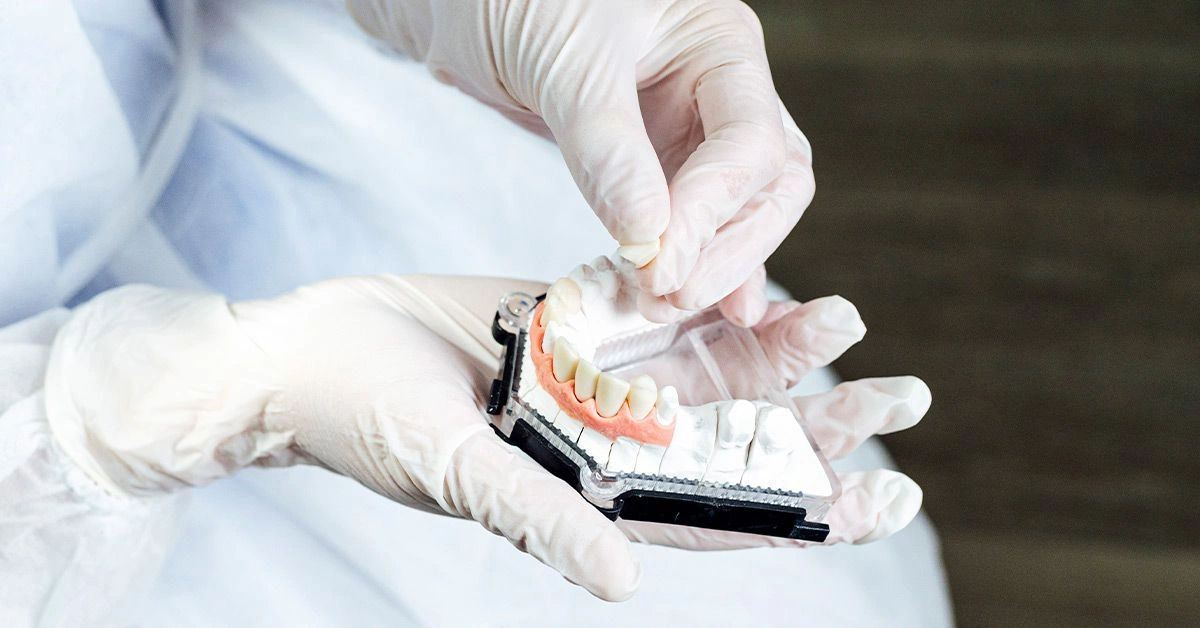
Partial dentures are designed to replace several missing teeth but not an entire upper or lower arch. To be eligible for partial dentures, you need to have some healthy natural teeth remaining in either the upper or lower jaw.
This article outlines partial dentures, including the different types, typical costs, and materials used. If you’ve lost teeth, consult a dentist to find out whether partial dentures are a suitable solution for you.
What are partial dentures?
Partial dentures are typically removable appliances that restore multiple missing teeth in the upper or lower portion of the mouth.
Partial dentures serve functional roles beyond appearance. They can improve a wearer’s ability to chew and speak, and they help keep the remaining natural teeth in place, preventing them from drifting.
Partial dentures generally aren’t meant for continuous wear. Dentists commonly advise removing them at night and cleaning them thoroughly.
A 2017 review notes that cleaning partial dentures not only keeps the appliance hygienic but also lowers the chance of cavities forming in adjacent healthy teeth because you can brush those areas more effectively.
The removable design — along with concerns about aesthetics and fit — can make partial dentures less appealing to some people.
The same review reported that roughly 39 percent of removable partial dentures were no longer used five years after they were provided to patients.
Why would one need partial dentures?
Partial dentures may be beneficial if you’ve lost multiple teeth in the upper or lower jaw. Common causes of tooth loss include:
- trauma
- tooth extraction
- severe decay
Whatever the cause, it’s vital to keep your remaining teeth healthy. A dentist will design the partial dentures around the existing teeth. If those teeth are unhealthy, a dentist may advise extraction and suggest full dentures instead.
What types of partial dentures are available?
Various fabrication methods and materials yield many options for partial dentures. Below are key aspects to consider when comparing types.
Location in your mouth
Partial dentures can replace teeth in either the front (anterior) or the back (posterior) sections of the mouth.
A 2017 study found that people fitted with anterior partial dentures reported the highest satisfaction levels.
Authors of that study suggested satisfaction might stem from the notable cosmetic improvement anterior dentures provide. Replacing front teeth can also make biting certain foods easier.
However, some patients have reported lower satisfaction with anterior partial dentures, according to a 2024 study, while another report observed no clear link between dissatisfaction and this denture type.
Posterior partial dentures also help with speech and eating, which can contribute to patient satisfaction.
Number of teeth on the dentures
Partial dentures are not the sole solution for missing teeth. Full dentures replace an entire upper or lower arch. If you still have natural teeth, they typically must be removed before fitting full dentures.
Dental bridges are another alternative. Bridges usually replace one or two adjacent teeth and are more limited than partial dentures in the number of teeth they can substitute.
Bridges are often fixed in place on one side of the mouth, whereas partial dentures can replace teeth on both sides and are frequently removable.
Generally, dentists recommend partial dentures when you have three or more missing teeth that are next to one another.
Durability
Sometimes a dentist will fit you with temporary partial dentures rather than a permanent set. This commonly happens after extractions of damaged teeth that the final partials will replace.
The Oral Health Foundation notes that gums typically require time to heal after extractions — often around six months — before permanent partial dentures are fabricated.
Materials used
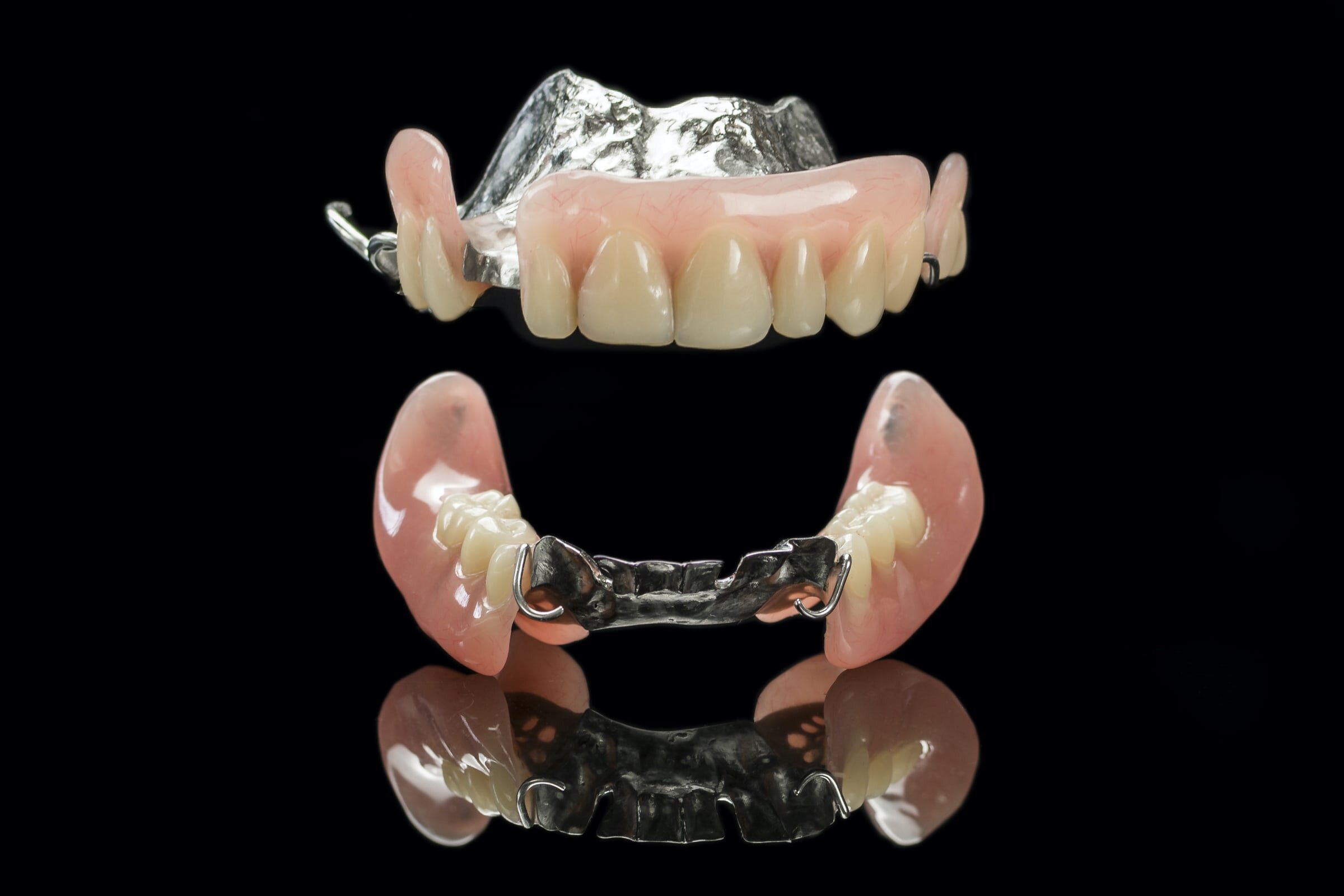
The denture base can be constructed from plastic (resin) or metal, such as alloys containing cobalt and chromium.
Metal
Larger partial frameworks may be made of titanium. Still, titanium triggered inflammatory responses in about 0.6 percent of people in the 2017 review.
Plastic and polymers
The Oral Health Foundation also states that plastic-based bases are generally less costly than metal ones because metal frames are lighter and more long-lasting.
Plastic or polymer dentures do offer benefits, including:
- a more pleasing look since no metal shows
- ease of fabrication and repair
- lightweight and somewhat flexible construction
Flexible dentures
Flexible partial dentures are another option, made from thin, light thermoplastic materials and typically lacking visible metal clasps.
Insertion differs slightly from rigid metal- or acrylic-based dentures. Flexible dentures are often warmed briefly in water to help them better conform to the gums before placement.
Attachments in your mouth
Partial dentures are commonly secured using either clasps or precision attachments.
Clasps are usually metal and wrap around at least part of the adjacent natural teeth to hold the partial in place. Depending on their location, these metal clasps may be noticeable when you smile.
Precision attachments connect to existing teeth or implants. They are custom-made for each patient and may involve crowns placed over natural teeth to accommodate the attachment.
The American Dental Association notes that the extra customization for precision attachments generally means they cost more than standard clasp systems.
How much do partial dentures cost?
Costs for partial dentures vary based on several factors, such as:
- materials selected
- number of teeth being replaced
- location in the mouth
- fabrication technique
You may also need preparatory dental treatment and subsequent adjustments to the dentures after delivery.
Paying for dentures
If you have dental insurance, your policy might cover part of the cost of partial dentures.
Check your plan’s “Explanation of Benefits” for restorative services. Some insurers pay a fixed amount or a percentage (often up to 50 percent) toward denture costs, depending on the policy.
Original Medicare typically doesn’t cover partial dentures. However, some Medicare Advantage plans include dental benefits that may assist with a portion of partial denture expenses.
Medicaid coverage for partial dentures varies by state and may cover some costs in certain areas.
Other ways to manage denture expenses include asking your dentist about payment plans or contacting nearby dental schools, which sometimes provide reduced-cost denture services.
How do I choose the right partial dentures for me?
A general dentist or a prosthodontist (a specialist in dentures) will design and fabricate your partial dentures. They will evaluate factors such as:
- the structure of your mouth, including hard and soft palate anatomy
- the condition and arrangement of your remaining teeth
- your cosmetic preferences
When weighing partial denture options, consider these questions:
- Do I have any allergies? Those allergic to metals or acrylic may be better suited to flexible dentures.
- Am I bothered by visible metal clasps? If missing teeth are toward the back, visibility may be less of an issue. For front teeth, you might prefer acrylic bases or precision attachments.
- What can I realistically afford? Budget is an important consideration when choosing dentures that meet your needs without overspending.
Your dentist or prosthodontist can guide you toward the best partial denture solution for your situation, and can also discuss alternatives such as what you need to know about maintaining a partial denture also known as a flipper tooth or weigh options like dentures vs implants when appropriate.
The bottom line
The American College of Prosthodontists reports that about 120 million adults in the United States are missing at least one tooth. If you’ve lost teeth or suffered dental trauma but still have some natural teeth remaining, partial dentures can restore your smile and function.
Discuss partial denture choices and estimated costs with a dentist to determine the most suitable option for you.
Frequently Asked Questions
A partial denture is a removable dental appliance that replaces several missing teeth in the upper or lower jaw while using remaining natural teeth for support and retention.
Partial dentures can last several years with proper care, but fit and function may change over time due to natural mouth changes; many people replace or refit partials every 5–10 years.
Common materials include acrylic (plastic), metal alloys (such as cobalt-chromium), flexible thermoplastics, and sometimes titanium for frameworks; each offers different durability and cosmetic benefits.
Partial dentures can initially affect speech and chewing, but most users adapt within days to weeks. Properly fitted partials restore much of the chewing function and can improve speech over time.
Coverage varies: many dental insurance plans cover part of the cost, Medicaid rules differ by state, and Original Medicare generally does not cover dentures, though some Medicare Advantage plans include dental benefits.
Read Next



Related Posts
Everything You Need to Know About Fever Blister Remedies, Causes, and More
Sep 6, 2026 • 4 min read
What Should I Do About a Molar Broken Off at the Gum Line
Aug 8, 2026 • 26 min read
How to Remove Nicotine Stains from Your Teeth
Aug 14, 2026 • 8 min read
How Long Will I Have to Sit in the Dentist Chair During a Root Canal?
Aug 19, 2026 • 9 min read
Hyperdontia: Do I Need to Have My Extra Teeth Removed?
Aug 1, 2026 • 34 min read