
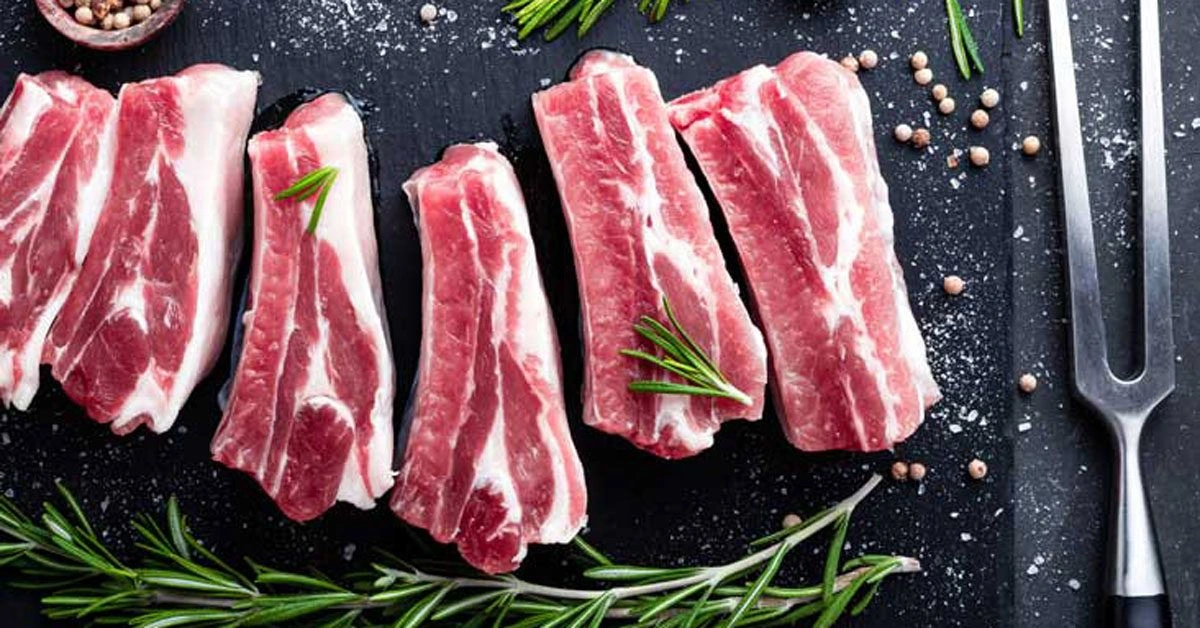
Pork is the flesh of the domestic pig (Sus domesticus). It provides ample protein, a range of vitamins and minerals, and can be prepared in numerous ways. However, consuming large amounts of pork may carry certain health considerations.
It is the most widely eaten red meat globally, particularly in East Asia, though some faiths, including Islam and Judaism, prohibit its consumption.
Consequently, pork is banned in several Islamic nations.
Often consumed fresh, pork is also commonly preserved — for example, smoked cuts, ham, bacon, and various sausages are popular cured products.
Because lean pork is rich in protein and micronutrients, it can be a valuable component of a balanced diet.
This piece covers the essential facts about pork.
Nutrition facts
Pork is a protein-dense food with variable fat content.
A 3.5-ounce (100-gram) portion of cooked, ground pork supplies the following nutrients (1):
- Calories: 297
- Water: 53%
- Protein: 25.7 grams
- Carbs: 0 grams
- Sugar: 0 grams
- Fiber: 0 grams
- Fat: 20.8 grams
Pork protein
Like other meats, pork is predominantly composed of protein.
Lean, cooked pork contains roughly 26% protein by fresh weight.
When dehydrated, lean pork’s protein proportion can reach about 89% — ranking it among the most concentrated protein food sources (1).
Pork supplies all nine essential amino acids needed for growth and tissue repair, making meat one of the most complete protein sources in the diet.
Therefore, pork — and other meats — may be particularly useful for bodybuilders, athletes in recovery, post-operative patients, or anyone needing muscle rebuilding.
Pork fat
Fat levels in pork vary by cut and preparation.
Typical fat content ranges from 10–16% (2), though it can be significantly higher depending on trimming and other variables.
Rendered pig fat, known as lard, is occasionally used as a cooking fat.
Like other red meats, pork contains both saturated and unsaturated fats, generally in similar proportions.
For example, a 100-gram serving of cooked, ground pork includes roughly 7.7 g saturated, 9.3 g monounsaturated, and 1.9 g polyunsaturated fat (1).
The fatty acid profile of pork differs somewhat from ruminant meats such as beef and lamb.
Pork tends to be lower in conjugated linoleic acid (CLA) and somewhat higher in unsaturated fats (3).
Summary: Protein is the primary nutrient in pork, supporting muscle growth and repair. Fat content varies by cut and is largely a mix of saturated and monounsaturated fats.
Vitamins and minerals
Pork provides many essential vitamins and minerals, including:
- Thiamine. Compared with other red meats like beef and lamb, pork is notably high in thiamine (vitamin B1), which is important for several bodily functions (4).
- Selenium. Pork is a good source of selenium. Animal-based foods such as meat, seafood, eggs, and dairy are the richest sources of this mineral (5).
- Zinc. An abundant mineral in pork, zinc supports brain health and immune function.
- Vitamin B12. Predominantly found in animal products, B12 is crucial for blood formation and nervous system health; deficiency can cause anemia and nerve damage.
- Vitamin B6. A group of related vitamins important for creating red blood cells.
- Niacin. Also called vitamin B3, niacin is involved in growth and metabolic processes.
- Phosphorus. Common in many foods, phosphorus is necessary for growth and tissue maintenance.
- Iron. Pork has less iron than beef or lamb, but heme iron from meat is efficiently absorbed and makes pork a solid iron source.
Pork also contains decent levels of numerous other micronutrients.
Note that processed and cured pork products, such as ham and bacon, are typically high in salt (sodium).
Summary: Pork supplies several important vitamins and minerals, notably thiamine, selenium, zinc, B12, B6, niacin, phosphorus, and iron.
Other meat compounds
Like plant foods, animal products include bioactive compounds beyond vitamins and minerals that can influence health:
- Creatine. Common in meat, creatine serves as an energy reserve for muscles and is a popular supplement for enhancing muscle growth and maintenance (6, 7).
- Taurine. Present in meat and fish, taurine is an antioxidant amino acid produced by the body; dietary taurine may support heart and muscle health (8, 9, 10).
- Glutathione. An antioxidant found abundantly in meat and synthesized by the body; although essential, its role as a dietary nutrient is not entirely clear (11, 12).
- Cholesterol. A sterol present in meat and other animal products like dairy and eggs. For most people, moderate dietary cholesterol has little impact on blood cholesterol levels (13).
Summary: Pork contains several bioactive components — including creatine, taurine, and glutathione — that may offer various health benefits.
Health benefits of pork
Pork brings high-quality protein and numerous micronutrients to the table. When properly cooked, it can be a nutritious part of a healthy eating pattern.
Maintenance of muscle mass
As with most animal-based foods, pork is an excellent source of complete, high-quality protein.
Preserving muscle mass becomes increasingly important with age.
Without adequate exercise and a suitable diet, muscle tissue naturally declines over time — a change linked to many age-related health issues.
In severe instances, this muscle loss culminates in sarcopenia, a condition marked by very low muscle mass and reduced life quality, commonly seen in older adults.
Poor intake of high-quality protein may hasten age-related muscle decline and raise sarcopenia risk (14).
Eating pork or other protein-rich foods helps ensure adequate intake of complete protein, which may aid in preserving muscle mass.
Improved exercise performance
Meat intake not only supports muscle preservation but may enhance muscle function and athletic performance.
Beyond high-quality protein, pork provides nutrients that benefit muscles, including taurine, creatine, and beta-alanine.
Beta-alanine is a precursor for carnosine, which plays a key role in muscle performance (15, 16).
Elevated muscle carnosine is associated with reduced fatigue and better physical performance (17, 18, 19, 20).
Vegetarian or vegan diets, which are typically low in beta-alanine, lead to reduced muscle carnosine over time (21).
Conversely, higher beta-alanine intake — from diet or supplements — raises muscle carnosine (15, 17, 22, 23).
Therefore, consuming pork or other beta-alanine-rich foods may help those aiming to maximize physical performance.
Summary: Pork is a high-quality protein source helpful for building and maintaining muscle. Like other meats, it may also boost muscle function and exercise capacity.
Pork and heart disease
Cardiovascular disease is a leading cause of premature death globally.
It encompasses conditions such as heart attacks, strokes, and hypertension.
Observational research on red meat and heart disease is mixed.
Some studies associate higher risk with both processed and unprocessed red meat, others implicate processed meat only, and some find no meaningful link (24, 25, 26, 27).
There is no definitive proof that meat directly causes heart disease; observational studies show associations but cannot establish causation.
High meat consumption often correlates with unhealthy lifestyle factors — lower intake of fruits and vegetables, reduced physical activity, smoking, and overeating (28, 29, 30).
Most studies attempt to adjust for these confounding factors.
A common hypothesis implicates cholesterol and saturated fat in meat as contributors to heart disease.
However, dietary cholesterol has minimal effect on blood cholesterol in most people, and many researchers no longer view it as a major health issue (13).
The role of saturated fats in heart disease remains debated, and some scientists have questioned their significance (31, 32, 33).
Summary: Reasonable amounts of lean pork, consumed as part of an overall healthy diet, are unlikely to raise heart disease risk.
Pork and cancer
Cancer involves uncontrolled cellular growth and is a serious health concern.
Many observational studies have reported links between red meat consumption and colorectal cancer risk, though findings are not entirely consistent (34, 35, 36, 37, 38).
Because observational studies cannot prove causation, it’s hard to say pork directly causes cancer.
Still, the hypothesis that high meat intake raises cancer risk is biologically plausible, particularly for meats cooked at very high temperatures.
Overcooked or charred meat can contain carcinogens, notably heterocyclic amines (39).
Heterocyclic amines form when animal proteins are exposed to intense heat during grilling, barbecuing, baking, or frying (40, 41).
Studies indicate that diets high in heterocyclic amines may increase the risk of cancers such as colon, breast, and prostate (42, 43, 44, 45, 46).
Despite these findings, the precise role of meat in cancer development remains uncertain.
Within a balanced diet, moderate consumption of properly cooked pork likely does not markedly increase cancer risk; however, limiting intake of heavily charred or overcooked pork is prudent.
Summary: Pork itself is unlikely to be a direct cancer cause, but eating large amounts of overcooked pork may raise concern.
Adverse effects and individual concerns
Avoid eating raw or undercooked (rare) pork — particularly in regions with poorer food safety controls.
Raw pork can carry several parasites capable of infecting humans (47).
Pork tapeworm
The pork tapeworm (Taenia solium) is an intestinal parasite that can reach 6.5–10 feet (2–3 meters) in length.
Infections are rare in developed nations but more common in parts of Africa, Asia, and Central and South America (47, 48, 49).
Transmission occurs through eating raw or undercooked pork.
Most infections are asymptomatic and harmless.
However, they can occasionally cause cysticercosis, a condition estimated to affect around 50 million people annually (47).
Cysticercosis can lead to serious outcomes such as epilepsy and is a major cause of acquired epilepsy in some areas (50).
Parasitic roundworms
Trichinella species are parasitic roundworms that cause trichinosis (trichinellosis).
While uncommon in developed countries, consuming raw or undercooked pork — especially from free-range, wild, or backyard pigs — raises the risk (47).
Trichinellosis is often mild or asymptomatic, presenting with diarrhea, abdominal discomfort, nausea, or heartburn.
In more severe cases, particularly in older adults, it can cause weakness, muscle pain, fever, eyelid swelling, and occasionally death (51).
Toxoplasmosis
Toxoplasma gondii is a single-celled parasitic protozoan found worldwide.
It is estimated to infect about one-third of humans globally (47).
In developed countries like the United States, eating raw or undercooked pork is a common route of infection (52, 53, 54).
Most infections are symptomless, but toxoplasmosis can be dangerous in people with weakened immune systems and harmful to a fetus during pregnancy (47, 55).
Although pork-borne parasites are uncommon in many developed settings, pork should always be cooked thoroughly.
Summary: Because of potential parasite contamination, eating raw or undercooked pork is unsafe and should be avoided.
The bottom line
Pork is the most commonly eaten meat worldwide.
It is an excellent source of high-quality protein and several vitamins and minerals.
Consequently, it may support exercise performance and help build and preserve muscle.
However, both undercooked and overcooked pork have downsides.
Overcooked pork can contain carcinogenic compounds, while undercooked or raw pork may harbor parasites.
Although not a perfect health food, moderate consumption of properly prepared pork can fit into a healthy diet.



















Leave a Reply
You must be logged in to post a comment.