

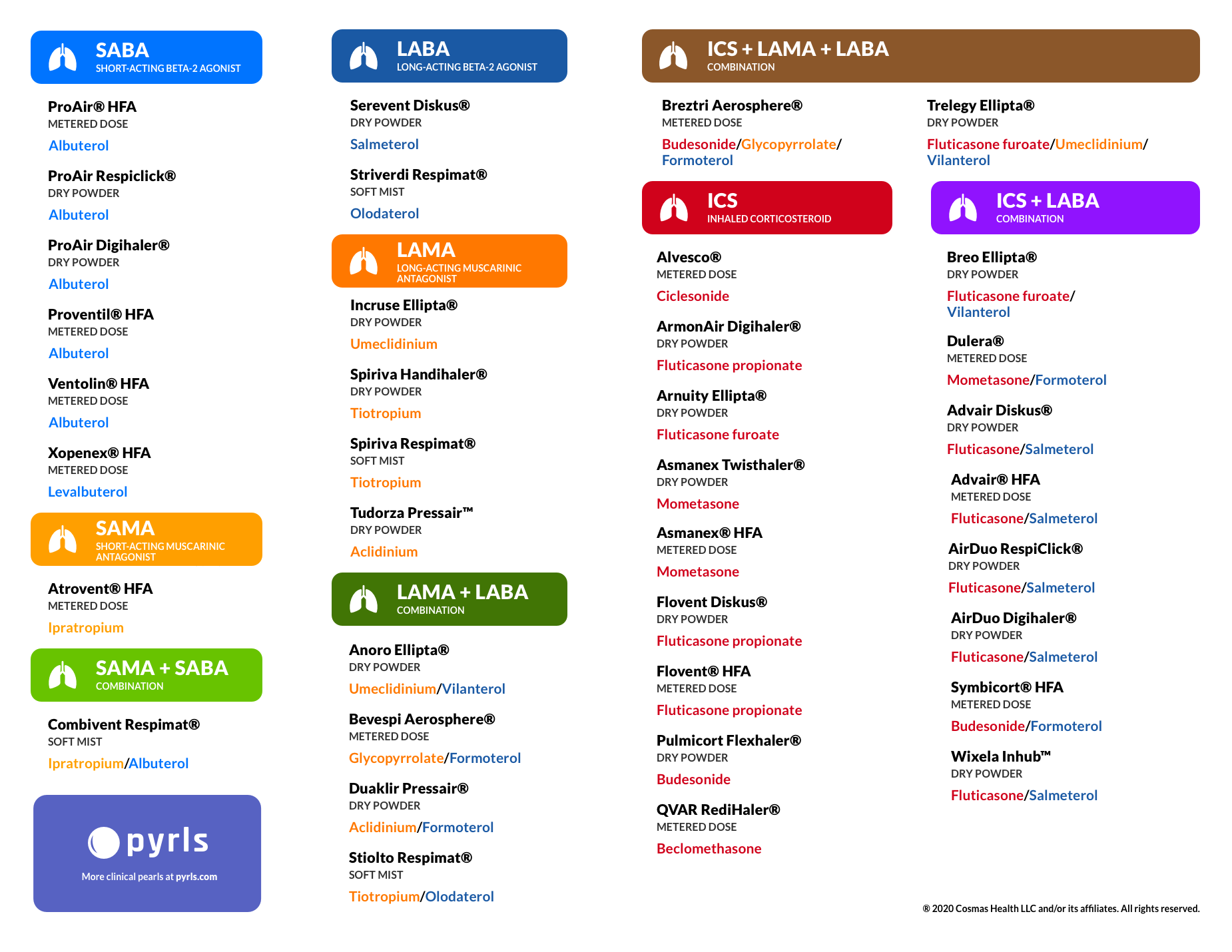
Short-acting beta-agonists (SABAs) are a group of bronchodilator medicines used to rapidly ease asthma symptoms. They’re most commonly inhaled through a rescue inhaler or delivered by a nebulizer.
SABA drugs act by relaxing the tiny muscles in your bronchial tubes (airways), helping them open so breathing becomes easier. They can also assist in loosening and clearing excess mucus from your airways.
Although SABAs play a vital role in asthma care, they shouldn’t be depended on as the sole treatment approach.
Below is an overview of how SABAs work, when they’re appropriate, and when you might need other medications to better control your asthma.
How SABA medications ease asthma symptoms
SABA drugs are effective at rapidly reversing airflow obstruction in people with asthma. Their effects can last for about 4 hours.
The medicines in this class are beta-2 agonists. Theytarget beta-2 receptors along the bronchial lining, causing the airways to relax and widen so air can flow more freely.
A clinician may also advise using a SABA to help ward off asthma episodes. During an asthma flare, the airways become inflamed and narrowed, making breathing difficult. Signs of an asthma attack can include:
- wheezing
- coughing
- a tight feeling in the chest
- shortness of breath
Many asthma attacks are mild and can be managed at home with a SABA. The duration of an attack can vary depending on triggers such as stress, physical activity, or allergens.
Do all people with asthma require SABAs?
Historically, clinicians prescribed SABAs for nearly everyone with asthma to have on hand for sudden symptom flare-ups.
SABAs typically come as a quick-relief (rescue) inhaler, and they may be used before exercise for those with exercise-induced asthma.
However, recent research has raised concerns about routine reliance on SABAs because of potential overuse.
SABAs are intended for occasional, short-term symptom relief. Excessive use of SABAs has been associated with worsening asthma control and poorer outcomes overall.
If you’re using a SABA more than twice weekly, it may indicate your current regimen isn’t adequate. Consult your doctor to reassess and adjust your asthma management plan.
Potential side effects of SABA medications
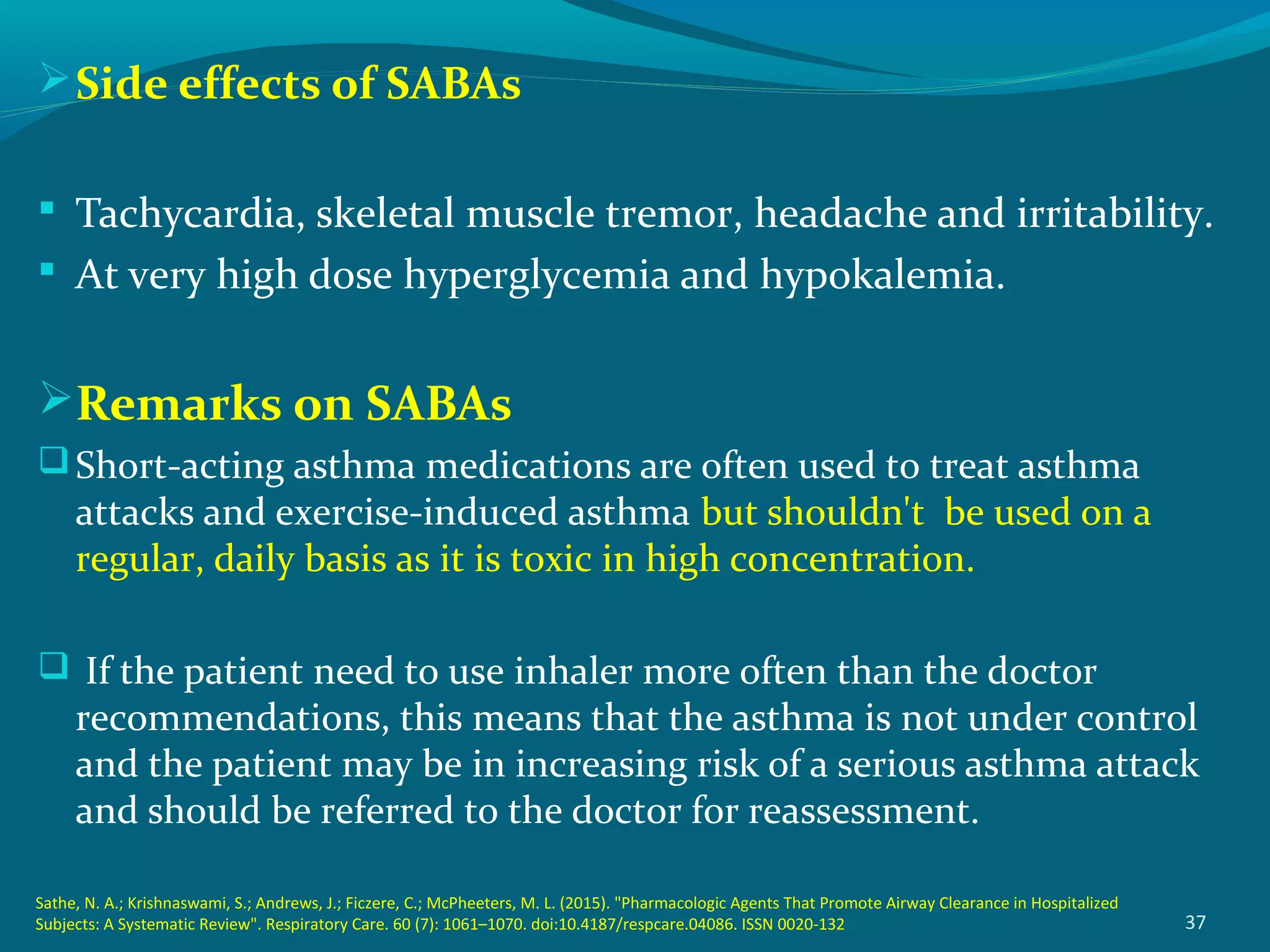
Possible side effects from SABAs can include:
- nervousness
- tremors
- palpitations
- muscle cramps
- headaches
In rare instances, SABAs may cause:
- paradoxical bronchospasm (sudden airway tightening)
- hypokalemia (low blood potassium)
- heart attack
Another issue is a possible decreased responsiveness to SABA medications with overuse, which could reduce their effectiveness over time.
SABA versus LABA asthma therapies
Both SABAs and long-acting beta-agonists (LABAs) are bronchodilators.
SABAs are used episodically for immediate symptom relief, whereas LABAs are taken on a regular schedule to help prevent symptoms. LABAs should only be used in combination with inhaled corticosteroids.
SABA medications and typical uses
The following table lists SABA medications available in the United States, per the American Academy of Allergy Asthma and Immunology:
| Drug name | Brand name(s) | Type | Dosage | Uses |
|---|---|---|---|---|
| albuterol sulfate | ProAir, Digihaler, Respiclick | inhaler | 2 puffs, every 4 to 6 hours as needed | rapid relief of asthma symptoms (ages 4 years+) |
| Albuterol and budesonide | Airsupra | inhaler | 2 puffs, as required | fast relief of asthma symptoms (ages 18 years+) |
| albuterol sulfate HFA | ProAir HFA, Proventil HFA, Ventolin HFA | inhaler; uses a hydrofluoroalkane (HFA) propellant | 2 puffs, every 4 to 6 hours as needed | rapid relief of asthma symptoms (ages 2 years+) |
| albuterol sulfate inhalation solution | generic versions only | unit-dose inhaler | 1 unit dose every 4 to 6 hours | rapid relief of asthma symptoms (ages 2 years+) |
| albuterol sulfate nebulizer solution | AccuNeb | nebulizer | 0.63 to 1.25-mg dose vials | rapid relief of asthma symptoms (ages 2 years+) |
| levalbuterol | Xopenex | nebulizer | dosage varies; may be given every 6 to 8 hours | rapid relief of bronchospasm (ages 6 years+) |
| levalbuterol HFA | Xopenex HFA | inhaler | 2 inhalations, every 4 to 6 hours as needed | treatment and prevention of bronchospasm (ages 4 years+) |
Who should consider SABA medications?
Anyone with asthma should have access to a rescue inhaler for sudden exposure to triggers and to obtain quick symptom relief.
In certain situations, these medicines can be lifesaving. Your clinician will choose the most appropriate SABA for you as part of your overall asthma care strategy.
The American College of Allergy, Asthma, and Immunology notes you may be a suitable candidate for a SABA if you:
- have asthma triggered by exercise
- suffer from seasonal allergies
- currently have a cold, flu, or other upper respiratory infection
- have sinusitis
Typically, you use your rescue inhaler at the first sign of an asthma episode. For exercise-induced asthma, a SABA may be taken 15 to 30 minutes before strenuous activity to prevent symptoms.
For people also requiring anti-inflammatory control, discuss options such as prednisone for asthma with your provider when appropriate.
Other treatments for asthma
While a SABA rescue inhaler can alleviate acute symptoms, it is not intended for daily maintenance.
Speak with a clinician about additional therapies to prevent and control asthma over the long term. These may include:
- inhaled corticosteroids
- LABAs used together with inhaled corticosteroids
- oral agents like leukotriene modifiers
- monoclonal antibody treatments
- allergy immunotherapy (shots)
Frequently asked questions
Is albuterol a SABA or LABA?
Albuterol sulfate is predominantly the active ingredient in SABAs. However, it also appears in some extended-release LABA formulations, such as VoSpireER extended-release tablets.
Is salbutamol a SABA or LABA?
Salbutamol is classified as a SABA medication.
Bottom line
SABA drugs are useful components of an asthma action plan for quickly relieving symptoms during an attack. For those with exercise-induced asthma, a quick-relief inhaler may also be recommended prior to vigorous exercise.
However, SABAs aren’t the only option for asthma care and can cause side effects if used frequently as a control strategy.
If managing your asthma is difficult, consult your clinician about your current regimen and whether adjustments are needed.






















Leave a Reply
You must be logged in to post a comment.