
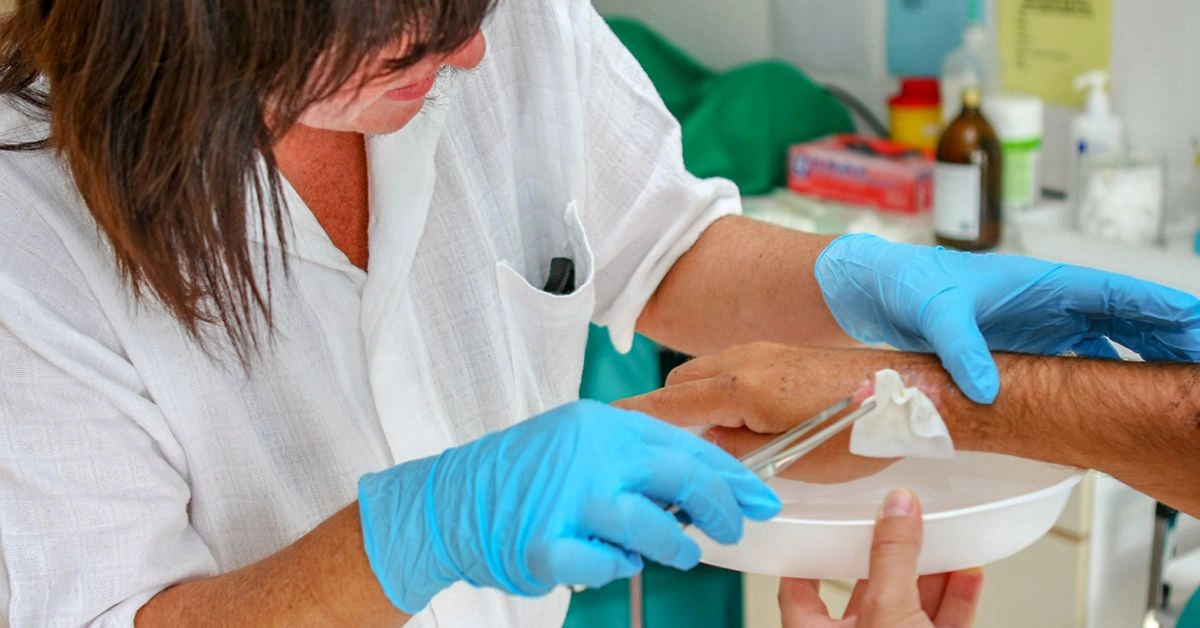
Skin tears are injuries that frequently heal on their own. Keeping them clean, hydrated, and protected can encourage recovery and lower the chance of infection.
Skin tears often resemble sizable cuts or abrasions. They are classified as acute wounds, meaning they happen suddenly and typically follow a predictable healing course over time.
For some individuals, though, skin tears can become complicated, chronic wounds that struggle to close.
Skin tears may be partial-thickness, where the outermost layer of skin (the epidermis) separates from the layer beneath (the dermis).
They can also be full-thickness, when both the epidermis and dermis lift away from the tissues beneath. This form is common on areas with thinner skin, such as the arms, the backs of the hands, and the elbows.
Causes of skin tears
Skin tears result from trauma. Common examples include:
- bumping into something (blunt force)
- being cut or scraped (shearing)
- friction from skin rubbing against surfaces
While these forces might only cause minor cuts or bruises in many people, they can more readily produce skin tears when skin is thin or fragile.
Skin tear pictures
Skin tears typically look like a large cut or scrape. They may be fully open or have a flap of skin that partially covers the wound.
Examples of skin tears are shown below.
Skin tear risk factors
Skin tears are most common in older adults because skin becomes more fragile with age. Newborns and people who are very active are also at greater risk.
Other risk factors include:
- female sex
- chronic medical conditions
- limited mobility
- cardiovascular or pulmonary disease
- prior skin tears
- long-term corticosteroid therapy
- poor nutrition
- history of falls
- dry skin
Skin tear precautions
After developing a skin tear, you can take steps to prevent infection.
Keep the wound clean and covered. This supports healing and helps prevent further damage or infection.
If you notice any signs of infection, seek medical attention promptly. Signs include:
- fever
- chills
- pus
- foul smell
- redness
- swelling
- increasing pain
Bear in mind that a skin tear may take several weeks to heal completely. Avoid bumping it or engaging in activities that could stress the wound.
Skin tear treatment
Minor skin tears can often be managed at home, but it’s generally wise to consult a healthcare professional, particularly if you are at higher risk for infection.
Home remedies
Begin by gently rinsing the tear with sterile water or an isotonic saline solution. For smaller, superficial tears, mild soap and water may be acceptable.
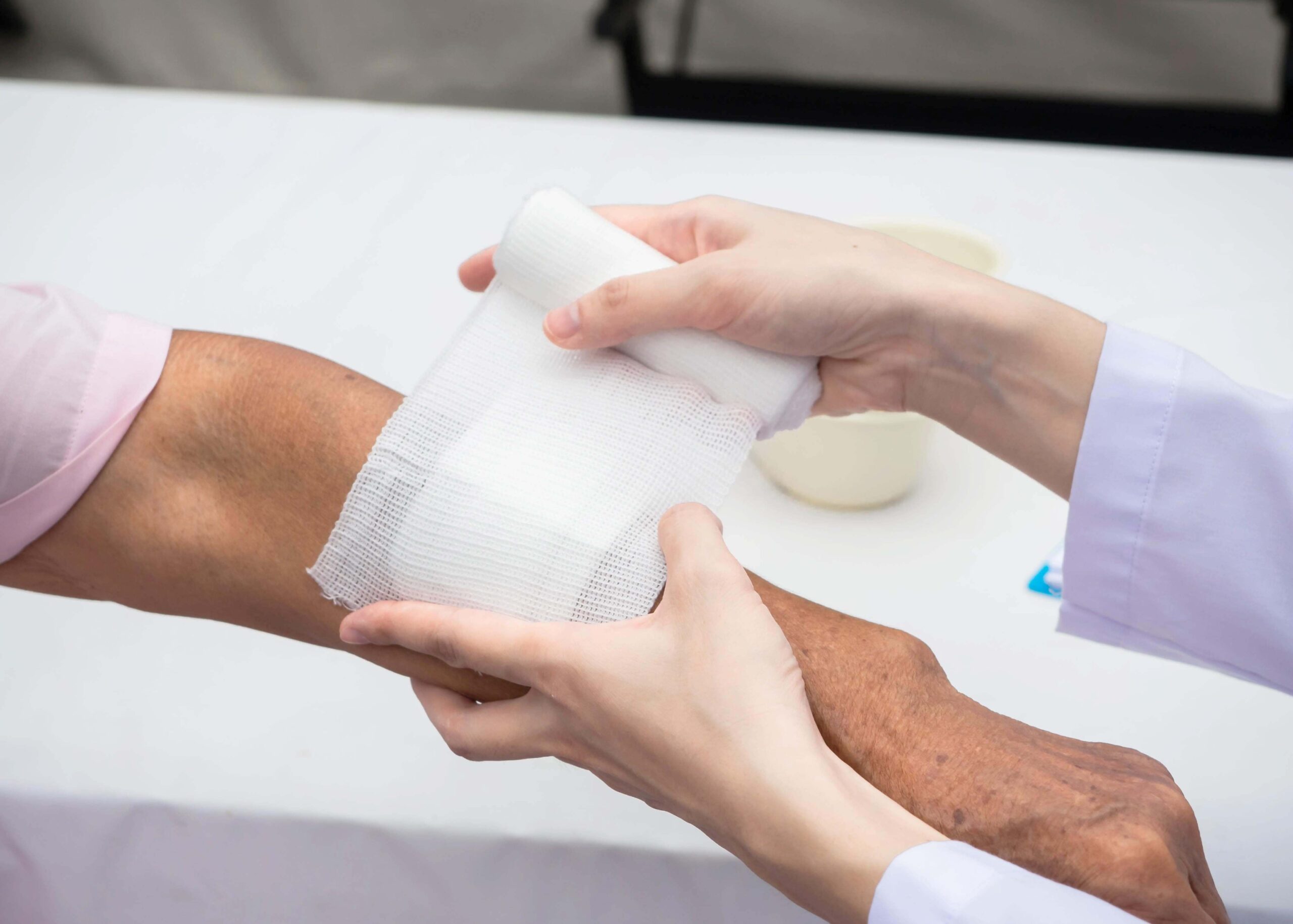
Then cover the tear fully, avoiding adhesive bandages directly on the wound. Use petrolatum-impregnated gauze (available at many pharmacies) and place dry gauze over it to secure the dressing.
If there’s a skin flap, try to carefully re-position it over the wound before dressing. This can help the skin regenerate and close more quickly.
When to see a doctor
Contact a healthcare provider if you experience:
- infection signs such as fever, chills, body aches, foul-smelling drainage, pus, or worsening pain
- a large or full-thickness tear (both epidermis and dermis separated from underlying tissue)
- bleeding that won’t stop
- other health issues, including a weakened immune system
A clinician may apply a specialized dressing to promote healing. If a skin flap is present, they might use skin adhesive to hold it in place, rather than sutures, because the surrounding skin is often delicate.
They can prescribe antibiotics if an infection is present and will advise you on warning signs to watch for. Depending on the cause of the tear and your vaccination history, a tetanus booster may be given.
While you recover, the provider can also help you identify strategies to reduce the chance of future skin tears.
Skin tear prevention and best practice guidelines
Skin tears often resemble sizable cuts or abrasions. They are classified as acute wounds, meaning they happen suddenly and typically follow a predictable healing course over time.
For some individuals, though, skin tears can become complicated, chronic wounds that struggle to close.
Skin tears may be partial-thickness, where the outermost layer of skin (the epidermis) separates from the layer beneath (the dermis).
They can also be full-thickness, when both the epidermis and dermis lift away from the tissues beneath. This form is common on areas with thinner skin, such as the arms, the backs of the hands, and the elbows.
Causes of skin tears
Skin tears result from trauma. Common examples include:
- bumping into something (blunt force)
- being cut or scraped (shearing)
- friction from skin rubbing against surfaces
While these forces might only cause minor cuts or bruises in many people, they can more readily produce skin tears when skin is thin or fragile.
Skin tear pictures
Skin tears typically look like a large cut or scrape. They may be fully open or have a flap of skin that partially covers the wound.
Examples of skin tears are shown below.
Skin tear risk factors
Skin tears are most common in older adults because skin becomes more fragile with age. Newborns and people who are very active are also at greater risk.
Other risk factors include:
- female sex
- chronic medical conditions
- limited mobility
- cardiovascular or pulmonary disease
- prior skin tears
- long-term corticosteroid therapy
- poor nutrition
- history of falls
- dry skin
Skin tear precautions
After developing a skin tear, you can take steps to prevent infection.
Keep the wound clean and covered. This supports healing and helps prevent further damage or infection.
If you notice any signs of infection, seek medical attention promptly. Signs include:
- fever
- chills
- pus
- foul smell
- redness
- swelling
- increasing pain
Bear in mind that a skin tear may take several weeks to heal completely. Avoid bumping it or engaging in activities that could stress the wound.
Skin tear treatment
Minor skin tears can often be managed at home, but it’s generally wise to consult a healthcare professional, particularly if you are at higher risk for infection.
Home remedies
Begin by gently rinsing the tear with sterile water or an isotonic saline solution. For smaller, superficial tears, mild soap and water may be acceptable.
Then cover the tear fully, avoiding adhesive bandages directly on the wound. Use petrolatum-impregnated gauze (available at many pharmacies) and place dry gauze over it to secure the dressing.
If there’s a skin flap, try to carefully re-position it over the wound before dressing. This can help the skin regenerate and close more quickly.
When to see a doctor
Contact a healthcare provider if you experience:
- infection signs such as fever, chills, body aches, foul-smelling drainage, pus, or worsening pain
- a large or full-thickness tear (both epidermis and dermis separated from underlying tissue)
- bleeding that won’t stop
- other health issues, including a weakened immune system
A clinician may apply a specialized dressing to promote healing. If a skin flap is present, they might use skin adhesive to hold it in place, rather than sutures, because the surrounding skin is often delicate.
They can prescribe antibiotics if an infection is present and will advise you on warning signs to watch for. Depending on the cause of the tear and your vaccination history, a tetanus booster may be given.
While you recover, the provider can also help you identify strategies to reduce the chance of future skin tears.
Skin tear prevention and best practice guidelines
The ideal way to prevent chronic wounds from developing is to avoid skin tears in the first place.
Wear long sleeves and pants to shield your skin. Choose clothing without zippers that could catch and tear delicate skin.
Keep skin well-moisturized. Use soap-free or pH-balanced cleansers rather than harsh soaps. Avoid overly long showers or needless bathing. Apply a hypoallergenic moisturizer at least twice daily.
Eat a balanced diet rich in fruits, vegetables, and whole grains to ensure adequate nutrition.
If you get a minor wound, take care to prevent it from worsening. Keep it clean and covered and try not to snag it on objects.
It’s also advisable to reduce fall and trip hazards in the home by:
- keeping floors uncluttered
- padding sharp furniture edges
- ensuring good lighting
Takeaway
With appropriate care, skin tears can typically heal without complications within a few weeks. Keep the tear clean and protected to prevent infection, and seek medical attention for large tears or any signs of infection.




















Leave a Reply
You must be logged in to post a comment.