

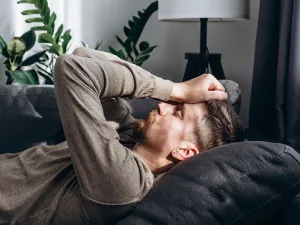
If you’ve ever felt a headache crop up after a meal, you’re not the only one. This phenomenon is known as a postprandial headache — “postprandial” simply means after eating.
If these headaches happen often, don’t dismiss them. While certain foods can provoke or trigger headaches, they can also signal underlying medical issues that warrant evaluation. Keep reading to find potential causes of headaches that appear after eating.

What makes your head hurt after a meal?
Post-meal headaches vary in intensity and can stem from multiple causes.
Some people find their headaches are especially severe after consuming particular foods, sweets, or carbohydrates. Others notice headaches following every meal.
Here are some of the more common explanations:
Postprandial hypoglycemia
Also referred to as reactive hypoglycemia, this condition produces a headache within about 4 hours after eating and is caused by a drop in blood glucose. Possible contributors include:
- diabetes
- digestive tumors
- hormonal imbalances
Food allergy
It’s a common belief that an allergy always presents with nasal symptoms like sneezing or a runny nose, but that’s not necessarily true. Food allergies can prompt a range of reactions, including headaches.
If you get headaches after eating a certain item or ingredient, you might have an unrecognized food allergy.
Food intolerance
Unlike an allergy, food intolerance usually causes digestive symptoms, though it can sometimes lead to a headache after eating.
TMJ disorders
The temporomandibular joint (TMJ) joins your lower jaw (mandible) to the part of your skull (temporal bone) in front of your ear.
TMJ problems often cause a popping or clicking noise, or a tight sensation at one or both sides of the jaw when you open and close your mouth. Because the joint is so close to the head, chewing can set off pain and produce a headache.
Cold stimulus
Often called a brain freeze or “ice cream headache,” this occurs after consuming something extremely cold or frozen.
Specialists think it results from rapid changes in the blood vessels near certain nerves in response to cold. These headaches can be intense but brief — lasting seconds to minutes — and typically don’t require treatment.
Treating and managing food-related headaches
Stay hydrated
Make sure you drink adequate water throughout the day by responding to thirst cues.
Keeping hydrated is a key part of headache management. Insufficient fluid intake, especially in warm conditions, can lead to dehydration, which can worsen headache pain.
Plain water is usually the best option since it avoids added sugars found in juices, flavored coffees, sweet teas, and other sweetened beverages.
Avoid foods and drinks with artificial sweeteners when possible, as they can provoke headaches in some individuals.
Try an elimination diet
Eating a nutritious, balanced diet is important. If maintaining such a diet doesn’t stop your post-meal headaches, consider discussing an elimination diet with your physician.
An elimination diet is approached like an experiment: you systematically remove and reintroduce foods to observe how each affects you. This method can expose intolerances, sensitivities, and possible allergies.
For instance, you might eliminate dairy for a while to see if your symptoms improve. If headaches subside during that period, you may have identified a sensitivity.
If headaches persist, you can reintroduce dairy and remove another suspect food. Continue this process until a trigger is identified. Always perform an elimination diet under the supervision of a doctor or registered dietitian.
If you notice headaches tied to certain meals or ingredients, it may also be helpful to read about back pain after eating for additional insight into post-meal symptoms and related patterns.
Outlook
If headaches follow your meals, consult your healthcare provider. It’s important to diagnose and address causes like abnormal blood sugar, TMJ disorder, or food-related allergies and intolerances when they’re responsible.
Fortunately, many post-meal headaches are manageable and respond well to appropriate treatment.












Leave a Reply
You must be logged in to post a comment.