

- Some male Redditors report what they’re calling “Ozempic penis,” claiming visible penile increases up to 1.5 inches.
- Medical experts caution that “Ozempic penis” is not a documented side effectof GLP-1 drugs.
- More likely, fat loss around the pubic area exposes more of the penis, and improved circulation from better metabolic health may play a role.
If you’ve browsed forums like Reddit’s r/Ozempic, you might have encountered a viral topic labeled “Ozempic penis.”
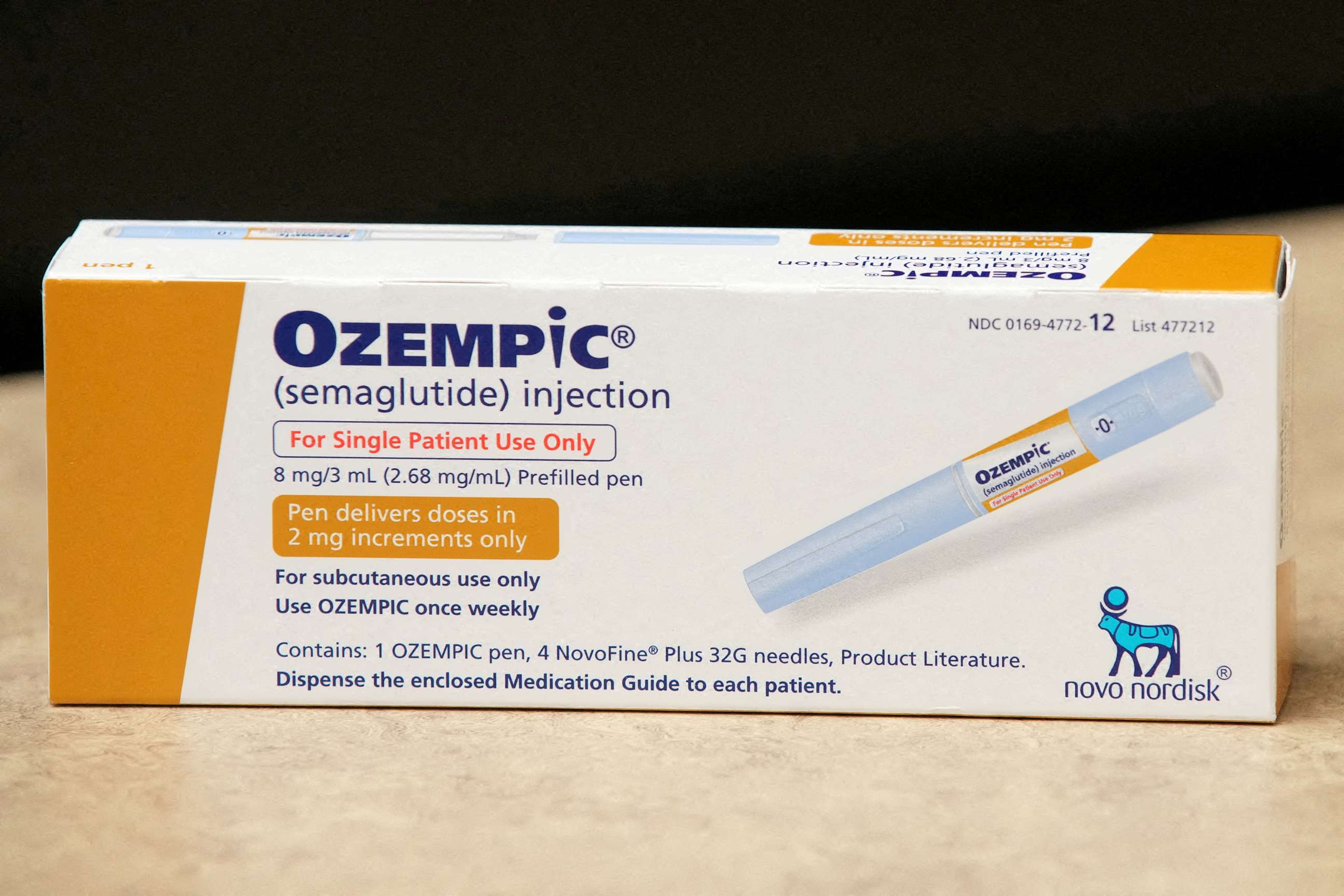
Several men taking semaglutide (Ozempic, Wegovy) and other GLP-1 therapies — including tirzepatide (Mounjaro, Zepbound) and liraglutide (Saxenda, Victoza) — have reported an unexpected change: their penis seems larger.
“I recently measured myself down there and noticed I gained about 1 inch,” posted Redditor coffeebeardtv.
Though it might seem like online hearsay, an increasing number of users are sharing similar anecdotes.
In one high-traffic thread, numerous men confirmed they’d observed the same effect.
“Yeah, wife has definitely noticed a difference, was 278 down to under 200,” wrote Beathil.
“Yep I noticed that happen to me as well,” added OwnCarpet717.
WeatherInfinite30 chimed in: “Yes. I gained 1.5 inches in length. No joke.”
But is this a genuine effect or an internet-amplified perception?
The original poster conceded that some might attribute the change to weight reduction. “[However], at the time I measured myself before 4 years ago [I] was thinner,” he noted.
Even so, other forum users questioned whether the size change was real.
“It just looks bigger (which doesn’t suck) and probably works better,” said No-Western924.
So what does the medical community say? Below is a summary of the evidence — and caveats — from clinicians.
Is “Ozempic penis” an actual side effect of GLP-1 medications?
Pamela Tambini, MD, who is board certified in Internal Medicine and Addiction Medicine and serves as Medical Director at Engage Wellness, says that “Ozempic penis” is an informal label describing anecdotal observations rather than a medical diagnosis.
“At present, there’s no scientific proof that GLP-1 agents like Ozempic cause genuine enlargement of penile tissue,” she told HealthEH.
Tambini explained that GLP-1 drugs mainly act to regulate blood glucose levels.
They also encourage weight loss by curbing appetite and altering gut hormone signals.
“There’s no established biological pathway linking GLP-1 receptor agonists to the growth of genital tissue,” she added.
Could “hidden penis” explain it?
Tambini pointed out that many men were likely on the right track when they suspected fat loss as the reason for perceived length gains.
“When men shed substantial weight, especially in the lower belly or pubic region, more of the penile base that was previously buried in fat can become exposed,” she explained.
“So the true length hasn’t increased, but a greater portion is visible, producing the sense of a longer penis.”
Stanton Honig, MD, Chief of Reproductive and Sexual Medicine at Yale, concurs, referencing a 2008 review he and colleagues published in the International Journal of Impotence Research.
The review discusses how excess fat over the pubic bone can make the penis appear shorter — a presentation often described as “hidden penis.”
They noted that reducing or surgically removing this fat pad is commonly performed to make more of the penis visible and thus appear longer.
While fat loss likely explains much of the Reddit reports, a few other factors may also contribute to the perceived change.
Tambini mentioned that GLP-1 therapies can offer cardiovascular improvements in some patients, which might enhance blood flow and erectile quality.
“There’s also a psychological element,” she said. “When someone loses weight, feels healthier, and gains confidence, their body image can shift and influence how they perceive themselves physically.”
For related safety concerns about tirzepatide, see zepbound side effects.
How can you tell if your penis size truly changed?
To assess any real alteration objectively, Tambini advises consistent measurements taken in the same manner under similar conditions.
“For instance, measure from the pubic bone to the penis tip while erect, both before starting the medication and afterwards,” she said.
Without uniform measurement technique each time, it’s impossible to know whether differences are due to weight loss, stronger erections, or simply altered self-perception.
If you want to mirror the study Honig referenced, measure along the top of the penis.
That research recorded measurements in three states: flaccid (unstimulated), flaccid stretched (gently extended to maximum length), and fully erect.
Girth (circumference) was measured at the midpoint of the shaft in both flaccid and erect conditions, the authors noted.
They used all three states because they were comparing men against one another and accounting for the “grower versus shower” effect, where some men lengthen noticeably when erect while others remain similar in size.
If you’re tracking changes in yourself only, choosing one state and being consistent is usually adequate.
When should a change in penis size prompt medical attention?
Although many men welcome the appearance of a bigger penis as a perk of weight loss, certain changes warrant a doctor’s evaluation.
Tambini recommends discussing any notable change, positive or concerning, with a healthcare provider.
“Improvements like better erectile function or higher energy can be signs of enhanced overall health,” she said.
“But if someone encounters trouble with erections, abnormal sensitivity, or sexual performance issues, it’s worth consulting a physician.”
According to Tambini, such symptoms might point to conditions like low testosterone, medication-related side effects, or vascular disease.
“If a change seems unexpected, unexplained, or troubling, seeing a clinician is the right course,” she advised.
Honig also observed that patients taking Ozempic may have diabetes as well as obesity, which increases their risk for erectile dysfunction.
“We have effective treatments for ED, including oral medications, shockwave therapy, penile injections, and surgical implants,” he said.
He suggested using the Sexual Medicine Society of North America’s Healthcare Provider Directory to find a urologist specializing in sexual medicine.



















Leave a Reply
You must be logged in to post a comment.