

A root canal is a dental treatment that removes damage in the roots of a tooth while preserving the natural tooth structure.
Root canal therapy becomes necessary when infection or inflammation affects the soft tissue (pulp) inside and around a tooth.
Damaged pulp is carefully removed and the tooth is sealed to prevent new bacteria from entering. Root canals are very common, with more than 15 million performed in the United States each year.
A root canal appointment can range from 90 minutes up to 3 hours. Some procedures are completed in a single visit, while others require two sessions.
A root canal may be performed by your general dentist or by an endodontist. Endodontists receive extra specialized training in root canal therapies.
The time you spend in the dental chair for a root canal depends on several factors, including how advanced the infection is and which tooth is affected. This article explains what to expect when you need a root canal.
Who needs a root canal?
Each tooth contains pulp — living tissue within the root that connects the tooth to the surrounding bone and gums. The pulp houses blood vessels, nerves, and connective tissue. The following situations can damage pulp and roots:
- teeth that are cracked or fractured
- teeth that have had multiple dental procedures
- teeth with infections due to large cavities
A root canal is a routine dental procedure used to save your natural tooth by removing diseased or injured tissue.
The term “root canal” refers to the canal of tissue inside a tooth that extends from the crown to the root. It’s a misconception that a root canal procedure involves drilling a canal into your gum or creating one where none exists.
If left untreated, a severe tooth infection can spread along the gumline to other teeth. Teeth may discolor, turning yellow or black, and dental infections can become serious, potentially spreading through the bloodstream.
Often, the conditions that necessitate a root canal are painful. While the procedure itself can cause temporary discomfort, it prevents the far worse consequences of an untreated infection.
What’s involved in a root canal procedure?
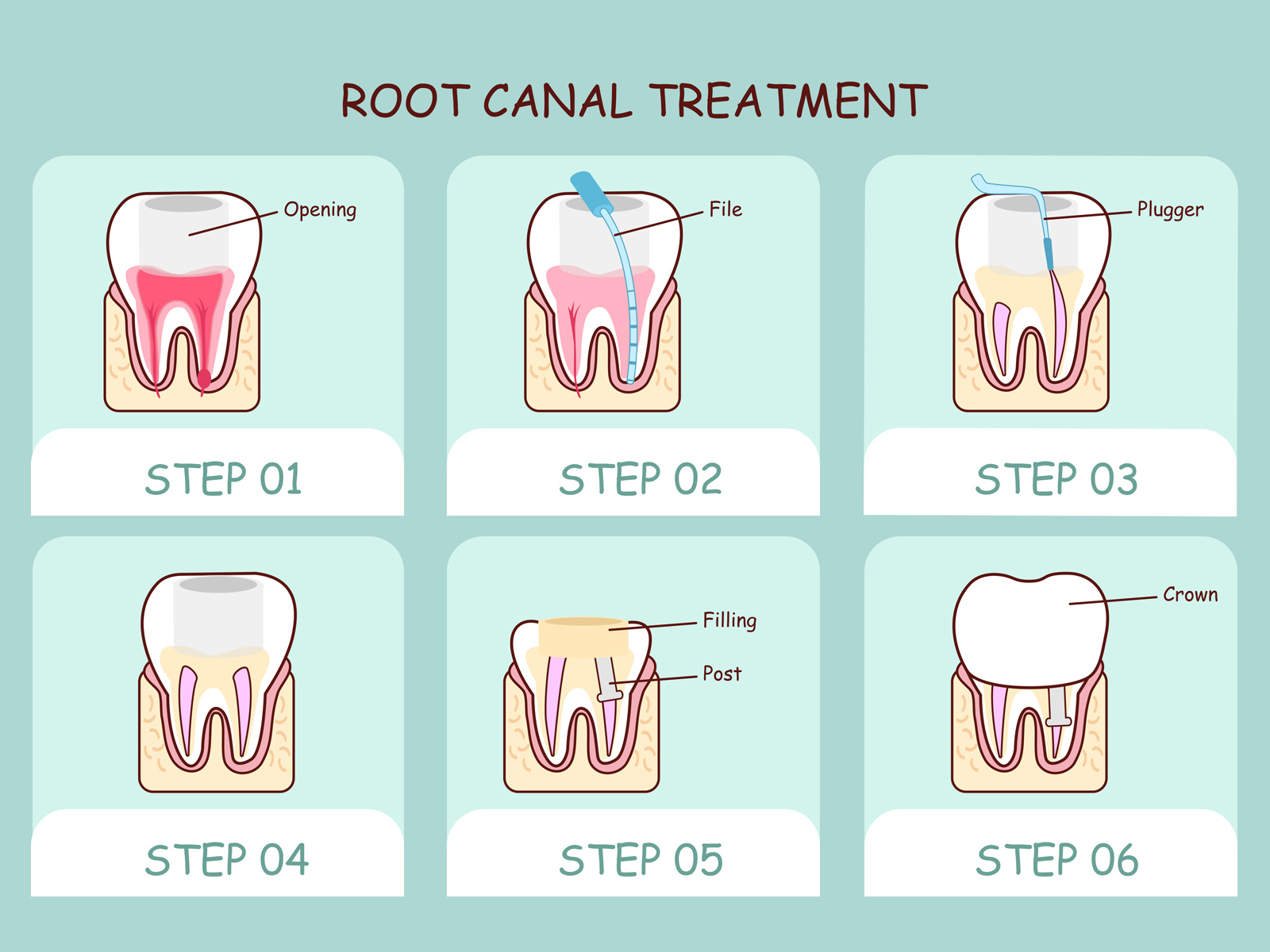
The root canal process includes several clear steps. At your appointment, here’s what typically happens:
- The dentist will administer a local anesthetic to numb the area surrounding the tooth or teeth being treated.
- Sterile instruments are used to create a small opening in the tooth. The interior is then cleaned out, removing infected or damaged pulp.
- The inside of the tooth is irrigated multiple times. If an infection is present, medication may be placed inside the tooth to eliminate remaining bacteria.
- X-rays are taken to confirm the root is thoroughly cleaned.
- If you’re returning for completion or for placement of a dental crown, the access hole is filled with a temporary material. If the dentist completes the root canal in one visit, a more permanent restoration may be placed.
During a follow-up appointment, a crown may be fitted to protect and permanently seal the tooth. Crowns are often important after root canal therapy—especially for back teeth used in chewing—because removal of the pulp can weaken the tooth.
How long does it take to do a root canal?
A straightforward root canal can take 30 to 60 minutes if the tooth has a single canal. Generally, plan to spend about 90 minutes in the dentist’s chair for a root canal appointment.
Root canals require time because the nerve tissue must be removed, rinsed, and disinfected. Some teeth contain multiple pulp canals, while others have only one. Anesthesia, set-up, and preparation also add to the appointment length.
Molars
Molars, the multi-cusped teeth at the back of the mouth, can contain up to four canals, making them the most time-consuming for root canal treatment. Since the roots alone can take an hour to remove, disinfect, and fill, molar root canals may last 90 minutes or longer.
Premolars
Premolars, located between the front teeth and molars, typically have one or two roots. A premolar root canal may take about an hour or slightly more, depending on the tooth’s anatomy.
Canines and incisors
The front teeth—incisors and canines—are used for cutting and tearing food.
They usually have a single root, which makes them quicker to treat during a root canal. Nevertheless, a front-tooth root canal can still take 45 minutes to an hour—excluding the time needed for a crown if required.
If your dentist is able to place a crown during the same appointment as the root canal—which is uncommon—you should add at least another hour to the total time estimate.
This only applies if the dentist can fabricate the crown in-office the same day. Often, dentists recommend waiting a short period after the root canal to ensure the tooth heals properly and has no complications before placing a permanent crown.
Why do root canals sometimes take two visits?
Some root canal treatments require two dental visits, depending on the complexity of the tooth.
The first visit typically focuses on removing infected or damaged pulp. This step requires care and concentration and can be time-consuming.
After cleaning, the dentist usually places a temporary antibacterial dressing inside the tooth. You should feel relief from tooth pain after this first appointment.
The second visit involves further cleaning and disinfection, followed by permanently sealing the inside of the tooth with a rubber-like material. A permanent or temporary filling is then placed, and sometimes a crown is fitted.
Is a root canal painful?
A root canal procedure may cause some discomfort, but it is often less painful than people expect. It is also far less painful than the alternative—a cracked tooth or an uncontrolled tooth infection.
Pain tolerance varies between individuals, so the level of discomfort experienced can differ.
All root canals are performed using injected local anesthesia to numb the tooth, so you should not feel significant pain during the procedure. If you experience discomfort, your dentist can administer additional anesthesia.
How long will pain last following a root canal?
After a successful root canal, mild pain or sensitivity can persist for several days. This discomfort is usually mild and gradually subsides. In most cases it can be managed with over-the-counter pain relievers like ibuprofen or acetaminophen.
Oral care following a root canal
Following the initial root canal visit, you may wait 1 to 2 weeks before having a crown placed to complete treatment.
During this interim, stick to softer foods to avoid damaging the treated tooth. Rinsing with warm saltwater can help keep food particles away from the unprotected tooth.
Maintain oral health by brushing twice daily, flossing once a day, reducing sugary foods and drinks, and keeping routine dental cleanings. Ensure you return for placement of a permanent crown if recommended.
Takeaway
A root canal is a significant dental procedure, but for most patients it is no more painful than a typical cavity filling.
It is much less painful than allowing a damaged tooth or infection to worsen.
The duration of your root canal depends on how severe the tooth damage is and which tooth is affected.
It’s preferable to address dental problems promptly rather than risk an emergency visit. If you’re concerned about how long a root canal will take, discuss the expected timeline with your dentist so you both have a clear plan for the treatment.























Leave a Reply
You must be logged in to post a comment.