
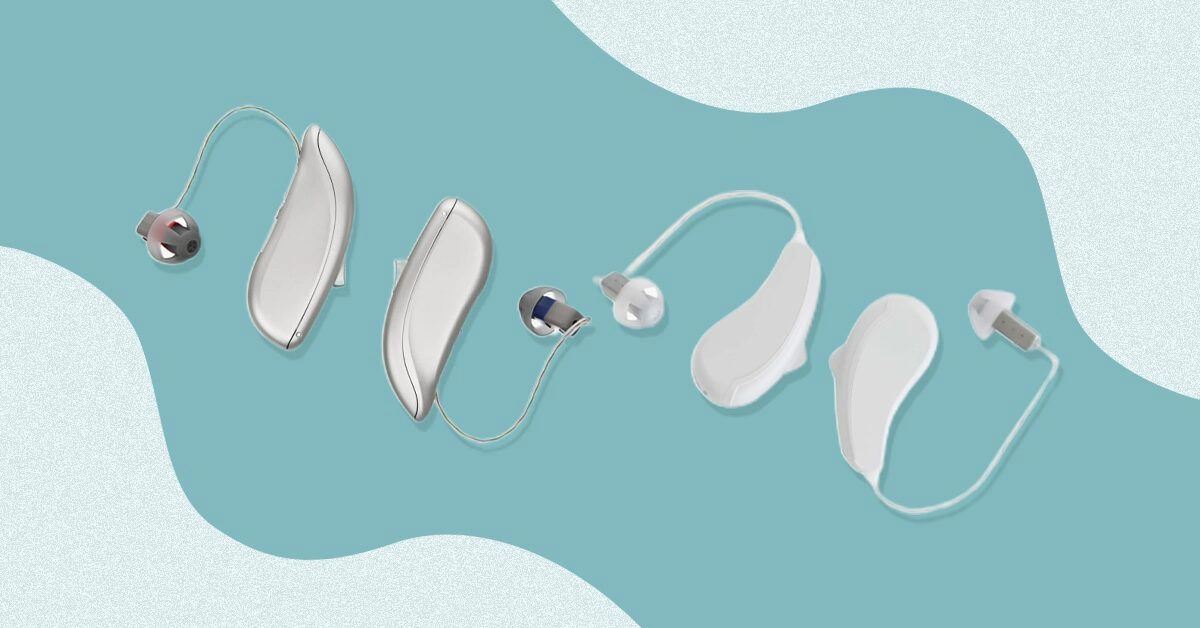
Jabra Enhance is a newer entrant in the hearing aid industry, yet it has quickly developed a positive reputation. In this in-depth review of Jabra hearing aids, we’ll explore their features, pricing, and whether they may be a suitable option for your hearing needs.

According to the National Institute on Deafness and Other Communication Disorders, approximately 13% of individuals in the United States age 12 and older have hearing loss in both ears. About 2% of adults ages 45 to 54 experience disabling hearing loss, and this percentage rises significantly with age.
Hearing aids are designed to amplify sound, making conversations, television, phone calls, and everyday environmental noises easier to understand for people with hearing loss. Despite the clear benefits, only 30% of adults age 70 and older and 16% of those ages 20 to 69 who could benefit from hearing aid technology actually use one. Barriers such as cost, access to audiology services, and stigma often prevent people from seeking help.
Traditional prescription hearing aids typically range from $900 to $6,000 or more per pair, and they are not usually fully covered by medical insurance. For this reason, many people look for more accessible options, including over-the-counter (OTC) solutions like Jabra hearing aids.
What is Jabra Enhance?
Formerly known as Lively, Jabra Enhance is a company that offers prescription-quality hearing aids directly to consumers online. Compared with many traditional clinic-based options, Jabra hearing aids are priced more competitively, making them appealing for individuals seeking affordable hearing solutions.
These devices are available for purchase online without a prescription and are listed with the Food and Drug Administration (FDA). The company rebranded to Jabra Enhance after being acquired by GN Group, an audio technology manufacturer founded in 1869. Before entering the hearing aid market, Jabra was widely recognized for producing headsets and speakers.
Although Jabra Enhance is relatively new to online hearing healthcare, its devices are manufactured by ReSound, a well-established hearing aid company with decades of industry experience and a strong reputation for quality and innovation.
Types of hearing aids
Not every type of hearing loss can be treated effectively with hearing aids. Completing Jabra’s at-home hearing test and consulting with one of their audiologists can help determine whether their products are appropriate for you. These devices are generally recommended for individuals with mild to moderate hearing loss.
The company advises getting an in-person hearing exam before making a purchase. A comprehensive evaluation can rule out underlying medical conditions that may contribute to hearing loss and confirm whether amplification will provide meaningful benefit.
Available products from Jabra Enhance
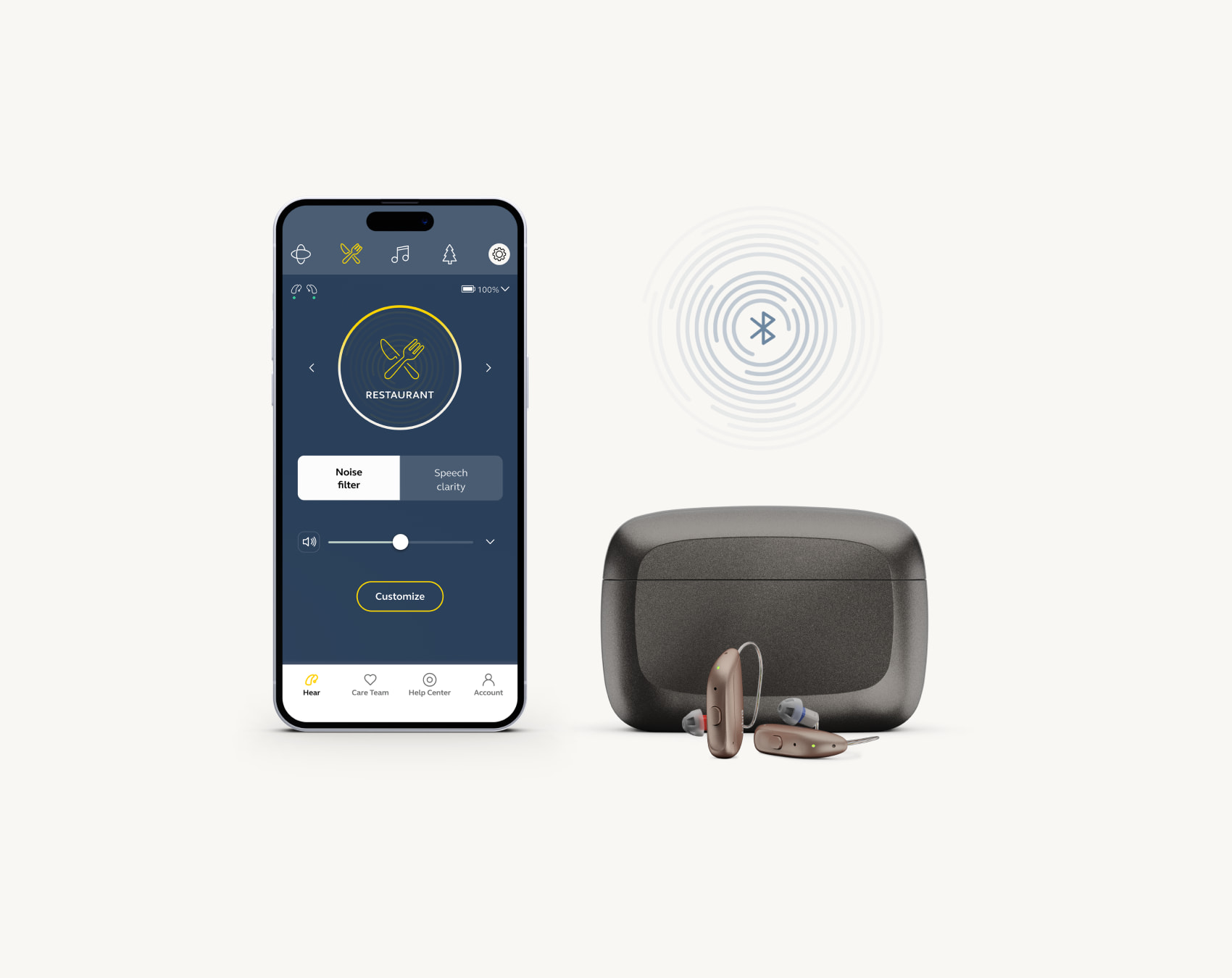
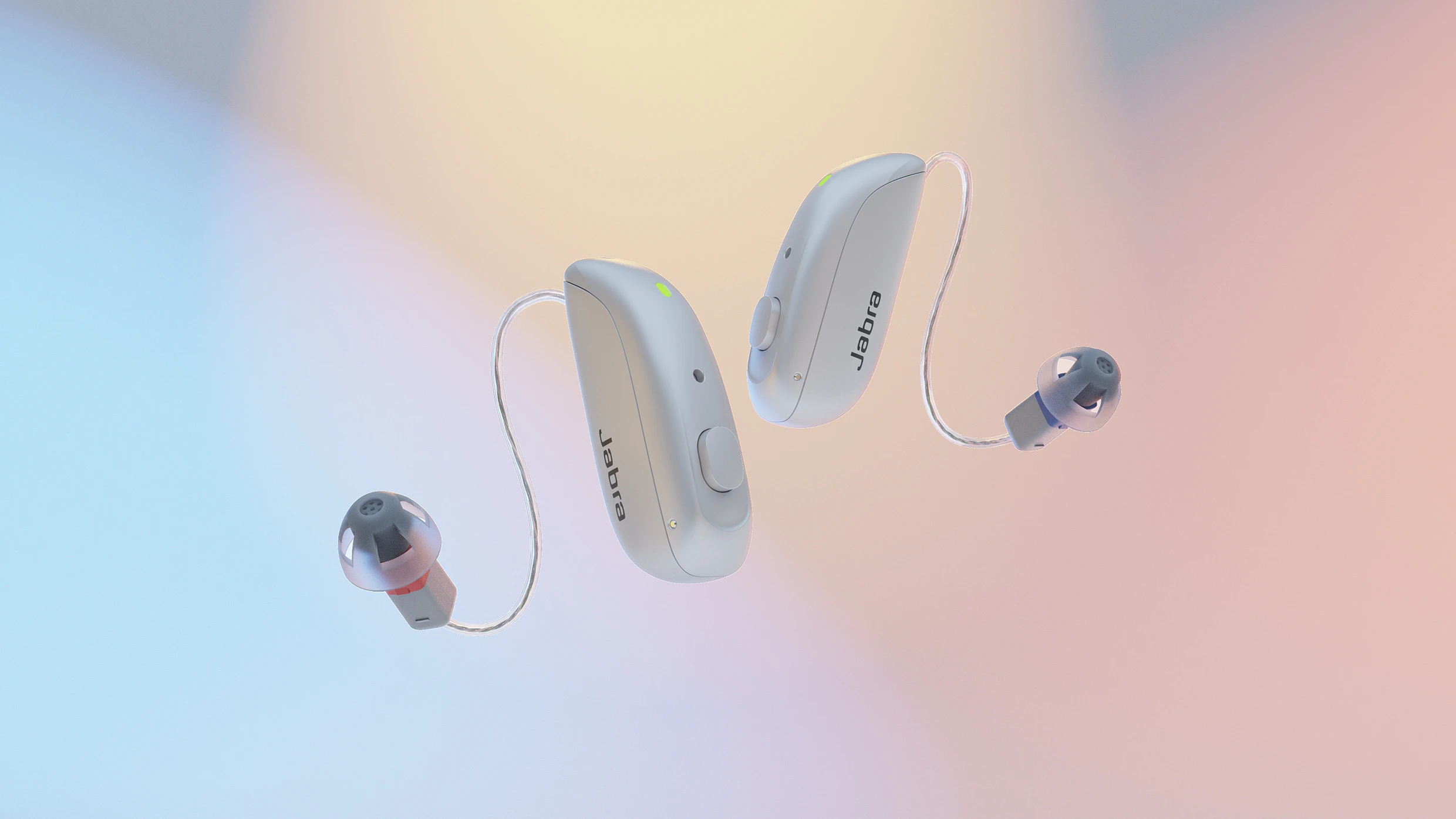
Jabra Enhance currently offers three main hearing aid models, including both battery-powered and rechargeable options. The battery-operated version is the most budget-friendly. All models are receiver-in-canal (RIC) devices with a behind-the-ear (BTE) component and Bluetooth connectivity for integration with iOS and Android devices.
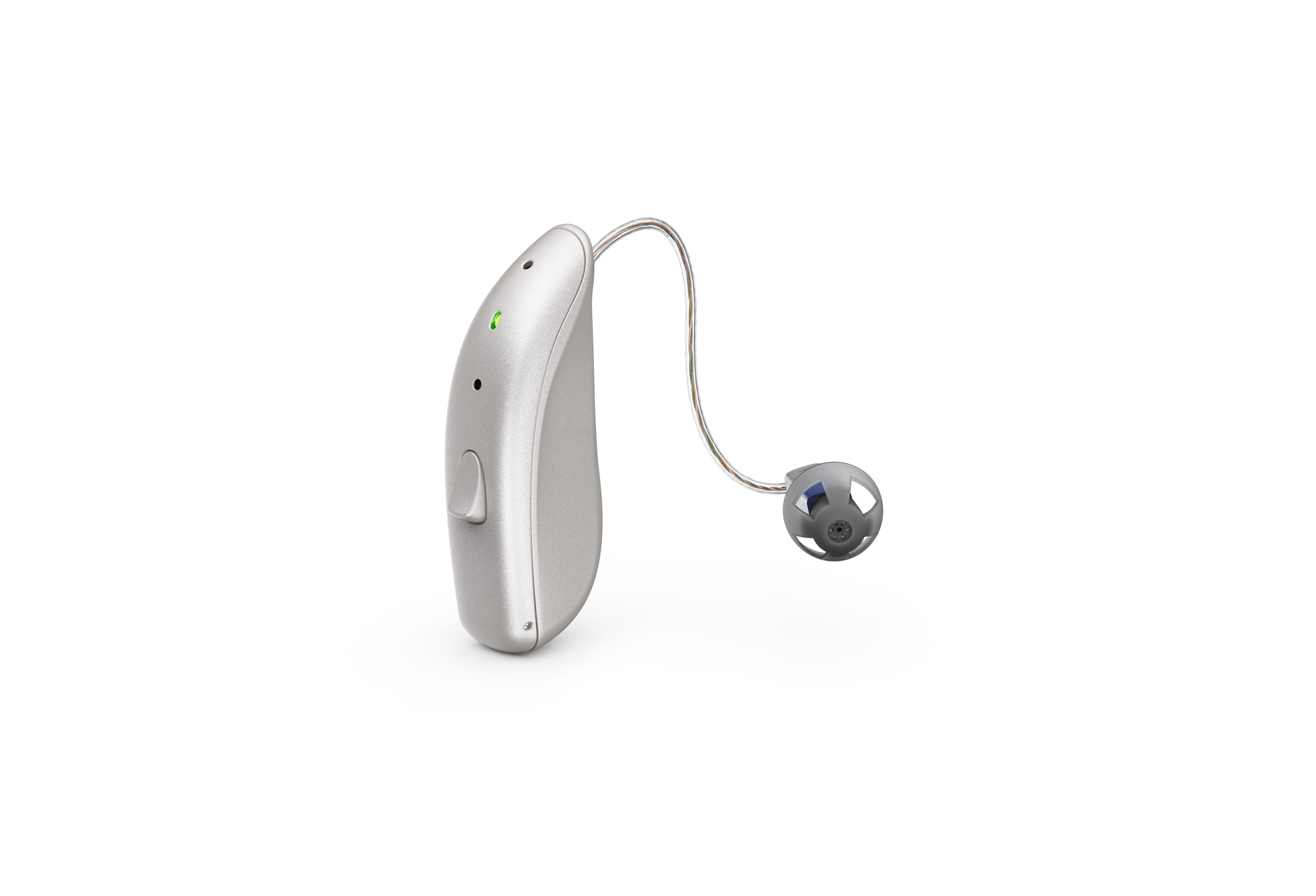
Each model includes customizable listening programs for different sound environments and directional microphones that help prioritize speech over background noise. These features are commonly sought by people comparing options and wondering which brand of hearing aid is best?
Across the lineup, you can expect:
- noise-canceling or noise reduction technology
- Bluetooth streaming for music and phone calls
- a discreet, nearly invisible profile behind the ear
- custom programming by a Jabra audiologist
- compatibility with most iOS and a wide range of Android devices
- app-based adjustments via smartphone
- five color choices
- a 3-year warranty with loss and damage protection
- a 100-day risk-free trial
Enhance Select 50 Hearing Aid
- Features: speech clarity and noise reduction, Bluetooth streaming, 1-year supply of batteries
- Style of fit: behind-the-ear
- Battery type: disposable
- Battery life: 3–10 days
*Price may vary.
This entry-level model is battery powered and offers fewer advanced features than higher-tier versions, but it is more affordable. It is particularly useful in quieter settings, such as one-on-one conversations or watching television at home.
Enhance Select 100 Hearing Aid
- Features: speech clarity and noise reduction, Bluetooth streaming, music mode for live music
- Style of fit: behind-the-ear
- Battery type: rechargeable
- Battery life: 30 hours
*Price may vary.
The rechargeable Enhance Select 100 includes a charging case and delivers clearer sound in noisy environments compared with the Select 50. It’s designed for individuals with active lifestyles who frequently encounter busy environments, such as restaurants or shopping centers.
Jabra Enhance Select 300
- Style of fit: mini RIE
- Battery type: Rechargeable (24 hours)
- Battery life: 30 hours
- Features: SoundScape technology for improved clarity and spatial awareness; smaller, more discreet design; Bluetooth streaming; music mode; hands-free calling for iPhone 11 and newer models
This advanced model replaces the earlier Select 200. It incorporates SoundScape technology to enhance clarity and spatial awareness, especially in crowded or noisy environments. Its compact design offers a more discreet appearance, and it supports hands-free calls on compatible iPhones.
Hearing aids vs. PSAPs
Personal sound amplification products (PSAPs) are OTC devices that typically cost less than hearing aids. However, PSAPs are not intended for people with hearing loss. Instead, they are designed for individuals without hearing loss who want sound amplification in certain situations. The FDA does not permit PSAPs to be marketed as hearing aids.
Jabra Enhance primarily offers hearing aids, but it also sells the Enhance Plus as a PSAP. If you’re reviewing comparisons such as Consumer Reports best hearing aids, it’s important to understand this distinction. A licensed audiologist can help determine which type of device is most appropriate based on your hearing profile.
OTC hearing aids
In August 2022, the FDA issued a final rule creating a new category of OTC hearing aids. These devices can be sold online or in stores without a prescription or medical exam, provided they:
- use air-conduction technology
- are intended for mild to moderate hearing impairment
- are designed for adults 18 years or older
All Jabra hearing aids fall within the OTC category. While a hearing test is not mandatory for purchase, experts still recommend a professional evaluation to ensure safe and effective treatment of hearing loss.
How much are Jabra Enhance hearing aids?
Jabra hearing aids are generally more affordable than many traditional prescription devices. Prices start at around $1,195 for the basic battery-powered model and $1,495 for the basic rechargeable version. Premium models can reach up to $1,995. Financing options are available.
The company attributes its lower pricing to its online-only business model, which reduces overhead costs associated with brick-and-mortar clinics.
Should you buy Jabra Enhance hearing aids?
Purchasing hearing aids online offers convenience and cost savings, but it may not be ideal for individuals with severe hearing loss. Those with more advanced impairment may require custom fittings and in-person adjustments.
A comprehensive hearing exam can identify the cause and severity of hearing loss and rule out medical issues such as infection or injury. Whether buying online or through an audiology clinic, professional guidance is strongly recommended.
Warranties and returns
Jabra Enhance provides a 100-day trial with a money-back guarantee, including shipping coverage. Devices come with a 3-year warranty and 3 years of loss and damage protection. Ongoing remote support from hearing professionals is included to ensure proper fit and performance.
Pros and cons of Jabra Enhance hearing aids
Pros
- Affordable pricing: Lower cost compared with many comparable devices.
- Virtual support: Free consultation and continued professional assistance.
- App-based controls: Users can fine-tune settings through a smartphone app.
Cons
- No in-person custom fittings: Devices are not individually molded.
- Limited to mild to moderate hearing loss: Not appropriate for severe cases.
Takeaway
Jabra hearing aids provide a cost-effective solution for adults with mild to moderate hearing loss. With OTC availability, Bluetooth connectivity, and remote audiology support, they offer a modern alternative to traditional clinic-based devices. Even so, an in-person hearing exam remains the best first step to ensure you choose the safest and most effective hearing care option.



















Leave a Reply
You must be logged in to post a comment.