

What causes menstruation?
Menstruation happens as a natural outcome of puberty. During this stage of development, your body becomes physically capable of reproduction.
When your menstrual cycle starts, estrogen levels rise. This hormonal increase prompts the lining of your uterus to thicken.
The uterine lining builds up so it can nourish and support a fertilized egg, allowing it to grow into a pregnancy.
If fertilization does not occur, your body sheds this lining and expels it from the uterus. The shedding process leads to bleeding — your menstrual period.
Whether you’ve been having periods for years or are still anticipating your first one, menstruation can feel confusing and sometimes overwhelming.
This in-depth guide will walk you through everything you should know — from choosing appropriate menstrual products and managing cramps to protecting clothing from stains. Just like following a clear Mor flo american air heater manual makes equipment easier to handle, understanding your body can make periods far less stressful. If you’ve ever searched for Mor flo american air heater troubleshooting, you know how valuable step-by-step guidance can be — the same principle applies to menstrual health education.
When will I get my first period?
Most individuals begin menstruating between ages 12 and 13.acog.org/Patients/FAQs/Your-First-Period-Especially-for-Teens However, starting slightly earlier or later is also completely normal.
As a general guideline, your first period typically begins about two years after breast development starts.
What signs should I look for?
Some people get their first period without any noticeable warning. Others may experience premenstrual syndrome (PMS) in the days before bleeding begins.
Common PMS symptoms include:
- acne
- abdominal bloating
- soreness in your breasts
- back pain
- constipation
- diarrhea
- feeling more tired than usual (fatigue)
- feeling extra emotional or irritable
- food cravings, especially for sweets
- clear or white vaginal discharge
It may help to keep a small “period kit” in your backpack or purse so you’re prepared when your period arrives.
Your kit might include:
- a clean pair of underwear
- pad or tampon
- wipe
- pain reliever, such as acetaminophen (Tylenol)
My period just started — what should I do?
If your period begins unexpectedly and you don’t have menstrual supplies, stay calm. You can create a temporary pad using toilet paper until you’re able to access a proper product.
Here’s what to do:
- Take a long strip (at least 10 squares) of toilet paper and fold it over itself several times.
- Place it where a pad normally sits — along the gusset (the fabric panel between your legs) of your underwear.
- Take another long strip of toilet paper and wrap it around both the folded tissue and your underwear several times to secure it.
- Tuck the loose end into the wrapped section. You now have a temporary pad.
If you’re at school, consider asking a teacher or the school nurse for a pad or tampon. They’re accustomed to these requests.
How long will it last?
Your first period might last only a few days.acog.org/Patients/FAQs/Your-First-Period-Especially-for-Teens
It can take several months for your cycle to become regular in timing and flow.
Once regulated, most periods last between two and seven days each month.
How much blood will I lose?
Although early periods are often light — appearing as small red-brown spots — your flow may become heavier once your hormones stabilize.
According to Planned Parenthood, the average person loses up to 6 tablespoons of blood during menstruation. What can I expect when I get my period? (n.d.). plannedparenthood.org/learn/teens/puberty/what-can-i-expect-when-i-get-my-period That may seem like a lot of blood, but it’s usually about 1/3 of a cup at most.
Heavier bleeding does not always indicate a problem. However, if you feel concerned about the amount of blood you’re losing, inform your guardian or speak with the school nurse.
Tell a trusted adult if you:
- need to change your pad, tampon, or menstrual cup every one to two hours
- feel lightheaded
- feel dizzy
- feel like your heart is racing
- have bleeding that lasts more than seven days
A healthcare provider can assess your symptoms and determine whether treatment is needed. In some cases, medication may help reduce heavy bleeding or ease discomfort.
What can I use to stop the bleeding?

You have several menstrual product options available to manage bleeding effectively.
It may take trying a few different products before discovering which works best for your body and lifestyle.
Over time, your preferences may change as you become more familiar with your cycle and comfort needs — much like how people refine solutions when dealing with Mor-Flo American air Heater systems and related Mor flo american air heater troubleshooting steps.
Period underwear
Period underwear looks like regular underwear but is designed with absorbent layers that capture menstrual fluid.
You can usually use one or two pairs throughout your entire period. Just make sure you wash them according to the manufacturer’s directions after each wear.
Different brands offer varying absorbency levels. Lighter flows may only require period underwear, while heavier flows may benefit from pairing them with another product.
Pads and panty liners
Sanitary pads are rectangular absorbent products that adhere to the inside of your underwear using a sticky backing.
Some pads include “wings” that fold over the edges of your underwear to help keep them secure.
Pads generally need to be replaced every four to eight hours, but there’s no strict rule. Change them whenever they feel wet or uncomfortable.
They come in multiple sizes for light, moderate, or heavy flow days. Smaller pads absorb less, while larger ones provide greater protection.
Panty liners are thinner, smaller versions of pads. They’re useful at the beginning or end of your period when spotting is more common.
Tampons
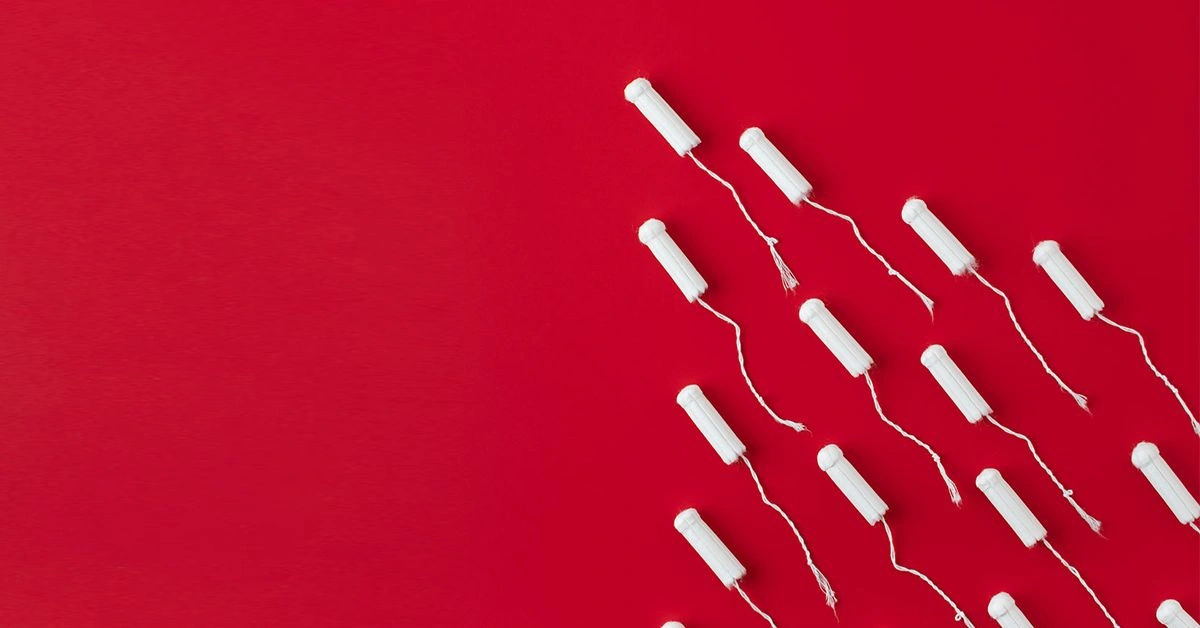
Tampons are absorbent, tube-shaped products inserted into the vagina to absorb menstrual fluid before it exits the body.
Some include plastic or cardboard applicators to assist with insertion. Each tampon has a string for removal.
Tampons must be changed every eight hours at most. Leaving a tampon in for more than eight hours can increase your risk for irritation or infection as a result of the bacteria present.
Avoid scented tampons, as fragrance may cause vaginal irritation.
Menstrual cups
Menstrual cups are flexible devices inserted into the vagina to collect menstrual blood.
They are often reusable and available in different sizes based on age and childbirth history.
Cups must be changed every 12 hours at most. Leaving a cup in for more than 12 hours can increase your risk for irritation or infection as a result of the bacteria present.
With proper cleaning and care, reusable cups can last between 6 months and 10 years.https://newsnetwork.mayoclinic.org/discussion/menstrual-cups-vs-tampons-things-you-might-not-know-about-the-cup/
What if I bleed through my clothes — are they ruined?
Not at all. Leaks happen to nearly everyone, especially when you’re still learning your flow patterns.
To remove stains:
- Rinse the stained fabric in cold water as soon as possible. Avoid warm or hot water, which can set the stain.
- Apply stain remover if available and let it sit according to instructions.
- If needed, rub bar soap or liquid detergent into the stain to create a lather.
- Rinse and repeat until the stain fades.
- Wash in cold water and allow the clothing to air-dry.
Can other people tell that I’m on my period?
No. You won’t look or smell different. Odor typically only develops if a pad or period underwear is worn longer than recommended.
Avoid scented menstrual products, as they may irritate your vulva. Gently washing the external vaginal area with warm water is sufficient.
Can I still swim and play sports?
Yes. You can swim, exercise, and participate in sports during your period. Physical activity may even reduce cramping and improve mood.
Use a tampon or menstrual cup while swimming to prevent leaks.
What can I do about cramps?
Cramps occur as the uterus contracts to shed its lining. Although normal, they can be uncomfortable.
You may find relief by:
- taking over-the-counter medicines, like ibuprofen (Advil) or naproxen sodium (Aleve), according to label specifications
- using a cloth-covered heating pad on your abdomen or lower back
- soaking in a warm bath
- practicing light stretching or gentle yoga to relax pelvic muscles
If cramps are severe enough to cause nausea or prevent daily activities, consult a healthcare provider. Conditions such as endometriosis can sometimes cause intense menstrual pain.
Are there other symptoms?
Besides cramps, you may notice:
- acne
- abdominal bloating
- soreness in your breasts
- back pain
- constipation
- diarrhea
- fatigue
- irritability
- food cravings
- clear or white vaginal discharge
Symptoms may vary each month depending on hormonal fluctuations.
How often will I get it?

The average menstrual cycle lasts about 28 days, though a normal cycle can range from 21 to 45 days.
It may take up to 6 years after your first period for your cycle to become consistently regular.acog.org/Patients/FAQs/Your-First-Period-Especially-for-Teens
How do I keep track of when it will come?
Tracking your period can help you recognize patterns and prepare in advance.
Mark the first and last day of each period on a calendar or use a smartphone app.
Typically, your next period will begin three to four weeks after the previous one ended.
Monitoring your cycle can also help you discuss irregularities or severe symptoms with a healthcare provider.
Will I have periods forever?
You will continue menstruating until menopause, which usually occurs between ages 45 and 55.
Stress, medical conditions, and hormonal changes can also cause periods to stop temporarily.
Can I get pregnant?
Yes. Pregnancy can occur anytime semen enters the vagina.
Even before your first period, ovulation may happen, making pregnancy possible.
Using condoms or another form of birth control is the most reliable way to prevent pregnancy.
When to see a doctor or other healthcare provider
Speak with a healthcare provider if:
- You haven’t started your period by age 15.
- Your period hasn’t become regular after two years.
- You bleed between periods.
- You have severe pain that disrupts daily life.
- Your bleeding is so heavy you must change products every one to two hours.
- Your period lasts longer than seven days.
Tips for parents or guardians
Supporting a young person through their first period involves open communication and reassurance.
- Normalize menstruation as a healthy part of development.
- Provide clear, factual information.
- Explain available menstrual products and demonstrate their use.
- Help prepare a discreet period kit for school or travel.
Sharing practical advice — such as which pain relievers work best or how to treat stains — can also build confidence and reduce anxiety surrounding menstruation.








Leave a Reply
You must be logged in to post a comment.