

Egg whites are naturally low in calories, carbohydrates, fat, and cholesterol, yet they’re rich in high-quality protein. While they offer impressive protein content, they contain fewer vitamins and minerals compared with whole eggs.
Eggs as a whole provide a wide range of beneficial nutrients that may help support cognition, improve blood lipid markers, and enhance body composition. Reviewing an Egg vitamin chart can help you clearly see how nutrients are distributed between the yolk and the white, making it easier to tailor your diet to your specific health goals.
That said, nutrients are not evenly shared across the different components of an egg. The yolk and egg white differ significantly in their vitamin, mineral, and fat content. As a result, the overall nutritional value changes depending on whether you consume the whole egg or only the egg white.
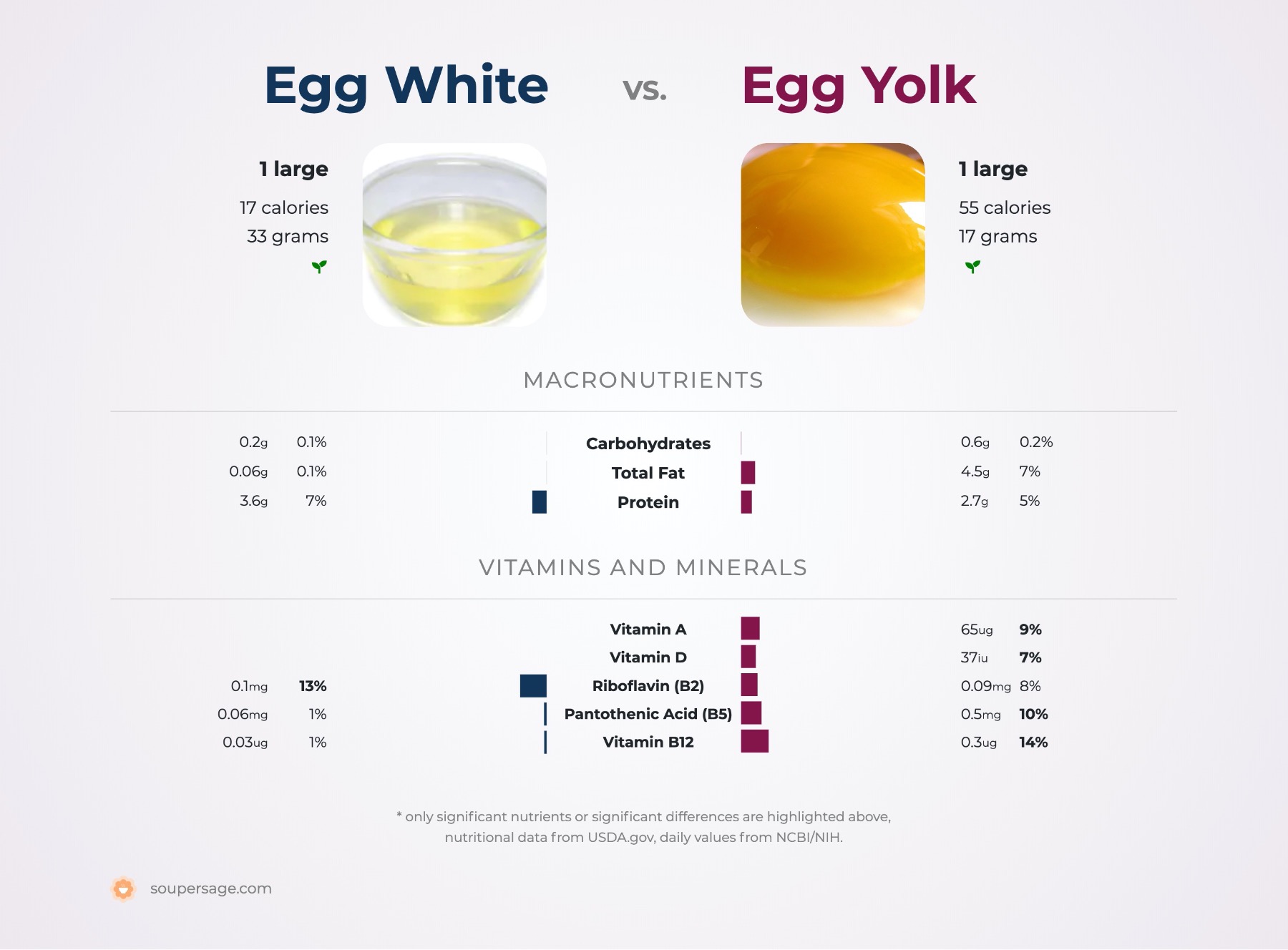
Continue reading to explore the detailed nutritional profile of egg whites and how they compare with whole eggs, including insights from an Egg vitamin chart to guide informed dietary choices.
Nutrition facts of egg whites and whole eggs
Egg whites are the translucent, viscous portion that surrounds the yellow yolk inside an egg.
In fertilized eggs, the white functions as a protective barrier, shielding the developing chick from harmful bacteria while also supplying essential nutrients that assist growth.
Most of an egg’s vitamins, minerals, and lipids are found in the yolk. By contrast, egg whites consist of approximately 87% water and about 10% protein.
If you separate the yolk and consume only the egg white, the egg’s overall nutrient composition shifts considerably. An Egg vitamin chart clearly illustrates these differences, especially for fat-soluble vitamins and essential micronutrients.
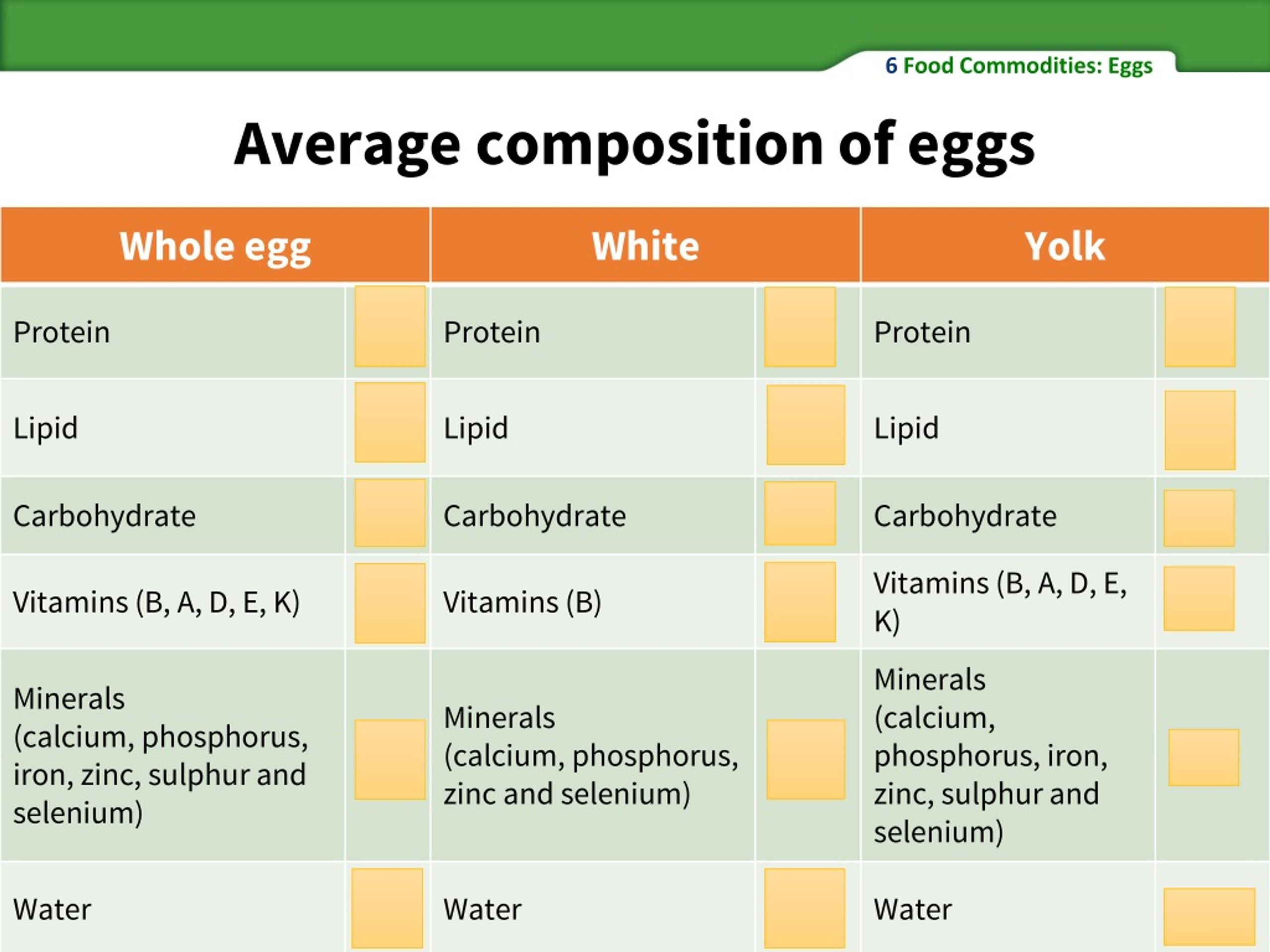
The table below highlights the nutritional distinctions between the egg white of one large egg (34 grams [g]) and a whole, large egg (50.3 g).
Daily Values (DV) are shown as percentages (%) and are calculated based on the DVs established by the Food and Drug Administration (FDA):
| Egg white | Whole egg | |
|---|---|---|
| Calories | 18 | 74 |
| Protein | 3.6 g | 6.2 g |
| Fat | 0 g | 5 g |
| Cholesterol | 0% | 69% |
| Vitamin A | 0% | 10% |
| Vitamin B12 | 0% | 21% |
| Vitamin B2 | 11% | 16% |
| Vitamin D | 0% | 8% |
| Choline | 0% | 31% |
| Selenium | 8% | 28% |
As shown in the Egg vitamin chart above, egg whites contain fewer calories and micronutrients than whole eggs, along with lower total protein and virtually no fat.
Low in calories but high in protein
Research indicates that egg proteins are distributed relatively evenly between the yolk and the white.
However, because egg whites are extremely low in calories, they deliver a higher protein-to-calorie ratio compared to whole eggs. This makes them especially appealing for individuals focusing on lean protein intake.
For example, if you consume 74 calories worth of egg whites—the same number of calories in one whole egg—you would get nearly 15 g of protein, compared to 6.2 g from the whole egg.
Protein is essential because it serves multiple roles in preserving the structure and function of muscles, organs, enzymes, and hormones. Adequate protein intake also supports immune health and tissue repair.

Research suggests that diets higher in protein may offer several advantages for weight management and body composition, including:
- supporting lean muscle growth
- lowering body fat percentage
- enhancing satiety
- reducing overall hunger levels
- supporting gut health
- helping prevent bone loss in older adults
Because of their high protein density and minimal calorie content, egg whites can help you meet daily protein goals without significantly increasing total caloric intake.
Additionally, egg whites provide a “complete” protein, meaning they contain all nine essential amino acids in the proportions required for optimal body function.
Low in fat and free of cholesterol
Eggs were once considered a controversial food choice due to their saturated fat and cholesterol content. Some healthcare professionals previously believed they might elevate the risk of cardiovascular disease.
It’s important to note that nearly all of the fat and cholesterol in eggs are concentrated in the yolk. Egg whites, by contrast, are almost entirely protein and contain no fat or cholesterol.
For many years, this led to the assumption that egg whites were healthier than whole eggs. However, more recent research shows that whole eggs can be part of a balanced diet, and that dietary cholesterol from eggs does not negatively impact blood cholesterol levels for most people.
That said, a subset of individuals known as “hyper-responders” may experience increases in blood cholesterol when consuming dietary cholesterol.
Hyper-responders often carry specific genes, such as the APoE4 gene, which predispose them to elevated cholesterol levels. For these individuals—or for those already managing high cholesterol—egg whites may be a more suitable option.
If you’re reviewing an Egg vitamin chart to reduce cholesterol intake while preserving protein, focusing on egg whites may help align with heart-healthy dietary strategies.
Potential risks
Egg whites are generally considered safe and nutritious. However, there are certain risks to keep in mind.
Allergies
Although egg whites are safe for the majority of people, egg allergies can occur.
Some research indicates that many egg allergens are located in the egg white.
Egg allergies are more common in children than adults, though approximately 1 in 2 children outgrow the allergy by age 3.
Salmonella food poisoning
Consuming raw eggs or egg whites carries a risk of food poisoning caused by the bacteria Salmonella, according to the FDA.
Salmonella can exist either inside the egg or on its shell. Modern agricultural and sanitation practices have significantly reduced this risk, but it has not been completely eliminated. Thoroughly cooking egg whites until firm greatly lowers the likelihood of infection.
Reduced biotin absorption
Raw egg whites may interfere with the absorption of the water-soluble vitamin biotin, which is found in various foods and plays a crucial role in energy metabolism.
Egg whites contain a protein called avidin, which can bind to biotin and stop its absorption.
However, developing a biotin deficiency would require consuming very large quantities of raw egg whites. Cooking neutralizes avidin’s effect, preventing this issue.
Egg whites vs. whole eggs: Which should you eat?
Egg whites offer high-quality protein with minimal calories, fat, and cholesterol.
This makes them particularly useful if you are following a calorie-controlled diet and want to maintain muscle mass, manage appetite, and sustain energy levels.
Still, compared with whole eggs, egg whites provide fewer vitamins and minerals, as clearly outlined in any comprehensive Egg vitamin chart.
Whole eggs are widely regarded as one of the most nutrient-dense foods available. They contain a broad spectrum of vitamins, minerals, and healthy fats that may offer anti-inflammatory, anticancer, anti-oxidative, and immunomodulatory effects.
For example, whole eggs provide Vitamin B12 and iron—nutrients essential for red blood cell formation and neurological function. If you’re curious about these specific nutrients, you can learn more by exploring Do eggs have iron and B12. Likewise, if you’re wondering about antioxidant vitamins, you may ask, Does egg contain vitamin C, to better understand how eggs fit into a balanced diet.
If you’d like to enjoy the advantages of both, consider combining whole eggs with additional egg whites. This approach increases protein intake while keeping overall calories moderate.
Frequently asked questions
Are two egg whites a day enough protein?
No. Two egg whites provide slightly more than 7 g of protein. According to the Dietary Guidelines for Americans, adult males should consume at least 56 g of protein daily, while adult females should aim for 46 g per day.
Can I eat 10 egg whites per day?
Yes, consuming 10 egg whites per day is possible. However, incorporating a variety of lean animal and plant-based protein sources can help ensure a broader intake of essential nutrients.
Are egg whites healthier than the yolk?
Egg whites have traditionally been viewed as healthier because they are low in calories, fat, and cholesterol. However, research indicates that egg yolks are nutrient-dense and contain most of the egg’s vitamins and minerals, along with beneficial compounds.
The bottom line
Egg whites are a protein-rich, low-calorie food that can support muscle maintenance and weight management goals.
However, whole eggs deliver a more comprehensive range of nutrients, as demonstrated in an Egg vitamin chart. Including both in your diet may help you maximize nutritional benefits while aligning with your personal health objectives.
Consider incorporating a balanced combination of egg whites and whole eggs to get the best of both worlds.




















Leave a Reply
You must be logged in to post a comment.