
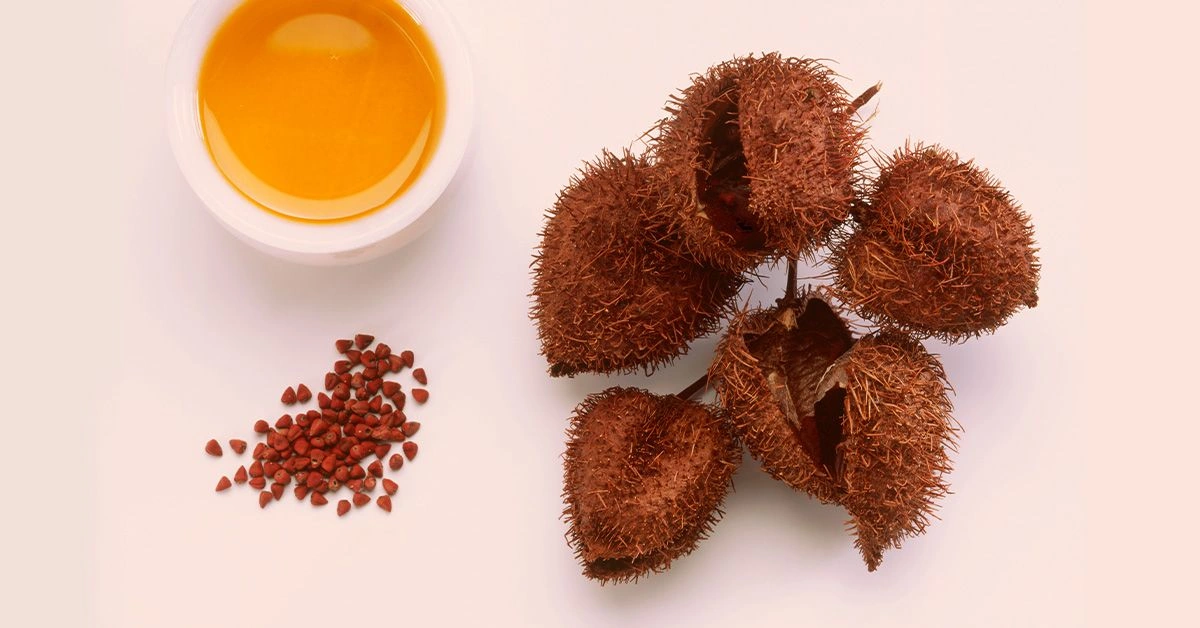
Annatto is a natural food additive associated with a variety of health-promoting effects, including lowered inflammation, potential eye and cardiovascular support, and possible anticancer actions.
It is a natural coloring agent derived from the seeds of the achiote tree (Bixa orellana).
Although not widely recognized by everyone, around 70% of natural food colorants are sourced from these seeds (1).
Beyond its culinary role, annatto has long been employed across parts of South and Central America for artistic decoration, cosmetics, and treating various ailments (1).
This article summarizes the uses, potential advantages, and adverse effects linked to annatto.

What is annatto?
Annatto is an orange-to-red natural dye and seasoning obtained from the seeds of the achiote tree (Bixa orellana), which thrives in tropical areas of South and Central America (1).
It goes by several other names, such as achiote, achiotillo, bija, urucum, and atsuete.
Most commonly, it’s used as a natural colorant because it produces vivid hues from yellow to deep orange-red, comparable to saffron and turmeric.
The shade is due to carotenoids, pigments present in the seed’s outer layer and in many fruits and vegetables like carrots and tomatoes.
Annatto is also used as a seasoning to boost flavors, offering a subtly sweet and peppery taste. Its scent is often described as nutty, peppery, and floral.
It is available in multiple forms: powder, paste, liquid extract, and essential oil.
Summary: Annatto is a natural coloring and seasoning derived from achiote seeds. Its bright color is produced by carotenoid compounds.
Potential health benefits of annatto
This natural dye has been associated with several prospective health advantages.
Antioxidant properties
Annatto contains many plant-derived compounds with antioxidant activity, including carotenoids, terpenoids, flavonoids, and tocotrienols (2, 3, 4, 5).
Antioxidants neutralize potentially damaging molecules called free radicals, which can harm cells when present in excess.
Studies link oxidative damage from excess free radicals to chronic diseases such as cancer, neurodegenerative disorders, cardiovascular disease, and diabetes (6).
Antimicrobial properties
Evidence indicates that annatto may possess antimicrobial effects.
In vitro experiments showed annatto extracts could inhibit growth of bacteria like Staphylococcus aureus and Escherichia coli (7, 8).
Another lab study demonstrated annatto’s fungicidal action against species such as Aspergillus niger, Neurospora sitophila, and Rhizopus stolonifer. Adding the dye to bread also hindered fungal growth, lengthening shelf life (9).
Similarly, pork patties treated with annatto powder showed lower microbial growth than untreated samples after 14 days of storage (10).
These findings suggest annatto could have a useful role in preserving foods.
May have anticancer properties
Preliminary research suggests annatto may combat cancer.
For instance, in vitro studies report annatto extracts can inhibit proliferation and trigger cell death in human cancer cell lines from the prostate, pancreas, liver, and skin, among others (11, 12, 13, 14).
The anticancer effects have been linked to constituents such as carotenoids bixin and norbixin, and tocotrienols, a form of vitamin E (2, 11, 13).
While results are encouraging, human trials are required to confirm these effects.
May support eye health
Annatto is rich in carotenoids, which may be beneficial for vision (15).
Specifically, it contains high levels of bixin and norbixin in the seed’s outer coating, contributing to its yellow–orange hue (16).
In an animal study, three months of norbixin supplementation reduced accumulation of N-retinylidene-N-retinylethanolamine (A2E), a compound associated with age-related macular degeneration (AMD) (17).
AMD is a leading cause of irreversible vision loss in older adults (17).
However, clinical research in humans is necessary before recommending annatto for eye health.
Other potential benefits
Annatto may provide additional advantages, such as:
- May support heart health. Annatto supplies vitamin E–related compounds called tocotrienols, which may help protect against age-related cardiac problems (18).
- May reduce inflammation. Several in vitro studies suggest annatto constituents can reduce multiple inflammatory markers (19, 20, 21).
Summary: Annatto has been associated with various possible health benefits, including eye and heart support, anti-inflammatory action, and antioxidant, anticancer, and antimicrobial properties.
Annatto uses
Annatto has a long history of diverse uses.
Traditionally it was applied for body decoration, as a sunblock, insect deterrent, and to treat conditions such as heartburn, diarrhea, ulcers, and skin ailments (22).
Today, its primary role is as a natural food dye and flavoring agent.
For example, annatto is used in many processed foods like cheeses, butter, margarine, custards, cakes, and baked goods (23).
In numerous cuisines, seeds are ground into a paste or powder and mixed with other spices. It is a key ingredient in cochinita pibil, a traditional Mexican slow-roasted pork dish.
Compared with synthetic dyes, annatto delivers antioxidants and other beneficial compounds.
Its seeds are also used to extract essential oils for aromatherapy, which may possess antimicrobial qualities.
Note: essential oils are intended for inhalation or topical use and should not be ingested, as swallowing them can be dangerous (22, 24).
Summary: Historically used in art, cuisine, and traditional medicine, annatto’s modern primary applications are as a food colorant and flavor enhancer.
Safety and side effects
Overall, annatto appears safe for the majority of people (25).
Although rare, allergic reactions can occur, particularly in individuals allergic to plants in the Bixaceae family (25).
Symptoms may include itching, swelling, low blood pressure, hives, and abdominal pain (26).
In some cases, annatto might exacerbate symptoms of irritable bowel syndrome (IBS) (27).
Pregnant or breastfeeding individuals should avoid consuming annatto in amounts beyond typical food levels, since safety data for these groups are limited.
If you notice any adverse reactions after consuming annatto or products containing it, discontinue use and consult your healthcare professional.
Summary: Generally safe for most people, but evidence is insufficient to confirm safety for certain groups and rare allergic reactions can occur.
The bottom line
Annatto is a natural food additive linked to potential benefits such as lowered inflammation, support for eye and heart health, and antioxidant, antimicrobial, and anticancer activities.
However, human studies are limited, and further research is required before annatto can be broadly recommended for therapeutic use.















Leave a Reply
You must be logged in to post a comment.