
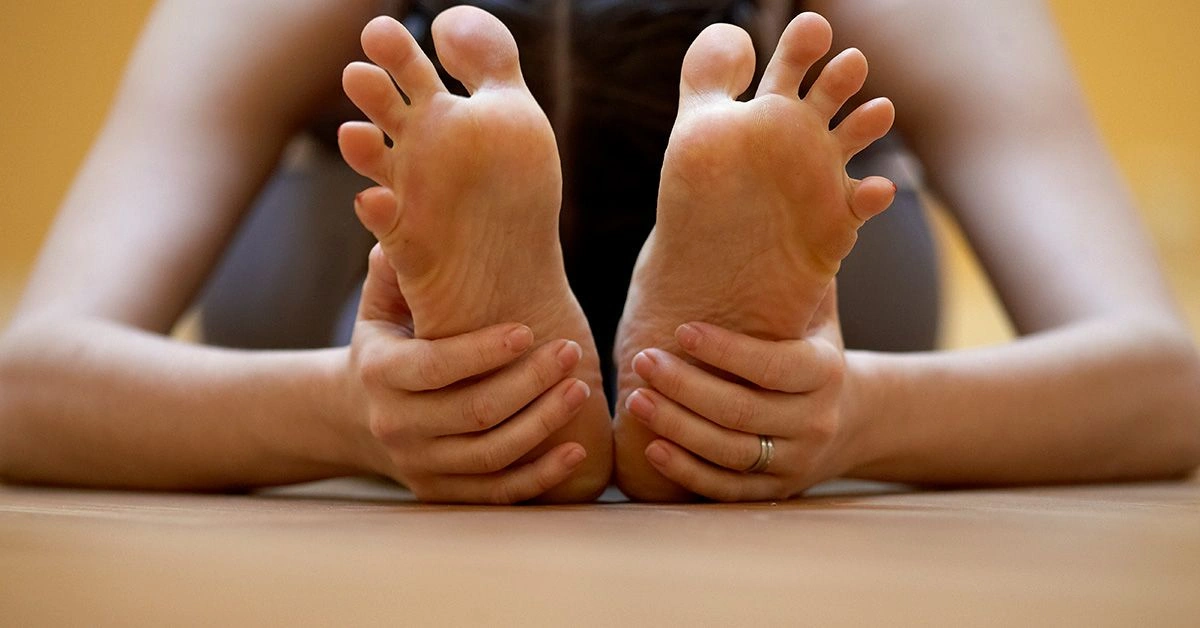
Stretching your toes helps enhance circulation, which may ease discomfort and reduce swelling. Keeping the toes loose and mobile can also lower your chances of strain or injury over time. If you’re wondering How to fix sideways big toe?, incorporating targeted toe stretches and strengthening exercises is often one of the first conservative steps to improve alignment and relieve pressure.

Many toe exercises focus on boosting flexibility and range of motion. Others are designed to build strength in the small intrinsic muscles of the feet. Certain stretches are especially helpful for specific conditions such as bunions and plantar fasciitis, which can contribute to a sideways big toe deformity.
As you perform the stretches outlined below, you should notice a gentle pull in your toes or along other areas of your foot. Avoid forcing the movement, jerking, or overextending the joints. For best results, practice these movements barefoot so your toes can move freely and naturally.
Aim to complete each stretch 10 times. If you’re just starting out, begin with 2 to 4 repetitions and gradually increase as your comfort and tolerance improve. Consistency is key when addressing concerns like a misaligned big toe.

Stretches to improve flexibility and mobility
1. Toe lift
This movement can be performed one foot at a time or with both feet simultaneously.
- Sit upright with your feet flat against the floor.
- Lift all your toes, trying to raise them to an even height.
- Hold for 5 seconds.
- Lower your toes back down.
- Repeat 10 times on each foot.
2. Toe lift and spread
You may do this exercise with one foot or both together. To increase difficulty, loop a rubber band around your toes for added resistance.
- Sit with your feet flat on the floor.
- Raise your toes so they are level with one another.
- While elevated, spread your toes apart as widely as possible.
- Hold for 5 seconds.
- Relax and lower your toes.
- Repeat 10 times per foot.
3. Toe flex
- Stand facing a stable vertical surface such as a wall, with your feet shoulder-width apart.
- Use your hands against the wall for balance, then bend the toes of one foot and press them into the wall. Hold for 5 seconds.
- Return your foot to a flat position on the floor.
- Repeat 10 times on each foot.
4. Big toe pull
This stretch enhances mobility and flexibility in the big toe joint, which is especially important if you’re researching How to fix sideways big toe?. If you don’t have a towel or belt, you can gently use your hands instead.
- Sit with both feet resting flat on the ground.
- Loop a towel or belt around your big toe.
- Pull the towel or belt toward you while gently resisting with your foot. Hold for 5 seconds.
- Repeat 10 times on each foot.
5. Lateral toe stretch
This movement stretches your toes side to side rather than up and down. Perform it on one foot at a time or both together.
- Sit with your feet flat on the floor.
- Lift your toes upward.
- Shift your toes to the left without moving your foot. Hold for 5 seconds.
- Relax.
- Lift your toes again.
- Shift them to the right without moving your foot. Hold for 5 seconds.
- Relax.
- Repeat the stretch with toes pointed downward.
- Repeat 10 times on each foot.
6. Toe raise, point, and curl
This sequence can be done with one or both feet.
- Sit with your feet flat on the floor.
- Lift the front of your foot while keeping your heel grounded.
- Raise your toes as high as possible. Hold for 5 seconds.
- Point your toes downward and hold for 5 seconds.
- Lift your heel and curl your toes under so your toenails or toe tips touch the floor.
- Repeat 10 times per foot.
7. Standing toe stretch
- Stand with your back resting against a wall.
- Cross your left leg over your right at the ankle.
- Point the toes of your left foot and press them into the floor so the toenails contact the ground. Hold for 5 seconds.
- Relax your toes.
- Repeat 10 times on each foot.
Stretches that increase strength
8. Toe splay
Perform this exercise on one foot or both at the same time. Add a rubber band around your toes for greater resistance if desired.
- Sit with your feet flat on the floor.
- Spread your toes apart as far as comfortably possible. Hold for 5 seconds.
- Relax.
- Repeat 10 times on each foot.
9. Toe lift and press
This drill improves coordination and control of toe movements while strengthening the muscles that stabilize the big toe joint.
- Sit with your feet flat on the ground.
- Lift the toes on one or both feet, aiming to raise them evenly.
- Press only your big toe down and lift it up 10 times.
- Press only your little toe up and down 10 times.
- Alternate pressing your big toe once with pressing your little toe once.
- Repeat this alternating pattern 10 times on each foot.
10. Doming
This exercise strengthens the intrinsic muscles of the foot and helps elevate the arch.
- Sit with your feet flat on the floor.
- Attempt to grip the floor using your toes, focusing on a true grasping action rather than simply curling them.
- Hold for 5 seconds.
- Relax.
- Repeat 10 times on each foot.
11. Toe curl
Also referred to as a “towel scrunch,” this exercise reinforces toe strength. Placing a small weight on the towel can make it more challenging.
- Sit with your feet flat on the floor.
- Lay a small towel on the floor with the short edge facing you.
- Use the toes of one foot to grasp and pull the towel toward you.
- Hold for 5 seconds.
- Relax your foot.
- Repeat 10 times per foot.
12. Marble pick up
- Sit with your feet flat on the floor.
- Place two bowls in front of you—one empty and one containing 10 to 20 marbles.
- Transfer each marble into the empty bowl using the toes of one foot.
- Repeat with the other foot.
13. Walking in the sand
Walking barefoot on sand can strengthen your toes, feet, and calves. Begin with 5 to 10 minutes and increase gradually as tolerated.
Walk barefoot on a sandy surface, such as a beach or sandbox.
Stretches for bunions
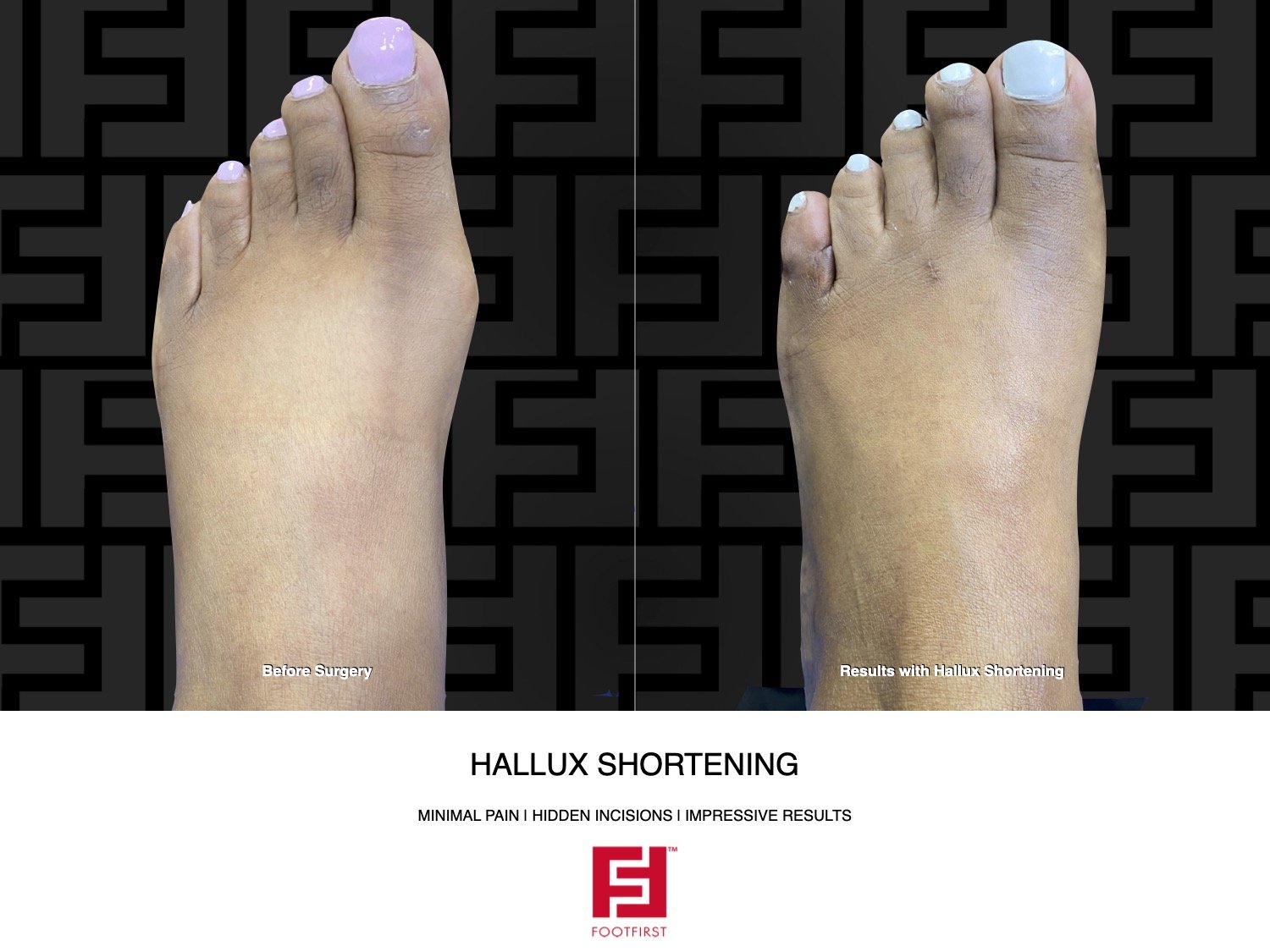
A bunion appears as a bump on the outer side of the big toe joint and develops due to bone misalignment. It can be painful and may cause the big toe to angle inward. If you’re exploring How to fix sideways big toe?, understanding the underlying cause is important. You can also learn more about Why is my big toe bent sideways for additional insight.
14. Big toe stretch
This exercise is particularly beneficial if your toes have been compressed by tight or narrow footwear.
- Sit with your feet flat on the floor.
- Lift your right leg and rest your ankle on your left thigh.
- Using your hands, gently move your big toe up, down, and side to side, holding each position for 5 seconds.
- Repeat 10 times.
- Switch legs and repeat on the other big toe.
15. Finger toe stretch
This stretch helps relieve pressure on misaligned or painful toes.
- Sit with your feet flat on the floor.
- Lift your right leg and place your ankle on your left thigh.
- Interlace the fingers of your right hand between your toes.
- Gently spread your toes apart with your fingers for as long as comfortable.
- Return your foot to the floor.
- Repeat on the opposite side.
Stretches for plantar fasciitis
Plantar fasciitis is inflammation of the ligament that runs along the underside of your foot from the sole to the heel. It typically results from overuse. Although it doesn’t originate in the toes, toe stretches may help reduce strain on the plantar fascia and ease symptoms.

16. Toe extension
You should feel this stretch along the bottom of your foot. For added benefit, gently massage your arch with your thumbs during the stretch.
- Sit with your feet flat on the floor.
- Lift the leg with the painful foot and rest that ankle across the opposite leg.
- Pull your toes upward toward your shin.
- Hold for 5 seconds.
- Relax.
- Repeat 10 times.
17. Bottle roll
As you roll the bottle, focus on tender areas along the sole of your foot.
- Sit with your feet flat on the floor.
- Place a frozen water bottle on the floor in front of you.
- Set the sore foot on top of the bottle.
- Roll it back and forth with your foot.
- Continue for 1 to 2 minutes.
18. Ball roll
While using the ball, concentrate on areas of discomfort on the bottom of your foot.
- Sit with your feet flat on the floor.
- Place a golf or tennis ball in front of you.
- Position the sore foot on the ball.
- Roll it around using gentle pressure.
- Continue for 1 to 2 minutes.
Stretches for hammer toe
A hammer toe bends downward at the middle toe joint, most commonly affecting the second toe. It is often linked to tight or narrow shoes.
19. Toe pull
This stretch targets the bent joint and may help guide the bones toward a more neutral position. Perform gently and avoid forcing the movement.
- Sit with your feet flat on the floor.
- Lift your right leg and rest your ankle on your left thigh.
- Carefully pull the bent toe downward to stretch the joint. Hold for 5 seconds.
- Repeat 10 times on each affected toe.
The previously described toe curl and marble pick up exercises can also benefit hammer toe.
Staying on your feet
The bones within your toes are known as phalanges. Each toe contains two or three phalanges. Moving from the toenail toward the foot, they are referred to as distal, middle, and proximal phalanges. The second through fourth toes contain three, while the big toe has only distal and proximal phalanges.
Joints connect two bones. In your toes, these joints also include where the phalanges meet the metatarsals—the longer bones of your foot.
Within each joint, cartilage covers the ends of the bones, allowing smooth movement. Your body produces synovium, a lubricating fluid that helps the bones glide more easily during motion.
Your toes do not contain muscles. Instead, their movement depends on tendons and ligaments that connect to muscles in your feet and lower legs. Structural differences, such as those seen in What does Morton’s toe look like?, can also influence toe alignment and biomechanics.
What are the benefits of toe stretches?
Although small, your toes play a major role in balance and movement. They support your body weight when you stand, walk, or run.
Spending long hours on your feet, participating in athletic activities, or wearing tight shoes may cause your toes to:
- shift out of proper alignment
- cramp
- become sore
- lose flexibility
- face a higher risk of injury
Common foot conditions associated with heavy use and restrictive footwear include:
- bunions
- hammer toe
- plantar fasciitis
Whether or not you have these conditions, regular toe stretching may offer relief and support healthier alignment. Stretching can help your toes become:
- better aligned
- more relaxed
- less painful
- more flexible
- less fatigued
While stretching alone won’t eliminate bunions, hammer toe, or plantar fasciitis, it can reduce symptoms and improve comfort. If you’re asking How to fix sideways big toe?, combining consistent stretching, strengthening exercises, supportive footwear, and professional medical guidance when needed provides a well-rounded approach to foot health.





















Leave a Reply
You must be logged in to post a comment.