
What is ankle mobility?
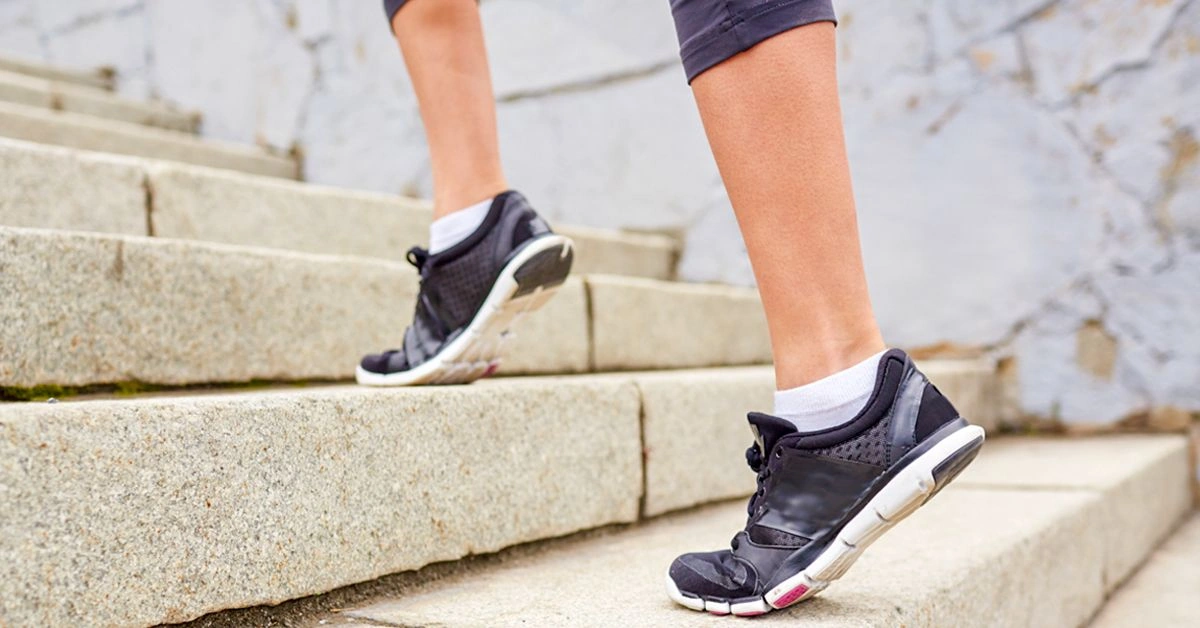
Ankle mobility describes how freely the ankle joint and the surrounding muscles and tendons can move. When your ankle joint is supple and responsive, you’re able to achieve a wider range of motion during daily tasks and physical activity.
If your ankles feel unstable, stiff, or you want to enhance athletic performance, specific ankle exercises and stretching routines can significantly improve both mobility and muscular strength. For women who enjoy wearing Comfortable platform high heels for mature women, maintaining good ankle mobility is especially important to support balance, reduce strain, and promote joint health over time.
Making ankle stretching and strengthening part of your everyday regimen can contribute to injury prevention. Strong, mobile ankles also support proper walking mechanics and help protect your knee and hip muscles from unnecessary weakness or compensation patterns.
Below are 12 effective ankle exercises you can incorporate into your routine three to five days per week.
Ankle circles
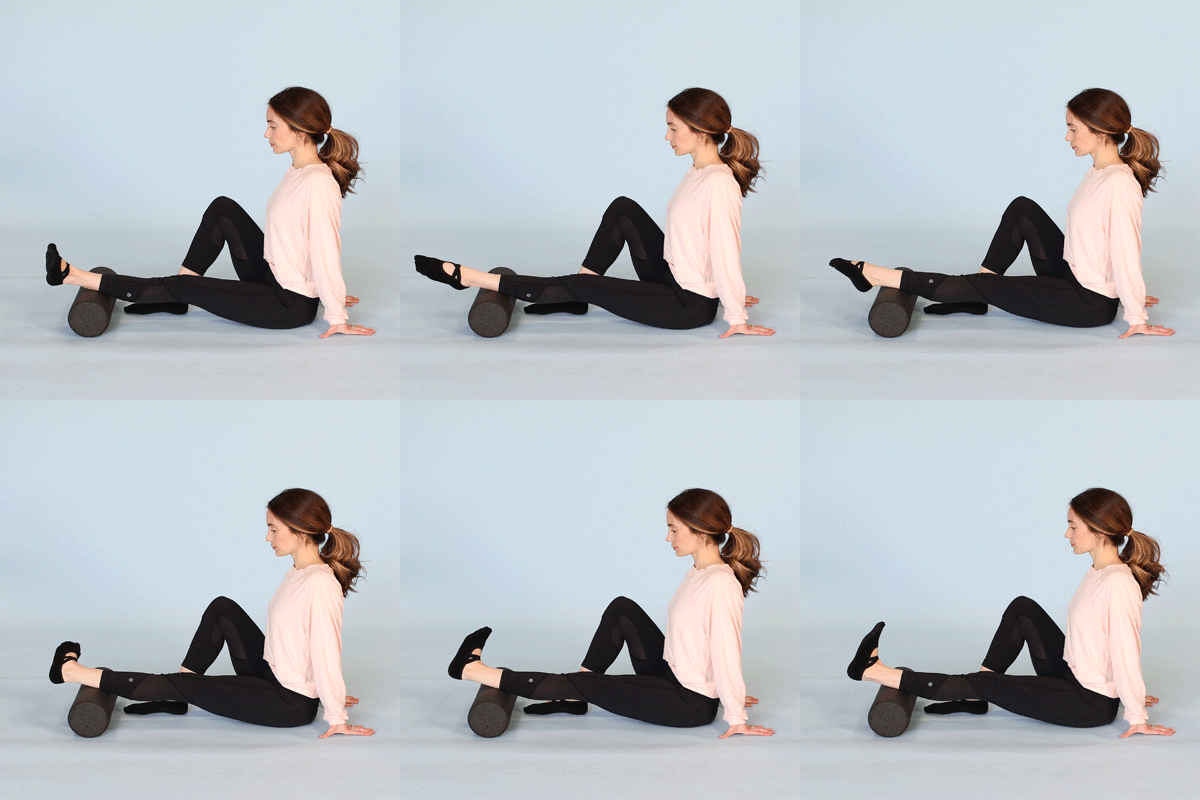
Begin with a gentle mobility exercise. Ankle circles enhance range of motion and can be performed either seated or lying down.
- Place a rolled towel or foam roller underneath your ankle for support.
- Slowly rotate your ankle in circles — 10 rotations clockwise and 10 counterclockwise.
- Isolate the movement to your foot and ankle only; avoid moving your entire leg.
- To increase the challenge, trace the letters of the alphabet in the air using your big toe.
You can explore additional ankle stretches to further support flexibility and joint function.
Single leg balance
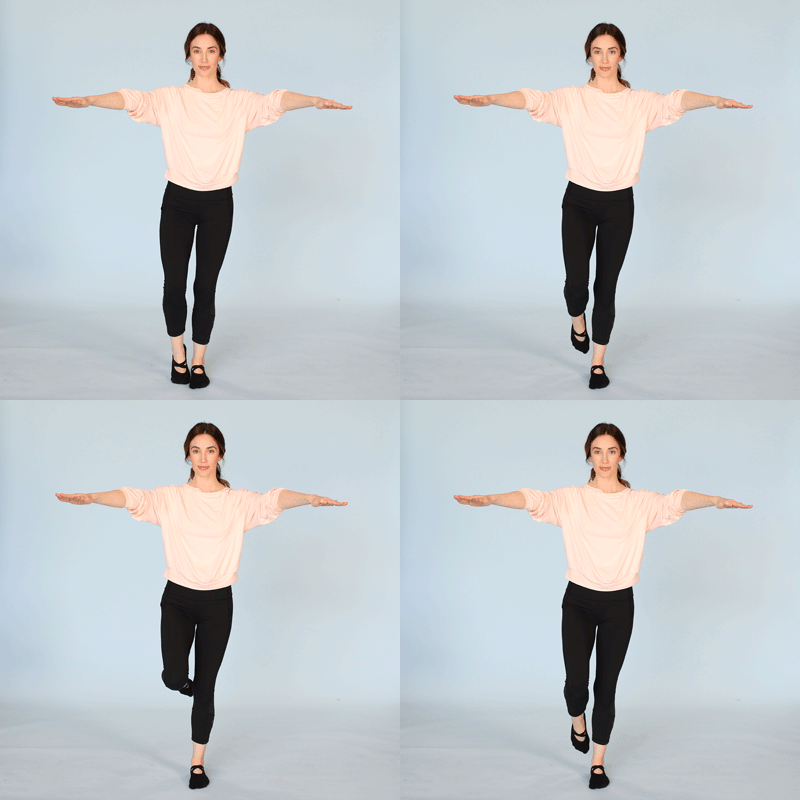
- Stand upright on a flat surface with your feet hip- or shoulder-width apart. Keep a chair or wall close by for assistance if needed.
- Extend your arms outward and lift one foot off the floor, balancing on the opposite leg.
- Practice daily and gradually increase the duration you can maintain stability on each side.
- Once you can balance for 60 seconds, try progressing by closing your eyes, placing your arms by your sides, or standing on an unstable surface such as a pillow, folded towel, or balance disc.
- Perform 1 or 2 repetitions per leg.
This exercise can easily be integrated into daily life — for instance, stand on one foot while brushing your teeth or waiting in line. Improved balance is particularly beneficial for those who frequently wear Platform high heels for mature women, as it enhances ankle stability and proprioception.
Standing heel lifts
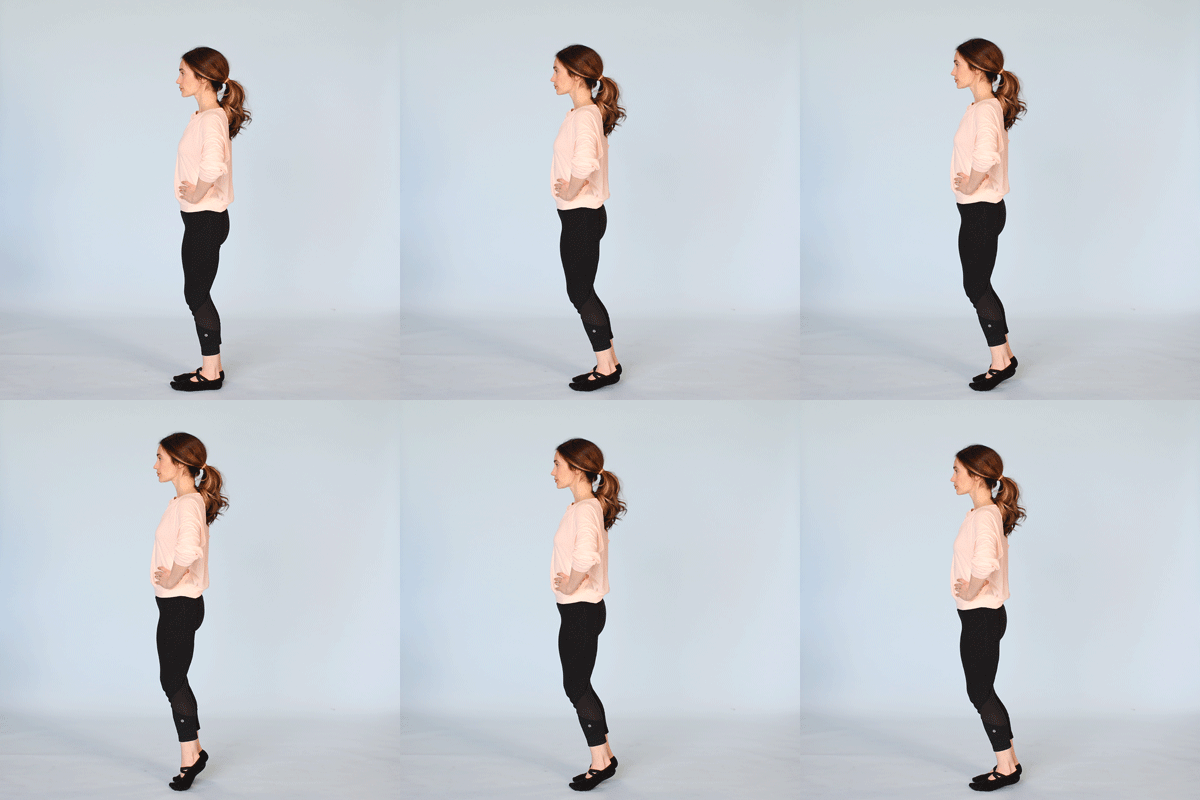
- Stand with your feet about shoulder-width apart. Keep a wall or chair nearby for balance if necessary.
- Lift your heels off the ground so you’re standing on the balls of your feet.
- Gradually lower your heels back down with control. Controlled movement is key for strengthening the calf muscles and ankle stabilizers.
- Complete 2 or 3 sets of 10 repetitions.
- To increase resistance, hold free weights while performing the lifts.
You can also practice heel lifts while doing routine tasks, such as washing dishes, to build strength consistently.
Toe raises and heel drops on a step
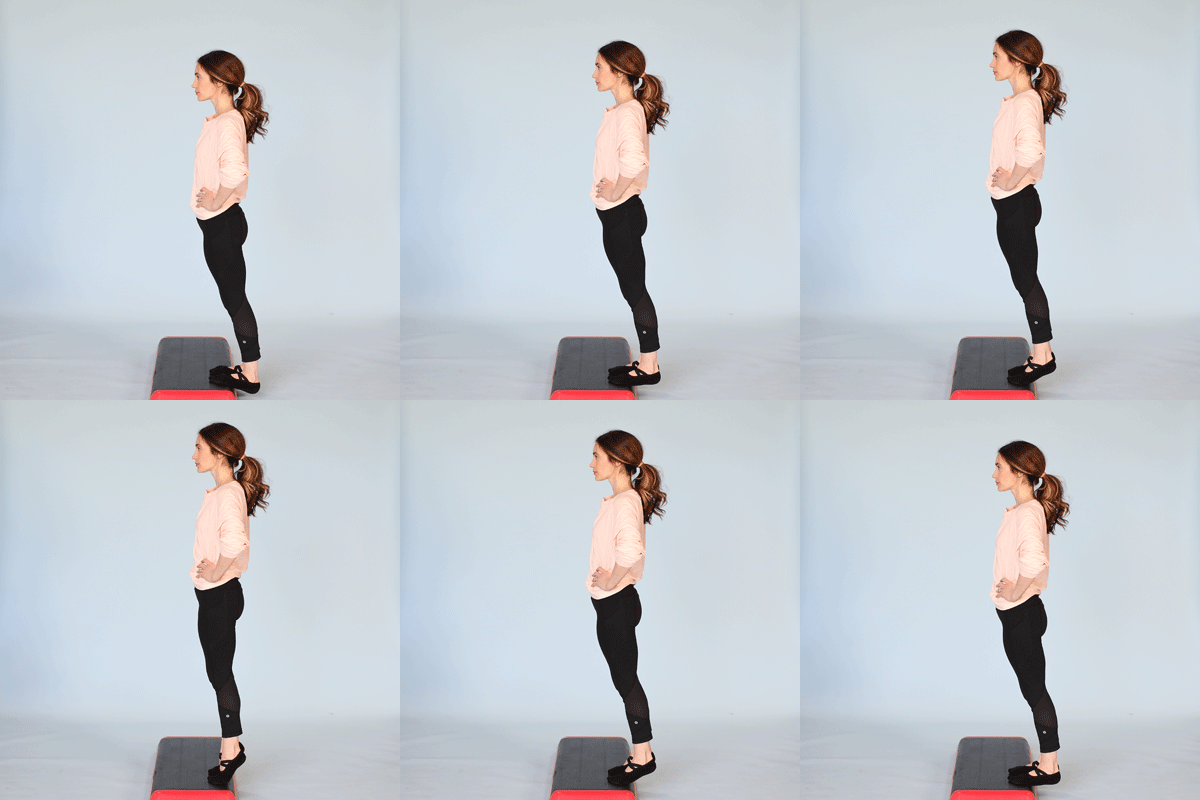
This exercise is more advanced than heel lifts on flat ground because it increases ankle flexion and challenges control through a greater range of motion.
- Stand on the lowest step with your weight supported by the balls of your feet and your heels extending off the edge. Use a bannister if needed for support.
- Rise onto your toes, then slowly lower your heels below the level of the step.
- Perform 2 or 3 sets of 10 repetitions every other day.
- You may hold weights to add resistance during the toe raises.
Ankle flexion (plantar)
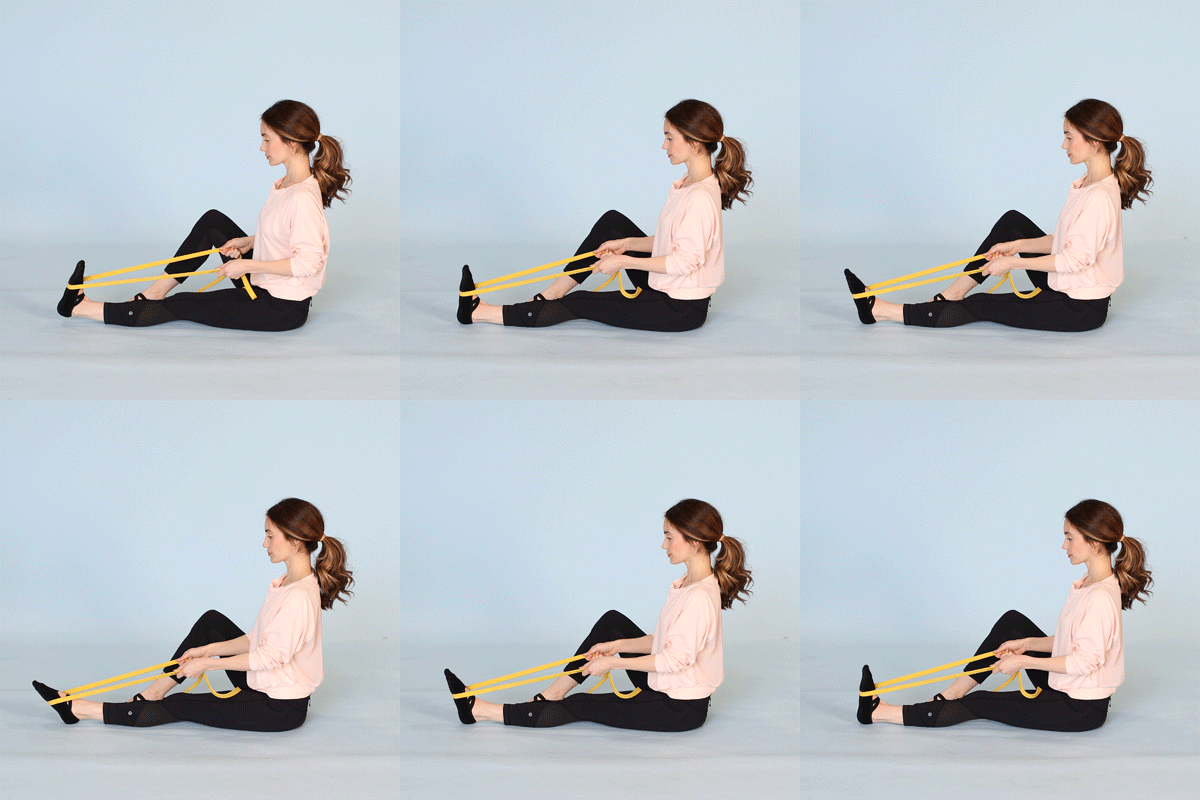
This movement uses a resistance band to strengthen the ankle as you point your toes downward toward your heel, known as plantar flexion.
- Sit on the floor with one knee bent and heel resting on the ground, while the other leg remains comfortably positioned.
- Wrap the band around the front of your foot and hold both ends securely.
- Slowly press your toes forward, then return to the starting position, controlling the band’s tension.
- Complete 3 sets of 10 repetitions on each foot, three days per week.
Ankle flexion (dorsiflexion)
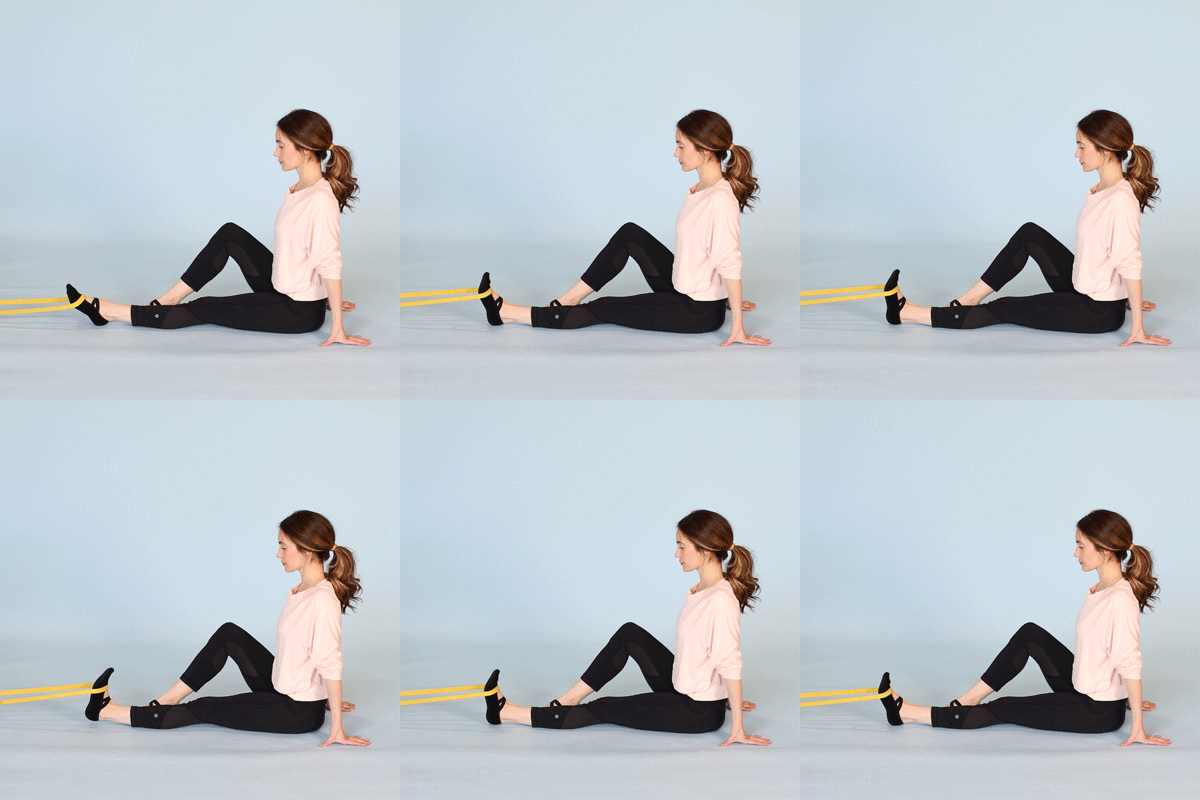
This variation strengthens dorsiflexion by pulling your toes upward toward your body using a stretch band.
- Sit on the floor with your legs extended straight ahead.
- Secure the band around a sturdy object such as a chair or table leg, then loop it around one foot.
- Gradually draw your toes toward you, then return to the starting position.
- Perform 3 sets of 10 repetitions on each foot, three times weekly.
Toe-heel walks
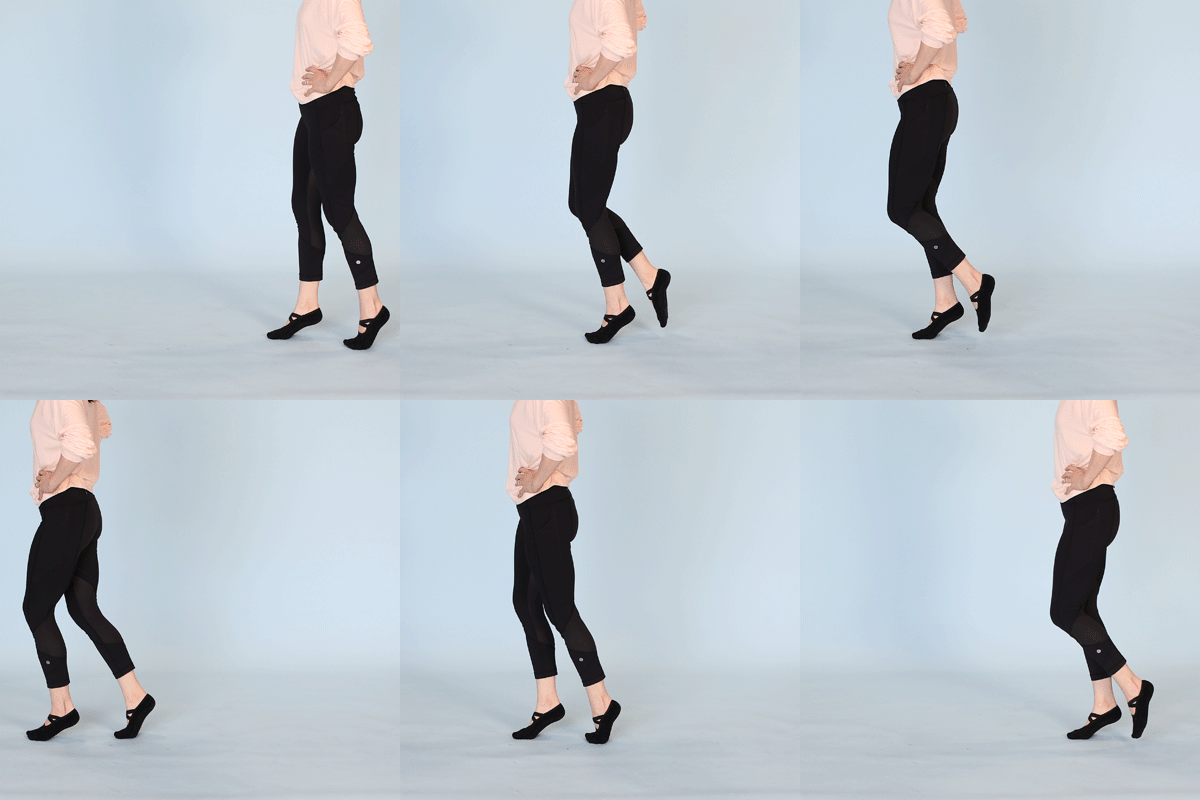
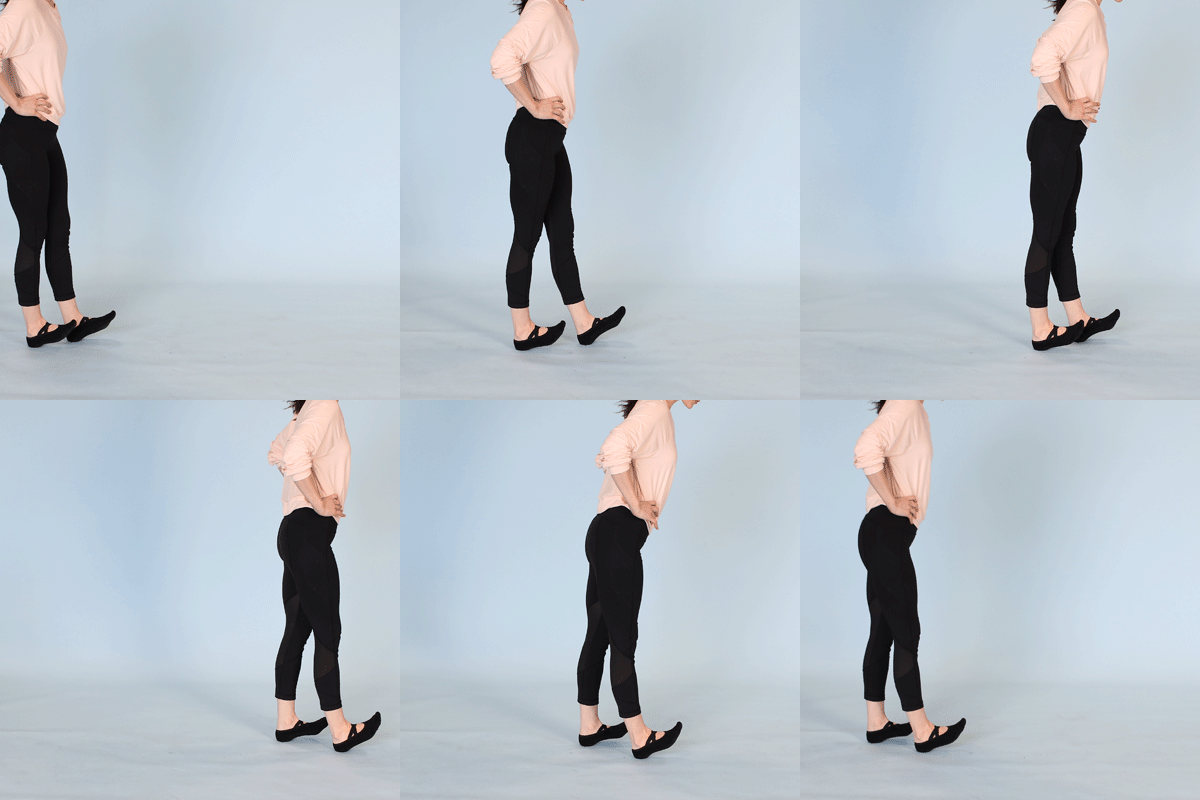
This drill can be performed barefoot or with shoes. It targets both ankle and foot muscles, improving strength and coordination.
- Walk approximately 30 feet on your toes.
- Turn around and return while walking on your heels.
- Repeat 3 to 5 times.
You can incorporate toe-walking into your daily routine, such as moving around your home, to build endurance gradually.
Lunges (static)
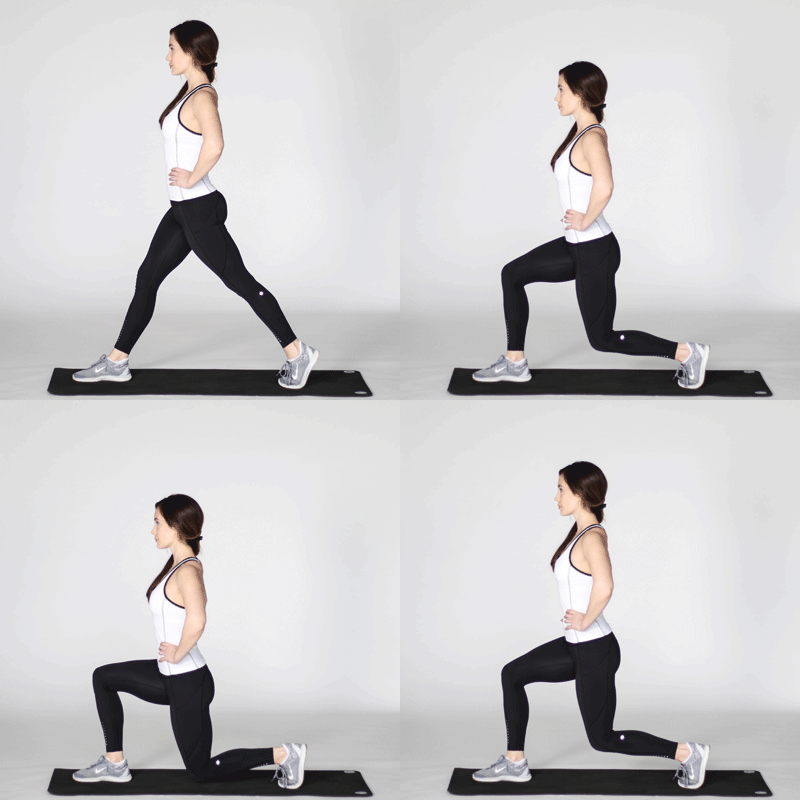
Lunges reinforce ankle stability while also enhancing balance and lower-body strength. There are multiple variations, but begin with a static lunge performed in place.
- Position one foot forward and the other behind you, both pointing straight ahead.
- Maintain an upright posture with your back straight.
- Lower your back knee toward the floor until it nearly touches.
- Press through your front heel to rise back up.
- Repeat 10 times and complete 2 sets.
You can alternate the leading leg and take several steps between lunges to add variety.
Walking lunge
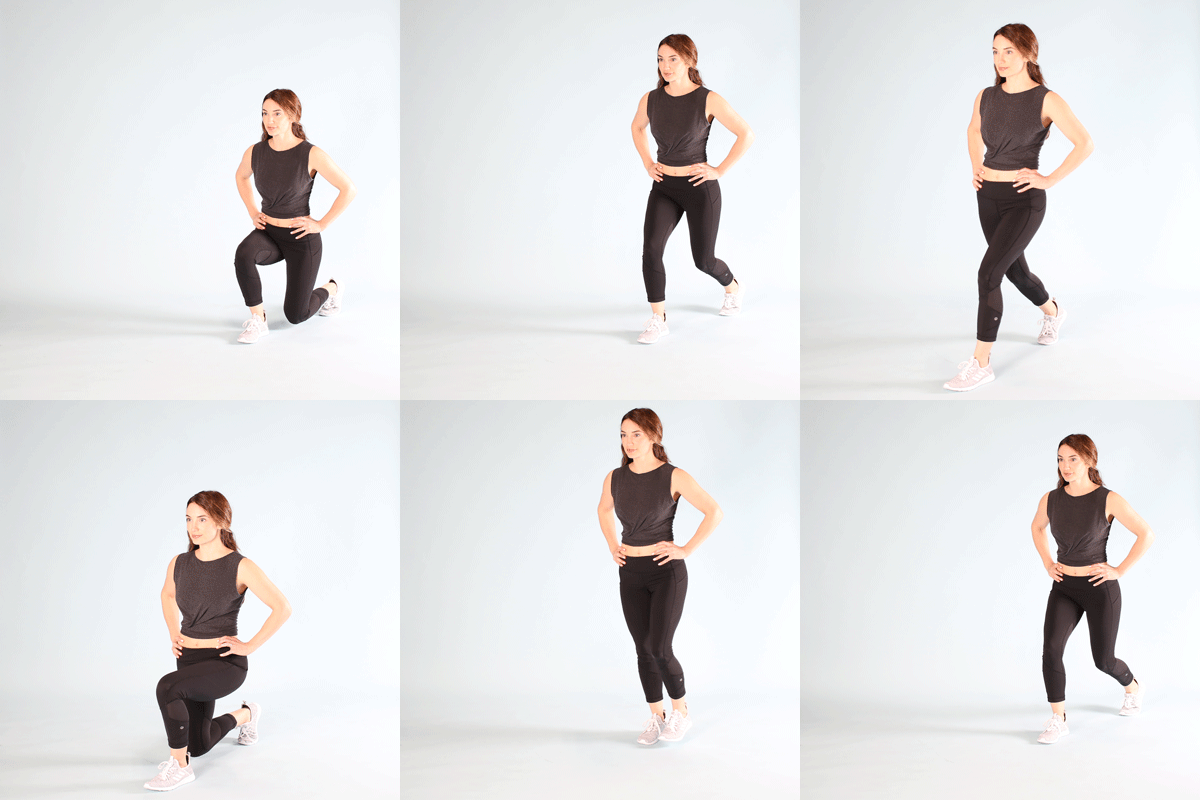
The walking lunge presents a greater challenge and engages your core along with your lower body. When first attempting this movement, consider guidance from a trainer to ensure proper form.
- Step forward with one leg, bending the knee to about a 90-degree angle.
- Simultaneously lower your back knee toward the ground so your thigh becomes nearly parallel to the floor.
- Pause briefly.
- Step forward with your back leg and repeat the motion.
- Progress toward 10 lunges per leg.
Plyometrics
Plyometrics are dynamic exercises that incorporate jumping movements. Their purpose is to train muscles to produce maximal force in the shortest possible time.
Because these exercises demand a baseline level of strength and coordination, start gradually. Proper form is essential, so you may benefit from supervision by an exercise professional.
Always perform a warm-up before attempting plyometric drills.
Ankle jumps
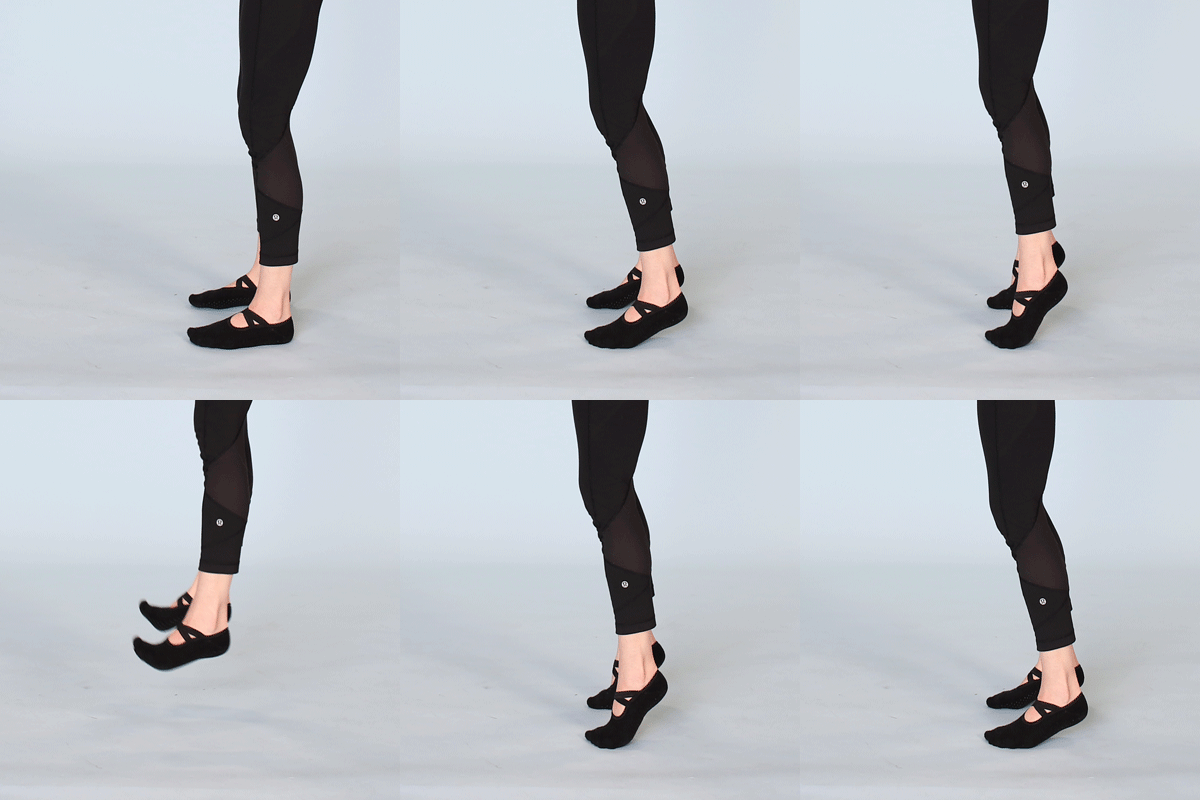
- Stand upright with your hands resting on your hips.
- Jump straight upward without bending your knees.
- Flex your ankles and lift your toes during the jump (dorsiflex).
- Extend your ankles just before landing.
- Explosively press the balls of your feet into the floor and jump again, minimizing ground contact time.
- Begin with a few repetitions per set, completing 2 or 3 sets, and gradually increase to 25 repetitions per set.
Double leg hops
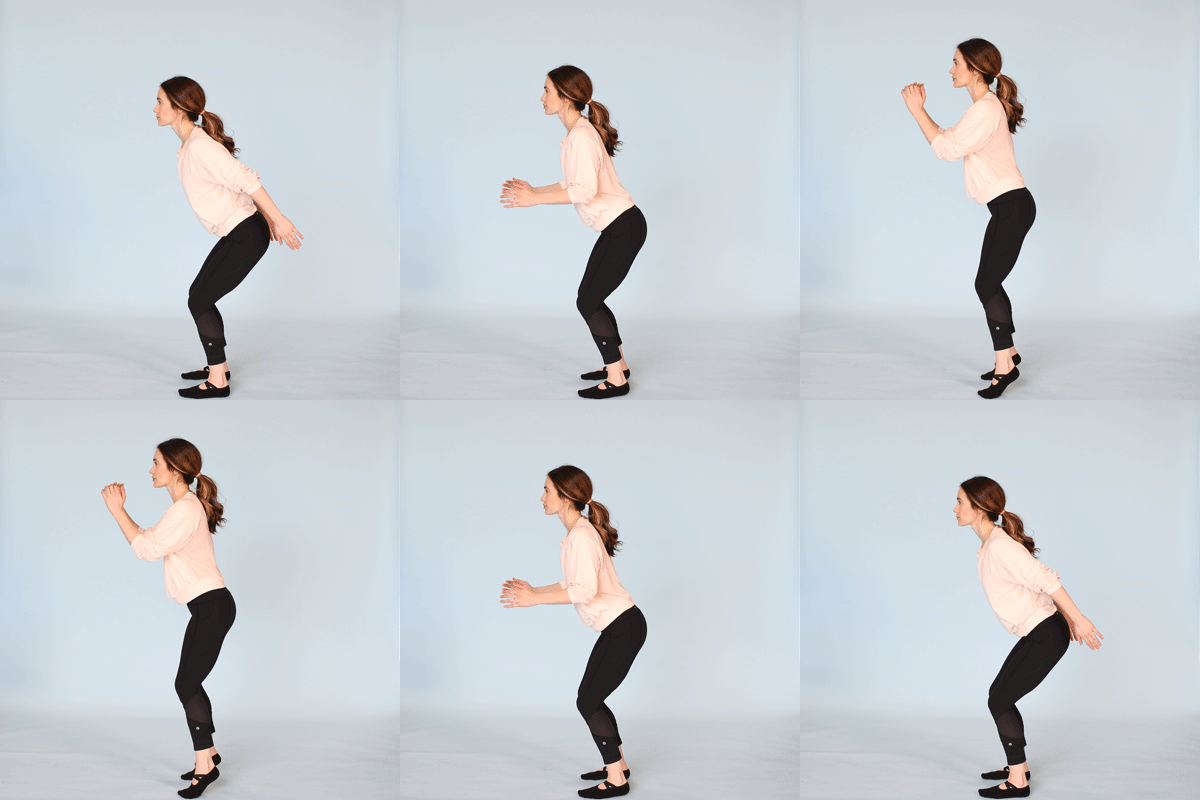
- Stand tall with your arms by your sides.
- Jump straight up, lifting your arms as you rise.
- Repeat 10 times.
Single leg hops

- Stand upright with your arms at your sides.
- Jump straight up on one leg, raising your arms as you lift.
- Repeat 10 times per leg.
You may also perform double leg and single leg hops moving side to side or forward and backward to increase coordination demands.
Ankle strengthening benefits
Increased movement awareness
One major advantage of ankle strengthening is improved proprioception, the body’s awareness of its position in space during movement.
If you begin to stumble or your ankle starts to twist, enhanced proprioception allows your body to detect the shift and respond quickly to prevent injury.
Balance-focused exercises, particularly single leg balance with eyes closed, are especially effective for training proprioception.
A 2015 meta-analysis concluded that proprioceptive training is effective at preventing ankle sprains.
Leg strengthening
Exercises that target ankle strength also engage larger muscle groups in the legs and promote a healthy walking gait.
A 2014 study indicates that runners should adopt a “ground up” strategy in training, beginning with ankle strengthening to support overall biomechanics.
High-heel relief
Wearing high heels for extended periods can place added stress on the ankle joints and calf muscles. Regular strengthening and stretching exercises may help counteract this strain. This is particularly relevant for women who prefer Comfortable platform high heels for mature women or supportive styles such as Low heel platform high heels for mature women, as maintaining ankle flexibility and muscle balance can reduce discomfort and improve stability.
The takeaway
Ankle-focused exercises and stretches are a valuable component of any balanced fitness plan. Strong, flexible ankles create a stable foundation for your body and enhance performance in sports, running, and dance.
Even if you’re not an athlete, preserving ankle strength becomes increasingly important with age. These exercises can improve balance and stability, both of which are critical for fall prevention and long-term joint health.
Before beginning a new exercise program, consult your doctor — especially if you are recovering from an illness or injury — to ensure the routine is safe and appropriate for your individual needs.























Leave a Reply
You must be logged in to post a comment.