
Overview
Both bruises and blood clots involve blood-related processes that can cause visible skin discoloration, but they are different conditions. Read on to understand how bruises and clots differ and what each one means for your health.
What are bruises?
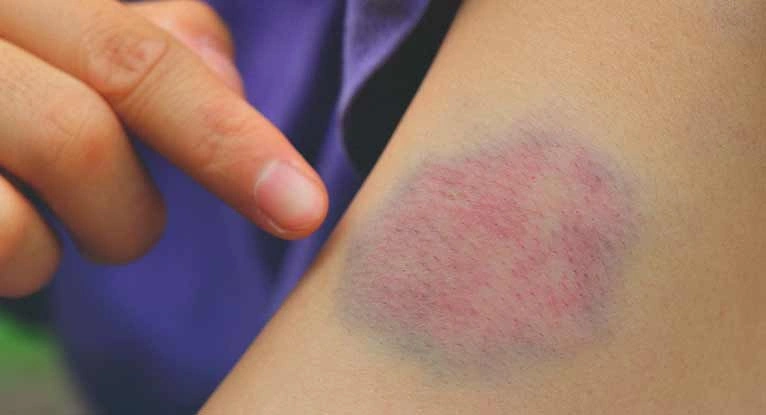
Bruises, also called contusions, are areas of skin discoloration that occur when tiny blood vessels — capillaries — rupture, allowing blood to pool beneath the skin. They commonly result from trauma such as a bump, a fall, a cut, or a broken bone.
Bruises can appear on virtually any part of the body. They are usually mildly painful, though some bruises may cause little or no pain, while others can be quite painful.
A bruise often looks blackish or bluish at first because of reduced oxygen in the pooled blood. As healing progresses, the color typically shifts through red, green, or yellow shades before fading completely.
Bruises located just under the skin are termed “subcutaneous.” They can also form within muscles, and when they develop adjacent to a bone they are called “periosteal.” Subcutaneous bruises are the most common.

What are blood clots?
Blood clots are semi-solid masses formed from blood. Like bruises, they can develop when a blood vessel is injured by trauma, a cut, or because of elevated blood lipids. In response to injury, platelets and plasma proteins trigger coagulation to stop bleeding, producing a clot.
Clots normally dissolve on their own, but sometimes they persist. When clots fail to break down and cause ongoing problems, this hypercoagulable state requires medical evaluation and treatment.
Symptoms
Bruises can arise in many locations, but their symptoms are fairly consistent regardless of where they occur.
Most bruises change color over time: initially reddish, then becoming dark purple or blue within hours. As healing continues, they frequently turn green, yellow, or brown. Bruises are typically tender or painful at first, with pain fading as the discoloration resolves.
Symptoms of blood clots depend on the clot’s location. Possible signs include:
- Pulmonary embolus (a clot in the lung): chest pain, shortness of breath, and sometimes rapid breathing.
- Deep vein thrombosis (DVT) in a leg vein: tenderness, pain, possible redness, and swelling in the affected leg.
- A clot in a leg artery: the limb may feel cold and look pale.
- Arterial clot in the brain (stroke): vision problems, trouble speaking, and weakness or numbness on one side of the body.
- Heart attack (clot in a coronary artery): nausea, difficulty breathing, sweating, and chest pain.
- Mesenteric ischemia (clot in an intestinal artery): stomach pain, nausea, and blood in the stool.

Risk factors
Risk factors for bruises
Almost everyone will bruise at some point, but certain factors make bruising more likely. These include:
- using anticoagulants like warfarin (Coumadin)
- taking medications such as aspirin or ibuprofen (Advil, Motrin IB) that can mildly thin the blood
- having an underlying bleeding disorder
- bumping into objects — sometimes without remembering the incident
- thinner skin and more fragile vessels due to aging
- vitamin C deficiency (scurvy)
- being a victim of physical abuse
Risk factors for blood clots
Multiple elements raise the likelihood of clot formation.
Lifestyle factors
Lifestyle-related risks include:
- excess body weight or obesity
- tobacco smoking
- pregnancy
- prolonged sitting
- extended bed rest
- use of hormone-modifying therapies such as oral contraceptives or hormone replacement
- recent injury or surgery
Genetic factors
Inherited tendencies also play a role. You’re at greater risk if you have:
- a personal history of clots before age 40
- close relatives with a history of pathological clots
- a history of multiple miscarriages
Clots commonly develop when proteins and other clotting components are not functioning correctly.
Diseases that increase your risk
Certain medical conditions can further elevate clot risk, including:
- heart failure
- type 1 and type 2 diabetes
- vasculitis
- atrial fibrillation
- atherosclerosis
- metabolic syndrome
Diagnosis
See a physician if you have unexplained or severe bruising. Your provider will take a detailed medical history, perform a physical exam, and check vital signs to identify possible causes. If bruising is frequent without an obvious explanation, blood tests may be done to search for bleeding disorders. Significant swelling or suspected fractures may prompt X-rays. Patterns of bruising in different stages of healing can also raise concerns for abuse.
To detect blood clots, doctors typically order imaging and lab studies. Possible tests include:
- ultrasound
- venography
- X-rays
- blood tests
Because clots can form in many locations, the choice of tests will depend on where the clinician suspects a thrombus is present.
Treatment
There’s usually no special medical therapy for routine bruises. Home care such as applying ice soon after injury and then switching to warm compresses later is commonly recommended. Over-the-counter pain relievers, including aspirin, can help with discomfort.
If your history suggests an underlying cause for frequent or severe bruising, your doctor will investigate further to identify or rule out contributing conditions.
Treatment for blood clots often involves medications. A typical approach uses anticoagulants in stages: an initial fast-acting agent such as heparin given by injection to quickly control the clot, followed by an oral anticoagulant like warfarin (Coumadin) for longer-term therapy, often for three to six months.
Outlook
Both bruises and blood clots range from mild to serious, but their consequences differ. Blood clots have a greater potential to cause severe health complications. Seek urgent medical attention if you suspect a clot.
Prevention
To lower your risk of blood clots:
- Maintain a healthy weight.
- Stop smoking or cut back significantly.
- Stay physically active.
- Avoid sitting or lying down for long stretches.
- Adhere to medications as prescribed by your healthcare provider.
You can also take steps to prevent bruising, such as:
- Keep furniture away from walkways and doorways.
- Ensure floors and rooms are free of clutter.
- Use protective equipment when playing contact sports like football or rugby.
- Get adequate vitamin C.
Minor note: if you injure your buttocks and notice persistent discoloration or pain, you might find relevant information about a butt bruise useful.



















Leave a Reply
You must be logged in to post a comment.