
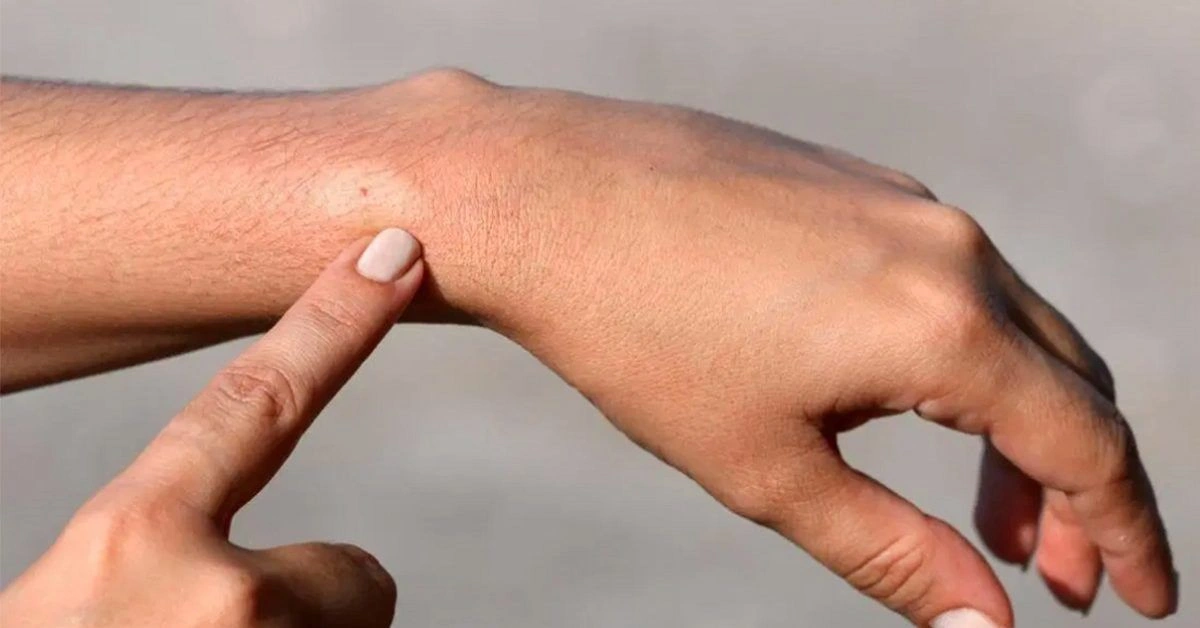
The first contact with a bug bite or sting can be painful. In many cases, it’s followed by an allergic reaction to venom that the insect or arachnid injects into your skin through its mouthparts or stinger. The way a bite looks and feels can vary widely, which is why using a reliable Bug bite identifier is helpful when trying to determine what caused your symptoms.
Whether you’re swimming in a lake, hiking along a mountain path, or relaxing in your own backyard, the wildlife around you has natural defense mechanisms to protect itself and its territory.
Insects such as bees, ants, spiders, and scorpions may bite or sting if disturbed or approached too closely. Most won’t attack unless provoked, but understanding what signs to watch for is essential for quick identification and appropriate care.
In most instances, bites and stings lead to mild irritation and short-term discomfort. However, certain encounters can become life threatening, especially if you have severe allergies to venom.
A severe allergic reaction can occur after any bug bite or sting, depending on individual sensitivity. Venom allergies may trigger a dangerous systemic response, including swelling, generalized itching, and difficulty breathing.
Prevention remains the most effective strategy. Learning how to recognize common insect and arachnid bites — and how to avoid exposure — is the safest way to reduce risk. Visual tools such as a Types of bug bites Chart can also help distinguish between different patterns of skin reactions.
Signs of an emergency
Anaphylaxis is a life threatening emergency. If someone develops symptoms of a severe allergic reaction, call 911 or your local emergency services immediately. Anaphylaxis may cause difficulty breathing, a choking sensation, wheezing, abdominal pain, dizziness, or fainting. Without prompt treatment, it can be fatal.
Pictures of bites and stings
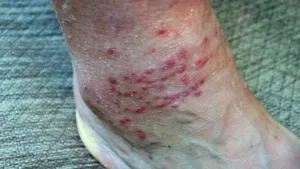
The appearance of a bite depends on the type of creature responsible. Reviewing the images below can assist with your Bug bite identifier process and help you narrow down the likely cause.
Warning: Graphic images ahead.
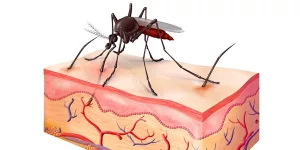
Mosquito bites
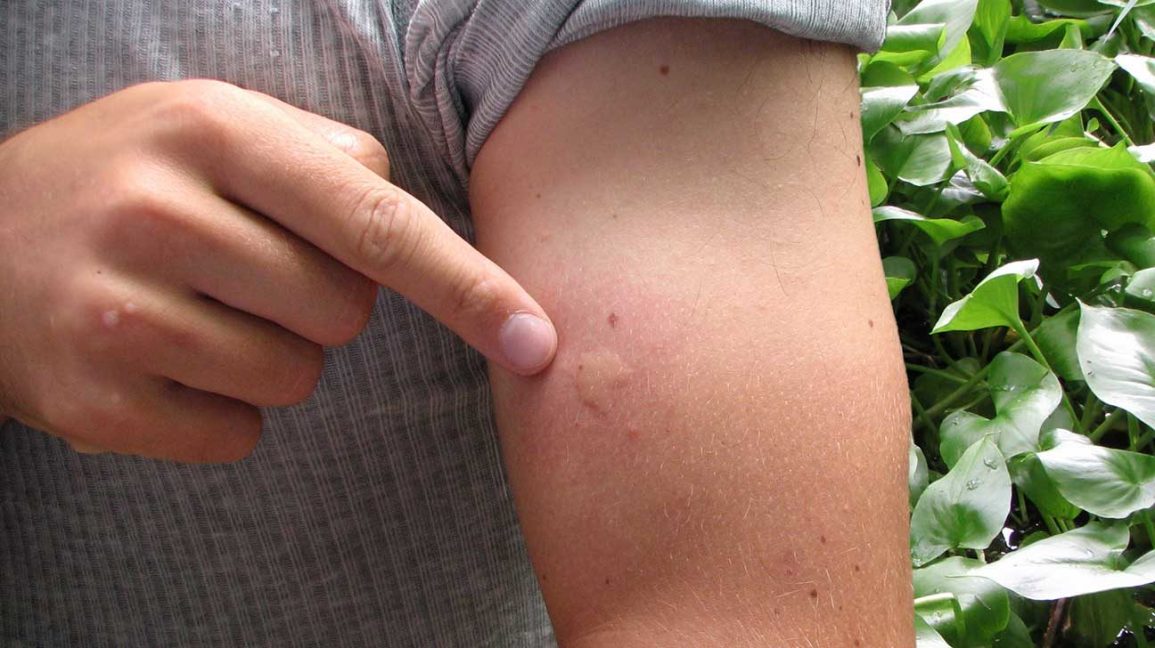
- A mosquito bite typically appears as a small, round, raised bump shortly after the bite occurs.
- The bump may become discolored, firm, swollen, and itchy.
- Multiple bites often develop in the same general area.
Fire ant stings
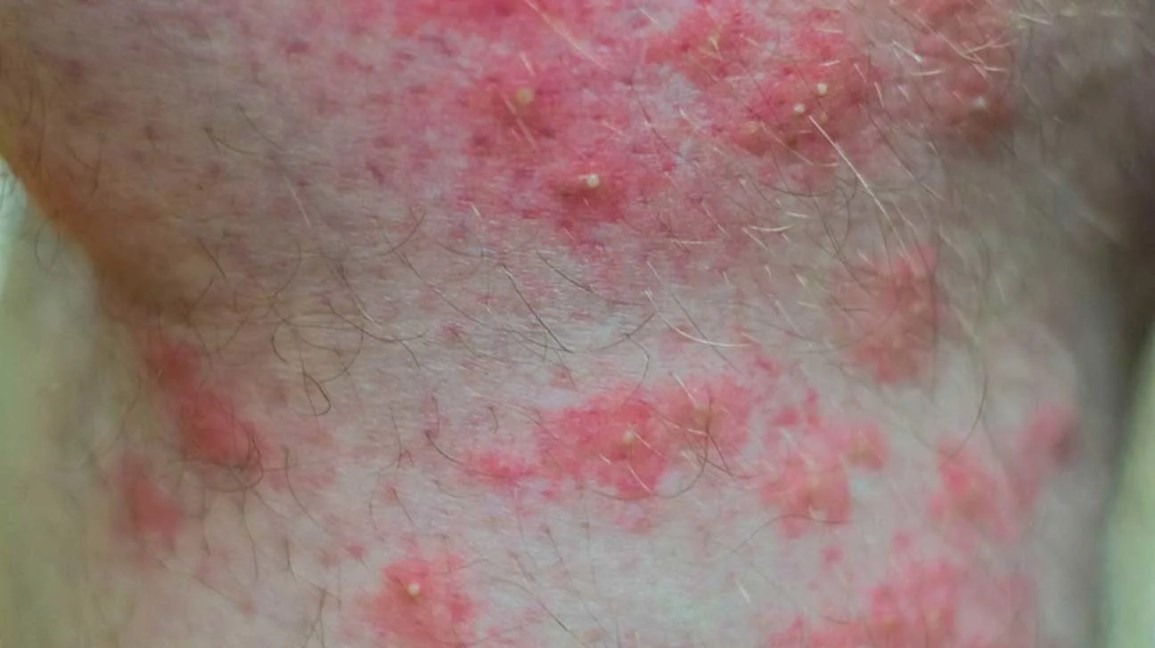
- Fire ants are small, aggressive, red or black venomous ants that both bite and deliver painful stings.
- Stings show up as swollen red spots that form a blister on top.
- They often produce burning and itching sensations.
Flea bites

- Flea bites commonly appear in clusters on the lower legs and feet.
- The itchy red bumps are often surrounded by a discolored halo.
- Symptoms usually begin right after the bite.
Bedbug bites

- The itchy rash results from an allergic reaction to the bedbug bite.
- Small rashes feature red, swollen areas with darker red centers.
- Bites may form in a line or cluster, often on exposed skin such as the hands, neck, or feet.
- Very itchy blisters or hives can develop at the bite site.
Read full article on bedbug bites.
Fly bites

- Painful, itchy rashes develop due to inflammation at the site of the fly bite.
- Although typically harmless, they can sometimes cause severe allergic reactions or transmit insect-borne diseases.
- When traveling to endemic countries, protect yourself by wearing long sleeves and pants and applying insect repellent.
Lice bites

- Head lice, pubic lice (“crabs”), and body lice are separate species of parasitic lice that infest humans.
- They feed on blood and trigger an itchy immune response where they bite.
- Adult lice are gray or tan six-legged insects about the size of a sesame seed.
- Nits (eggs) and nymphs (immature lice) appear as tiny specks resembling dandruff.
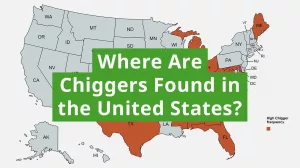
Chigger bites

- Painful, intensely itchy rashes can result from an immune response to tiny mite larvae.
- Bites may look like welts, blisters, pimples, or hives.
- They often appear in clusters and are extremely itchy.
- Chigger bites commonly develop in skin folds or near tight clothing.
- Because chiggers jump from grass, bites are often found on the legs near the tops of socks.
Read full article on chigger bites.
Tick bites

- Bites may cause localized pain or swelling.
- They may also lead to rash, burning sensations, blisters, or difficulty breathing.
- The tick frequently remains attached to the skin for an extended period.
- Bites rarely occur in clusters.
Scabies

- Symptoms from scabies mites may take 4 to 6 weeks to appear.
- The intensely itchy rash may look pimply, with tiny blisters or scales.
- Raised white or flesh-toned lines may be visible.
Spider bites

This condition is considered a medical emergency, and 911 or local emergency services should be contacted. Urgent care may be required.
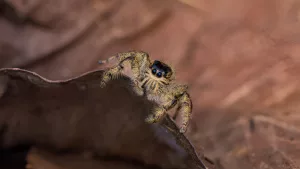
- Most spiders are not dangerous to humans, and their bites are harmless or cause mild irritation similar to a bee sting.
- Dangerous spiders include the brown recluse, black widow, funnel web spider (Australia), and wandering spider (South America).
- A single raised papule, pustule, or wheal may form at the bite site, followed by redness and tenderness.
- The bite may appear as two small puncture wounds.
- Severe allergic reactions to a spider bite require medical attention.
Types of biting and stinging insects and arachnids
Some bugs pose greater risks than others. These include:
- spiders, such as brown recluse spiders, black widow spiders, and mouse spiders
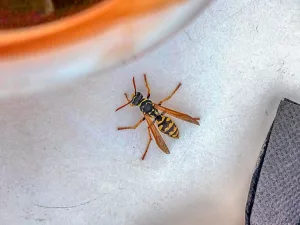
- stinging insects, including bees, paper wasps (hornets), and yellow jackets
- scorpions, such as the Arizona bark scorpion
Many larger insects and other bugs will not actively seek you out but may bite if handled or trapped.
Who is at risk of bites and stings?
Anyone can experience an insect or arachnid bite, and these incidents are very common. Your risk increases if you spend significant time outdoors, especially in rural, wooded, or grassy environments.
Children and older adults may experience more pronounced reactions to bites and stings.
What are the symptoms of a bad reaction to bites and stings?
If you are bitten or stung, you may see or feel the organism during the incident. Others may not notice the culprit and only become aware once symptoms develop.
- swelling
- rash
- pain at the site or in surrounding muscles
- itching
- warmth at and around the bite or sting
- numbness or tingling in the area
Symptoms of a severe reaction requiring immediate medical care include:
- fever
- difficulty breathing
- nausea or vomiting
- muscle spasms
- rapid heart rate
- swelling of the lips and throat
- confusion
- loss of consciousness
If you feel unwell or develop flu-like symptoms in the days after a bite, consult a doctor for testing to rule out infections or diseases transmitted by the insect or arachnid. Reviewing Bug bite with bruise around it pictures can also help you determine whether your skin changes are typical or require evaluation.
Diagnosing bites and stings
Many individuals realize they’ve been bitten or stung because they see the insect or arachnid soon after it happens.
While you should not attempt to handle or provoke the creature, if it dies after the bite or sting, preserving it may help a doctor accurately diagnose your symptoms. This is particularly important for spider bites, as some species have potent venom.
Treating bites and stings
Most bites and stings can be managed at home if the reaction is mild.
To care for a bite or sting:
- Remove the stinger if it remains in the skin by gently scraping it away with a fingernail or gauze. Avoid tweezers, as squeezing may release more venom.
- Clean the affected area thoroughly.
- Apply an ice pack to minimize pain and swelling.
Topical anti-itch creams, oral pain relievers, and antihistamines may ease uncomfortable symptoms.
You might also apply a thin paste of baking soda mixed with water to soothe itching.
Call 911 or local emergency services right away if signs of a severe reaction appear.
While waiting for emergency responders:
- loosen tight clothing
- place the person on their side
- perform CPR if breathing or heartbeat stops
If you suspect a bite from a black widow or brown recluse spider, contact emergency services immediately, even if symptoms seem mild or have not yet appeared.
Scorpion and certain spider bites should be treated as an emergency. Seek urgent medical attention if symptoms extend beyond the bite location.
The bottom line
Most insect bites and stings resolve on their own after a few days of minor discomfort.
Monitor the affected area for signs of infection and contact a doctor if the wound worsens or fails to heal after several weeks.
Bites and stings that trigger severe reactions can be fatal without immediate treatment.
If you have experienced a severe allergic reaction, a doctor may prescribe an epinephrine auto-injector. Epinephrine is a hormone that can prevent anaphylactic shock.
Keep the auto-injector with you at all times so you can use it immediately after a bite or sting if needed.
If you need help finding a primary care doctor, then check out our FindCare tool here.
















Leave a Reply
You must be logged in to post a comment.