

Nowadays, nose piercings are as widely chosen as ear piercings.
Similar to ear piercings, nose piercings commonly require about 4 to 6 months to fully recover. The exact timeline depends on:
- where the nose piercing is placed (nostril, septum, etc.)
- the jewelry material, for example: nickel 18- or 24-karat gold stainless steel titanium niobium
- how well you follow aftercare for the pierced area
Below, we’ll outline healing durations for the various nose piercings, steps to help ensure proper recovery, and what to do if healing doesn’t progress as expected.
Nose piercing healing process
These are the stages you can expect after getting a nose piercing.
1. Acceptance/inflammatory stage
In the first days to weeks, your body begins to seal the wound created by the jewelry. It replaces damaged tissue with new tissue through these steps:
- Blood clots form and harden around the piercing holes and jewelry.
- White blood cells work to rebuild skin and tissue using collagen.
- The tissue around the jewelry may swell as your body attempts to push out the foreign object; this happens because the body recognizes the jewelry as something unusual and can’t complete normal healing immediately.
During this phase you might also notice:
- pain
- tenderness
- warmth
- bleeding
2. Healing/proliferative stage
This stage occurs over the following weeks to months after surface redness and swelling start to subside. A typical progression includes:
- Your body forms a tube-like channel of scar tissue, called a fistula, linking the piercing openings.
- A yellowish fluid made of lymph, blood plasma, and dead cells appears near the piercing and accumulates around the opening, hardening as part of the scarring.
- Discharge eventually lessens. The fistula’s sides begin to join completely, finalizing scar tissue formation.
Your piercing might remain tender for several weeks or months, especially if the area experienced trauma during or after piercing. Be particularly cautious if there’s heavy discharge or significant pain.
3. Seasoning/maturation stage
This is the last phase when the piercing reaches full recovery. At this point you can change jewelry or remove it briefly without endangering the piercing; however, this final phase can take additional weeks to months.
In this stage:
- The inner lining of the fistula thickens and secures the jewelry while making removal and replacement easier.
- The piercing is much less likely to close because the tissue is healed and no longer attempts to seal itself.
That said, some piercings can begin to close within a day of jewelry removal. If that happens, replace the jewelry promptly to keep the channel open.
Healing by types of piercing
Different nose piercings heal at different rates. Here’s an overview of typical healing times for each variety.
Nostril piercing
Nostril piercings generally need around 4 to 6 months to heal.
Healing time can vary based on the jewelry style. A thin hoop may close faster, while a thicker-gauge ring or a stud can require more time.
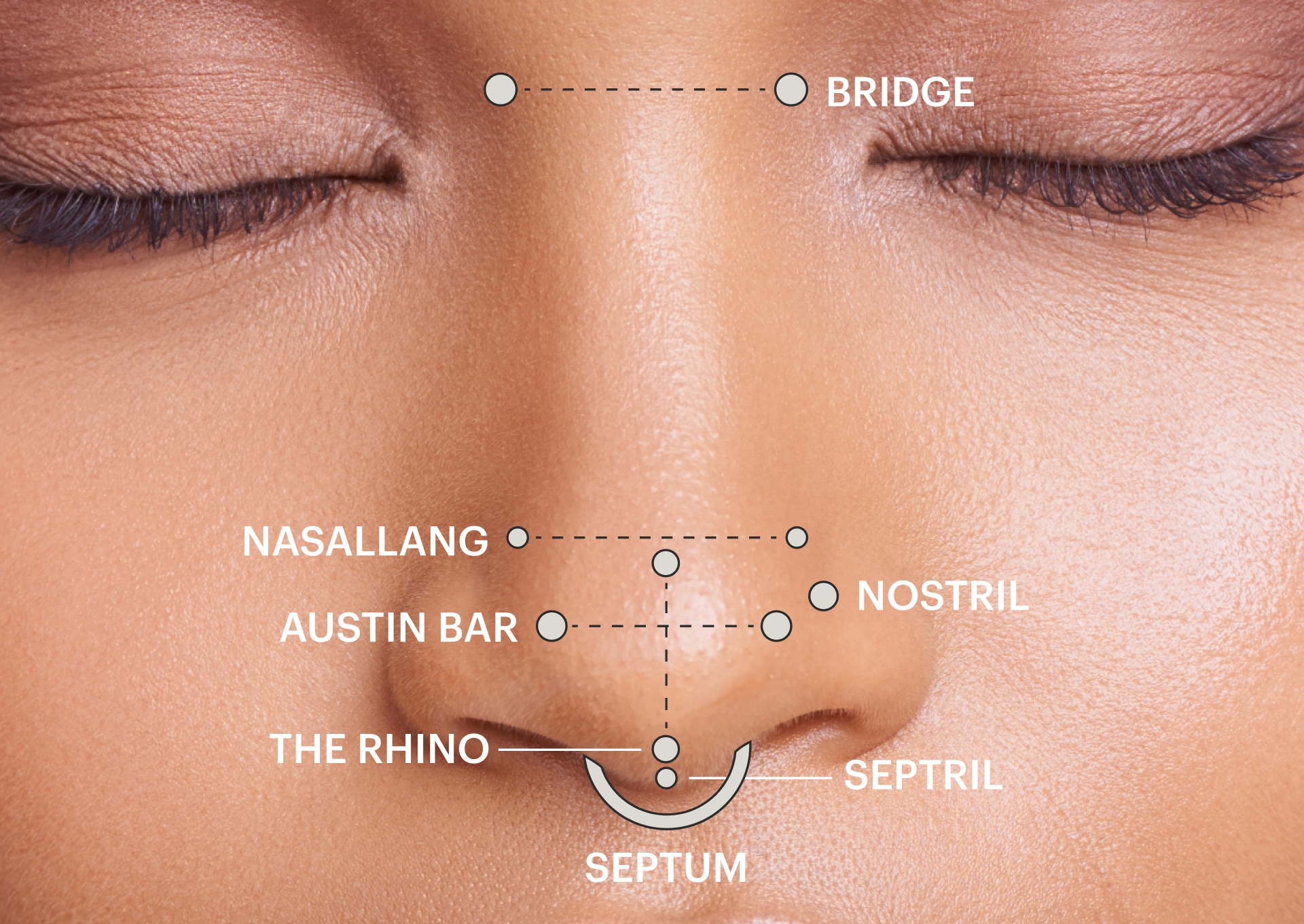
Septum
Septum piercings usually heal in about 2 to 3 months.
The septum consists of a thin layer of skin, nerves, and blood vessels between the nostrils. It’s often more painful than a nostril piercing, but it heals faster because less tissue must be rebuilt.
Rhino piercing
Rhino piercings need about 6 to 9 months to heal.
Because the tissue higher on the nose is thicker, these piercings take longer than others for the area to fully recover.
Bridge piercing
Bridge piercings tend to heal within approximately 2 to 3 months.
They usually recover quicker than many nose piercings because only a small patch of skin between the eyes is pierced.
Nasallang piercing
Nasallang piercings take roughly 4 to 6 months to heal.
These are more complicated since they go through the septum and both nostrils. Have an experienced piercer perform this procedure.
Piercing aftercare best practices
Your piercer will provide specific aftercare instructions to follow.
General advice for keeping your piercing clean and healthy during healing includes:
- Avoid touching the piercing unless you’ve washed your hands thoroughly with soap and water.
- Rinse the area twice daily with warm water and a saline solution. Pat it dry gently with a clean towel or disposable paper towel.
- Use mild, fragrance-free soap on the pierced area and rinse all soap away completely.
Signs of improper healing
Contact your piercer or a medical professional if you observe any of the following signs of problematic healing:
- excessive or disruptive itching
- increased redness
- blister formation
- thickened or dry skin
- unusual skin discoloration
- burning or painful sensations around the piercing
- heightened tenderness when touched
- an unpleasant odor from the piercing
- greenish or yellowish discharge
When you can replace your nose piercing
You shouldn’t remove or swap out a nose piercing until it has fully reached the final healing phase.
That means waiting potentially up to 8 months or longer before changing jewelry. By then you should not feel pain, tenderness, discharge, or other discomfort.
If you’re uncertain whether your piercing is healed, check with your piercer. Removing jewelry too soon can lead to infection or closure of the piercing; a professional can also safely insert new jewelry.
Takeaway
Nose piercings often take longer to heal than other common piercings, but they generally don’t exceed 9 months.
If you notice unusual, painful symptoms or if healing surpasses 9 months without improvement, consult your piercer or a healthcare provider.




















Leave a Reply
You must be logged in to post a comment.