
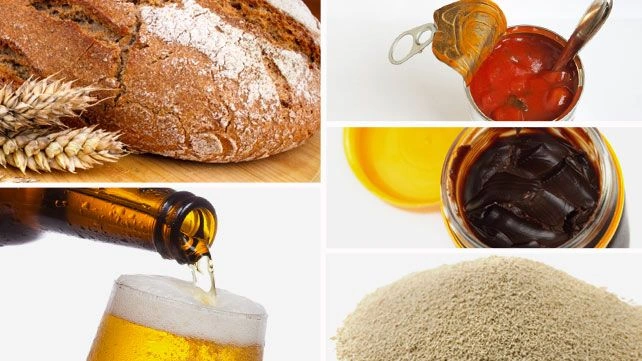

Yeast extract is a flavoring ingredient derived from the same species of yeast used to bake bread and brew beer. It’s commonly incorporated into products such as soy sauce and various cheeses to provide a savory, full-bodied taste often described as “umami.”
You’ll also find yeast extract in canned soups and stews, frozen entrees, and many salty snack foods. In countries like the UK and Australia it’s even sold as a spread for bread — think Marmite or Vegemite.

But is yeast extract beneficial to your health? Keep reading to learn more.
How Is It Produced?
Yeast extract is produced by feeding yeast with a sugar source in warm conditions. As the yeast grows, its cell walls become more permeable. The mix is then centrifuged to separate and remove the softened cell walls.
There are two primary methods used to make yeast extract: autolysis and hydrolysis. In both approaches, the cell walls are discarded and the internal cell material is collected.
With autolyzed yeast, the yeast’s own enzymes break down its proteins. In hydrolyzed yeast, external enzymes are added to accomplish the breakdown. The final product may appear as a thick paste or as a moist powder.
How Can I Identify It on an Ingredient List?
Many manufacturers plainly list yeast extract on ingredient panels. However, it may also be hidden under terms like “natural flavors” or “additives.”
Yeast extract contains glutamates — naturally occurring forms of an amino acid present in numerous foods. These glutamates are sometimes concentrated and used as food additives. The most familiar form is monosodium glutamate (MSG). Yeast extract includes naturally present glutamates, though typically at lower levels than purified MSG.
The key distinction between yeast extract and MSG in foods is their role in flavor. MSG itself has no taste but enhances other flavors, similar to salt. Yeast extract, on the other hand, contributes its own savory flavor, more like a seasoning.
The U.S. Food and Drug Administration (FDA) mandates that products containing added MSG must disclose it on the label. Foods containing yeast extract are not required to list MSG specifically, but they are not permitted to label themselves as “No MSG.”
Could It Be Harmful?
Yeast extract is relatively high in sodium, but manufacturers generally use only modest amounts in processed foods — even in spreads. The small quantities typically added don’t usually raise a product’s sodium level substantially. Still, if you need to limit sodium for high blood pressure or another health concern, you may prefer to avoid products with yeast extract.
Some individuals report mild symptoms such as facial flushing or headaches after consuming glutamates or MSG. However, medical experts have not confirmed a true allergy to glutamates. Given the low quantities of yeast extract commonly used, it’s unlikely most people would consume enough to trigger such a reaction.
Could It Be Beneficial?

Yeast extract is rich in B vitamins, making it an inexpensive source of these nutrients. That can be helpful for pregnant people or those with conditions that impair nutrient absorption and increase B vitamin needs.
If you have food allergies or sensitivities, it’s wise to monitor ingredient lists. For the majority of people, yeast extract poses no harm. If you prefer to steer clear of added ingredients like yeast extract, reduce your intake of processed and packaged foods and opt for more fresh, home-cooked meals.























Leave a Reply
You must be logged in to post a comment.