
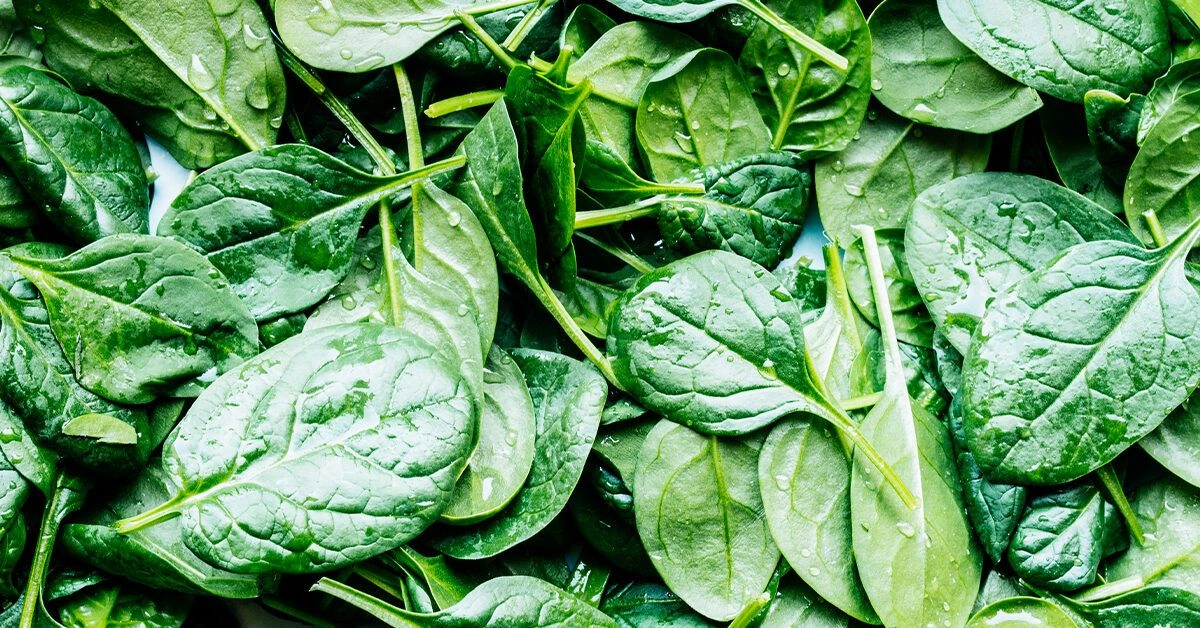
Consuming spinach can support eye function, lower oxidative stress, potentially reduce cancer risk, and help manage blood pressure.
Spinach (Spinacia oleracea) is a leafy green that originated in Persia.
It is a member of the amaranth family and is related to beets and quinoa. Moreover, it’s regarded as very healthful, packed with vitamins, minerals, and antioxidants.
:max_bytes(150000):strip_icc()/20250930-SEA-MatureSpinach-AmandaSuarez-02-910890f959fd40cd93eabd55d6c39d2b.jpg)
Spinach can be prepared in numerous ways. You can purchase it fresh or canned and enjoy it cooked or raw. It tastes great on its own or incorporated into various recipes.
This article covers everything you should know about spinach and its health-promoting properties.
Nutrition facts
The nutritional profile for 3.5 ounces (100 grams) of raw spinach is (1):
- Calories: 23
- Water: 91%
- Protein: 2.9 grams
- Carbs: 3.6 grams
- Sugar: 0.4 grams
- Fiber: 2.2 grams
- Fat: 0.4 grams
Carbs
The majority of carbohydrates in spinach are fiber, which is very beneficial to health.
Spinach also holds trace amounts of sugars, mainly glucose and fructose (1).
Fiber
Spinach is rich in insoluble fiber, which can enhance health in multiple ways (2).
This fiber adds bulk to stool as it travels through your digestive tract, which may help prevent constipation.
Summary: Spinach is low in digestible carbs but high in insoluble fiber. This kind of fiber may support digestive health.
Vitamins and minerals
Spinach is an outstanding source of numerous vitamins and minerals, including (3):
- Vitamin A. Spinach is abundant in carotenoids that the body can convert to vitamin A.
- Vitamin C. This antioxidant vitamin supports skin health and immune defenses.
- Vitamin K1. Essential for blood clotting. Remarkably, a single leaf of spinach provides a significant portion of daily needs.
- Folic acid. Also called folate or vitamin B9, this nutrient is crucial for pregnant women and important for normal cell function and tissue growth.
- Iron.Spinach is a good source of this mineral, which helps form hemoglobin to transport oxygen to body tissues.
- Calcium. Important for bone strength and vital as a signaling molecule in the nervous system, heart, and muscles.
Spinach also includes other nutrients such as potassium, magnesium, and vitamins B6, B9, and E.
Summary: Spinach is highly nutrient-dense. It contains substantial amounts of carotenoids, vitamin C, vitamin K, folate, iron, and calcium.
Plant compounds
Spinach contains a range of bioactive plant compounds, including (4, 5, 6, 7, 8, 9, 10):
- Lutein. Associated with better eye health.
- Kaempferol. An antioxidant that may lower the risk of cancer and chronic ailments.
- Nitrates. Spinach provides significant levels of nitrates, which may support cardiovascular health.
- Quercetin. An antioxidant that can help combat infection and inflammation. Spinach ranks among the richest dietary sources of quercetin.
- Zeaxanthin. Like lutein, zeaxanthin contributes to improved eye health.
Summary: Spinach contains several beneficial plant compounds, such as lutein, kaempferol, nitrates, quercetin, and zeaxanthin, that can promote health.
Health benefits of spinach
Spinach is highly nutritious and associated with multiple health benefits.
Research suggests it can reduce oxidative stress, support eye health, and help regulate blood pressure.
Oxidative stress
Free radicals are natural byproducts of metabolism that can cause oxidative stress, accelerating aging and raising the risk of cancer and diabetes (11).
Spinach contains antioxidants that neutralize free radicals and reduce the damage they create.
One small study of eight healthy volunteers showed that spinach helped prevent oxidative damage. While modest in size, this result is supported by other human and animal studies (12, 13, 14).
Eye health
Spinach is especially rich in lutein and zeaxanthin, two carotenoids that give color to certain vegetables.
The human eye accumulates high concentrations of these pigments, which help shield eyes from sun-induced damage (15).
Multiple studies indicate that lutein and zeaxanthin may prevent macular degeneration and cataracts, two leading causes of vision loss (16, 17, 18, 19).
These nutrients might even help partially reverse existing damage (20, 21).

Cancer prevention
Spinach contains molecules called MGDG and SQDG that may inhibit cancer progression.
In one instance, these substances slowed tumor growth in a cervical cancer case and reduced tumor size (22, 23).
Several observational studies link spinach intake with a lower risk of prostate cancer, and it may also help reduce breast cancer risk (24, 25).
Animal research similarly suggests that spinach might hinder cancer formation (26).
Moreover, spinach is rich in antioxidants, which may contribute to its cancer-fighting effects (27).
Blood pressure
Spinach is high in dietary nitrates, which have been shown to help modulate blood pressure and lower cardiovascular risk (28, 29).
One trial with 27 participants found that consuming spinach led to reductions in blood pressure. Other studies have reported similar benefits, suggesting spinach supports heart health (7, 30, 31).
Summary: Spinach provides numerous health perks. It may lessen oxidative stress, support vision, fight certain cancers, and help regulate blood pressure.
Potential downsides
While spinach is widely regarded as very healthy, it can cause issues for some people.
Kidney stones
Kidney stones form from accumulations of acid and mineral salts. The most common type is calcium oxalate stones.
Spinach is rich in both calcium and oxalates, so those prone to kidney stones should moderate their intake (32, 33).
Blood clotting
Spinach contains a high level of vitamin K1, which has vital roles in the body but is best known for participating in blood clot formation.
Consequently, it can interact with anticoagulant medications. Individuals taking blood thinners like warfarin should consult their healthcare provider before consuming large amounts of spinach (34).
Summary: People susceptible to kidney stones may want to limit spinach. Its vitamin K1 content may also present issues for those on blood-thinning drugs.
The bottom line
Spinach is a nutrient-packed leafy vegetable.
Research indicates it offers several health benefits. Spinach may reduce oxidative stress, promote eye health, and contribute to preventing heart disease and some cancers.
If you’re curious about adding a healthful boost to your diet, spinach is an easy and versatile choice — and you might also explore supplements like clorofila liquida for similar chlorophyll-rich options.






















Leave a Reply
You must be logged in to post a comment.