

A finger joint replacement involves taking out a damaged or degenerated joint in the finger and substituting it with a synthetic one.
Also known as arthroplasty, this surgical procedure is most frequently employed for arthritis-related joint damage, though it can sometimes be advised for other causes of joint deterioration.
If you’re thinking about finger joint replacement, discuss the potential advantages and drawbacks with a physician, and learn what the operation and the recovery phase will likely involve.
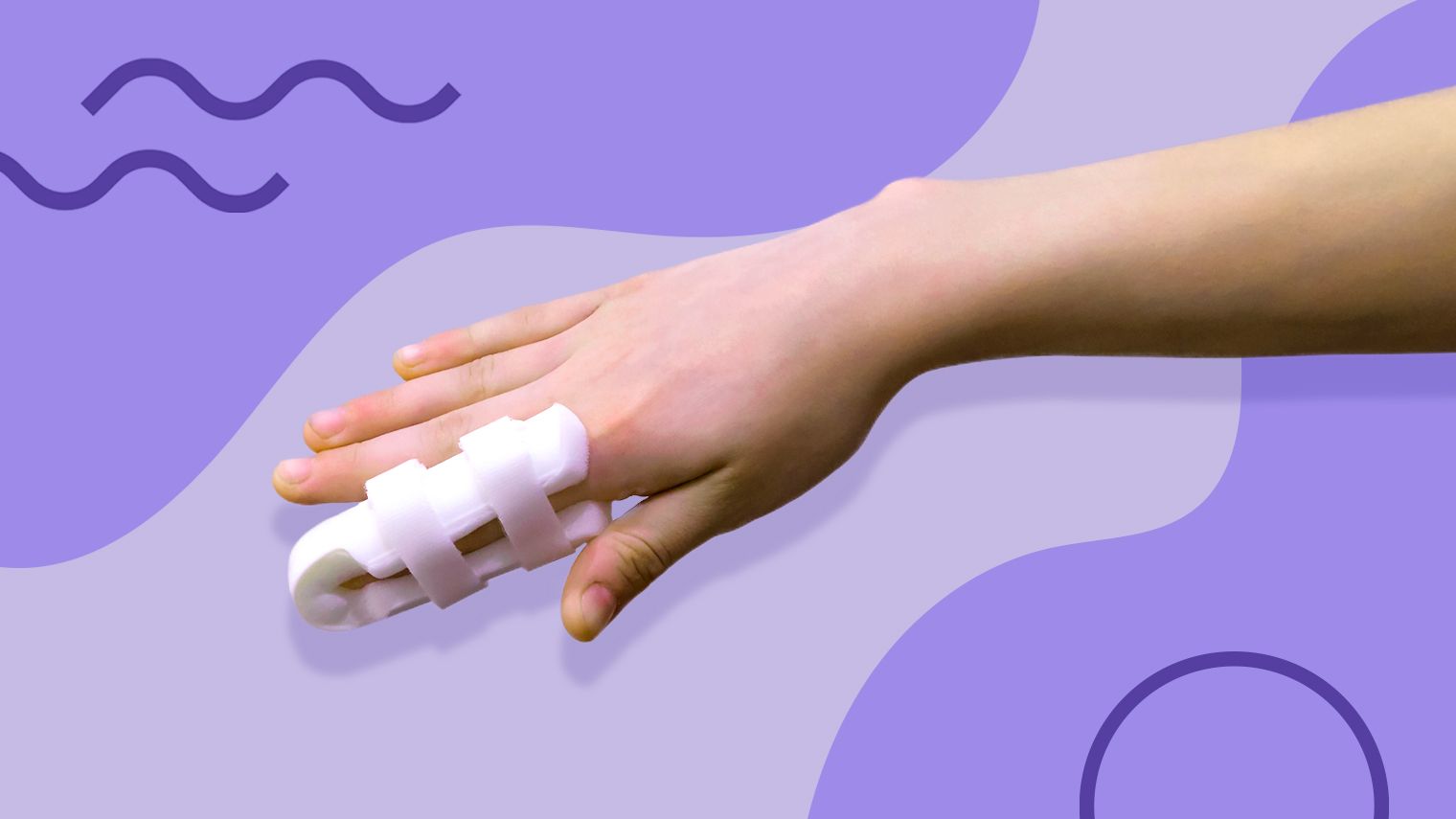
What are the advantages of finger joint replacement?
Surgeons may consider replacing a finger joint when it has suffered substantial injury or when arthritis has progressively worn down the bone.
The main advantage of this operation is relief from severe, persistent pain. It can also restore some flexibility and range of motion to the hand and correct structural deformities of the joint.
Possible complications of finger joint arthroplasty
Although finger joint arthroplasty can be suggested to relieve pain in a diseased or injured joint after other treatments have failed, it’s important to realize that improvement in joint movement is not guaranteed.
Common short-term effects following finger joint replacement include:
- bleeding
- bruising
- pain
- swelling
- stiffer joints
- scarring
- changes in skin color
- increased sensitivity
- reduced mobility
- audible squeaking when the joint moves
- adverse reactions to general anesthesia, such as nausea or vomiting
Although uncommon, more serious problems can occur after this operation. Before proceeding with finger joint replacement, review the following risks with your surgeon:
- damage to blood vessels or nerves
- ongoing long-term pain
- infection
- tendon injury
- loosening, instability, or failure of the implanted joint
Types of finger joint replacement procedures
There are two primary finger joint replacement procedures:
- Metacarpophalangeal (MCP) joint replacement: The replacement is performed at the knuckle. This approach is commonly used for surgeries addressing rheumatoid arthritis (RA).
- Proximal interphalangeal (PIP) joint replacement: This surgery targets the middle segment of the finger between the knuckle and the fingernail, and it’s more often used for osteoarthritis (OA).
Most prosthetic finger joints are constructed from silicone, although alternatives like pyrocarbon may be chosen by the surgeon.
Below is an outline of what you might expect before, during, and after the operation:
Before the operation
Prior to finger joint replacement, your doctor will evaluate your overall health to confirm you’re fit for surgery. They may order blood work. You may be instructed to stop certain medications, such as blood thinners, and you’ll be advised to quit smoking if you smoke.
Do not eat or drink after midnight on the day of surgery. It’s also unsafe to consume alcohol 24 hours before the procedure if you regularly drink.
Arrive at the hospital or outpatient facility several hours before your scheduled surgery so you can be prepared for the operation, which typically involves receiving general anesthesia.
During the operation
For a finger joint arthroplasty, the surgeon will make an incision over the finger and may move or split a tendon to reach the joint if required. They will trim the damaged ends of the bone and remove them before placing the artificial joint.
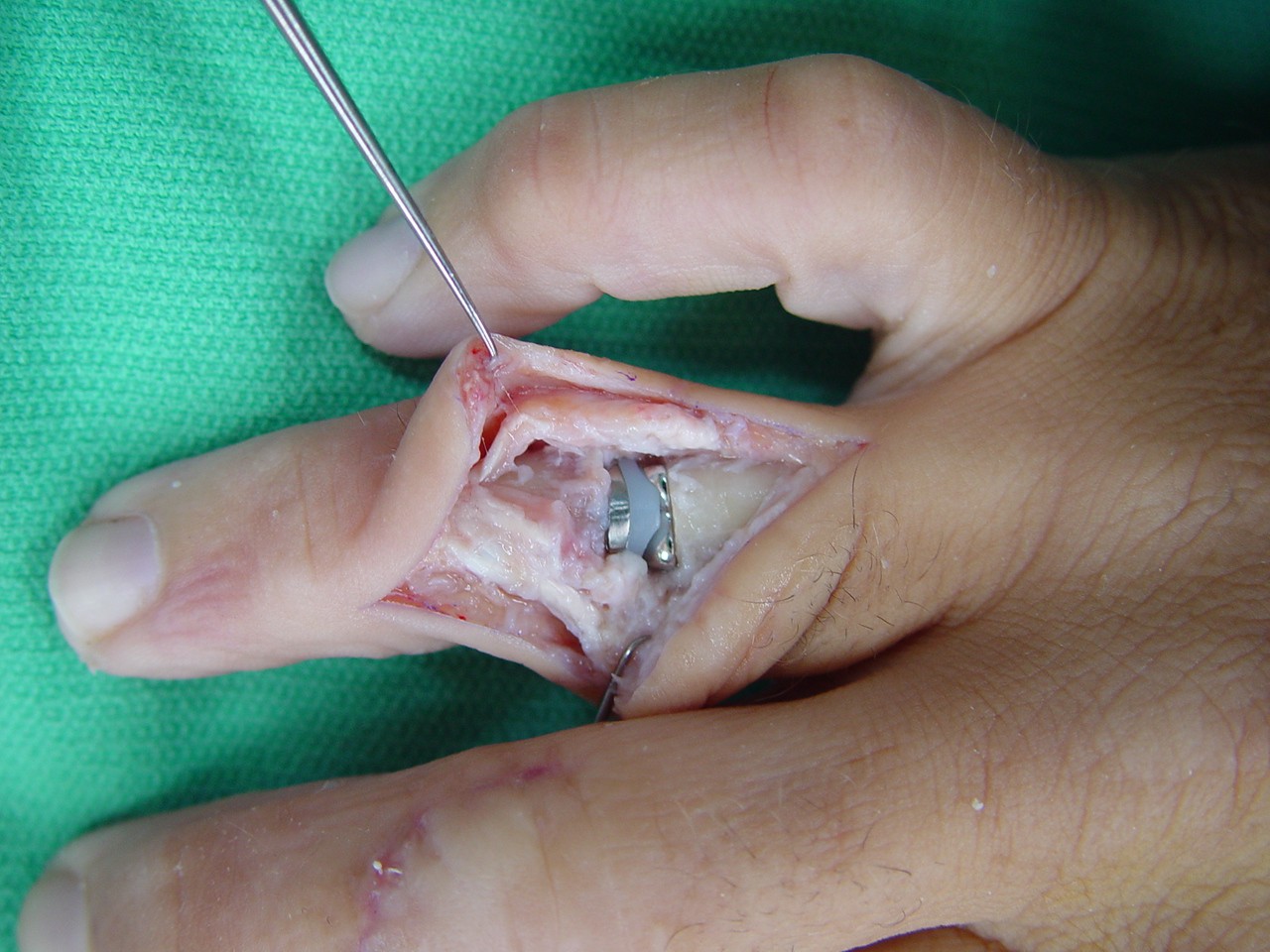
Prior to closing the incision, the surgeon may repair any split tendon. Once the wound is stitched, your hand will be bandaged and supported with a cast.
After the operation
Before discharge, you will be taught hand exercises to perform at home to help improve mobility and reduce swelling.
Most patients go home the same day. You will need someone to drive you and remain with you for at least the first 24 hours following your surgery. If complications occur during the operation, an overnight hospital stay may be necessary.
Expect swelling of the hand after surgery, and you’ll be instructed to keep it elevated as much as possible.
Does finger joint replacement hurt?
A primary goal of this surgery is to reduce pain in the hand, but temporary swelling, bruising, and discomfort are common after the procedure. This short-term pain results from the body adjusting to the new joint and healing tissues.
Generally, the pain should resolve within a few months. For severe pain, a physician may prescribe short-term pain medication.
Persistent pain can also be a possible outcome after this surgery. Consult your doctor if pain continues after the expected recovery period.
How long does recovery take after finger joint replacement?
Healing from a finger joint replacement typically takes at least 3 months, and full recovery may require several months.
Although individual recoveries vary, use this timeline as a general reference:
- 4 weeks: You may begin using the affected hand again.
- 6 to 8 weeks: Light activities may be resumed.
- 6 to 10 weeks: You might be able to drive again.
- 8 to 12 weeks: Return to work may be possible.
- 12 weeks: A physician may clear you for sports and hobbies, though contact sports are often discouraged.
Success rate of finger joint replacement
Overall, finger joint replacement is regarded as effective, according to a 2021 review.
Still, discuss with your surgeon the potential for silicone implants to fail over time due to cracking from normal wear and tear.
Who may be a suitable candidate for arthroplasty
You may be considered for finger joint arthroplasty if you have a severely damaged joint caused by injury or conditions like RA or OA.
A surgeon may also consider you a suitable candidate if you:
- are generally in good health
- understand the risks and potential benefits of the operation
- don’t have immune-related issues that could slow healing
- do not smoke
Cost of finger joint replacement
The estimated cost of a finger joint arthroplasty in 2023 was $22,092. Coverage varies by plan, but private and public insurance programs typically pay for finger joint replacement when a physician determines it’s medically necessary.
Your out-of-pocket expenses may differ depending on deductibles, copays, and other terms of your insurance. Separate bills from the surgeon, hospital, and anesthesiologist are common. Prescription drugs, postoperative garments, and testing fees may add to costs.
Nonoperative alternatives to finger joint arthroplasty
Physicians usually suggest conservative treatments before recommending major surgery like finger joint arthroplasty. Options may include:
- pain-relief medications
- steroid pills or injections to lower inflammation
- wearing ring splints on affected fingers
- hand and finger strengthening exercises
- physical therapy
Takeaway
If a finger joint is severely damaged and interferes with daily tasks and quality of life, a clinician may recommend arthroplasty. As with other significant surgeries, weigh the potential benefits against the possible risks.
Discuss your current finger symptoms and treatment history with a doctor. If other measures aren’t controlling pain or loss of mobility, they may consider a finger joint replacement. Also, if you’re experiencing issues like finger numbness, mention this during your consultation as it can affect treatment decisions.




















Leave a Reply
You must be logged in to post a comment.