
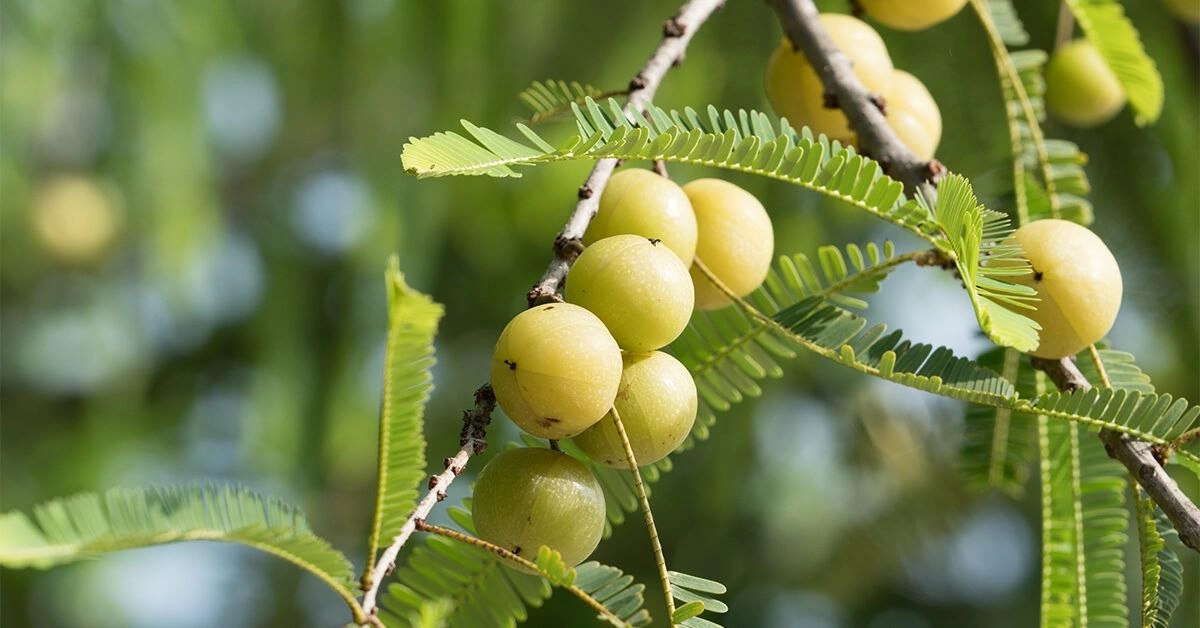
Indian gooseberry, commonly called amla, is a fruit-bearing tree indigenous to regions of Asia.

It’s used both as a culinary ingredient and in herbal medicine, particularly across India. The fruit is an excellent source of vitamin C and is frequently promoted for its antioxidant qualities and potential cardiovascular advantages.
This piece examines what Indian gooseberry is, its possible health benefits and drawbacks, and practical ways to use it.
What is Indian gooseberry?
Indian gooseberry is referred to by the scientific names Phyllanthus emblica and Emblica officinalis. The common name for this plant is amla.
This small tree produces yellow-green blossoms that develop into round, edible fruits of a similar hue.
The fruits resemble golf balls in size and contain a seed surrounded by a thin skin. Their flavor is often described as tart, bitter, and astringent.
In Indian cooking, the fruit is used in many recipes, while most commercial supplements are made from dried, powdered fruit or standardized extracts.
Traditional Indian medicinal practices utilize the entire plant — fruit, leaves, and seeds — for various remedies (1).
Summary: Indian gooseberry is consumed in Indian cuisine and commonly sold as dietary supplements. The whole plant is employed in traditional medicinal systems.
Potential benefits
Indian gooseberry shows several promising effects, though more robust human trials are necessary to confirm many of these proposed benefits.
Heartburn
A well-designed 4-week trial involving 68 individuals with gastroesophageal reflux disease (GERD), a condition marked by recurrent heartburn, evaluated the impact of 1,000 mg daily of amla fruit tablets on GERD symptoms (2).
The study found that participants taking amla experienced larger decreases in heartburn frequency and severity, as well as in vomiting, compared with the placebo group (2).
While encouraging, additional research is required to better understand how Indian gooseberry supplements affect GERD and heartburn.
Anti-aging
Thanks to its substantial vitamin C content, Indian gooseberry may offer anti-aging advantages. Vitamin C acts as an antioxidant that helps protect cells from damage, which could slow aspects of biological aging (3).
Some potential anti-aging effects include:
- Skin. Beyond antioxidant protection, Indian gooseberry may guard against collagen degradation, the protein network that provides skin and soft tissues with strength and elasticity (4, 5).
- Hair. Amla extracts are widely used in Thailand for encouraging hair growth, and some research indicates they might inhibit enzymes linked to hair thinning (6).
- Vision. Laboratory studies show Indian gooseberry extracts may protect against age-related macular degeneration by supporting mitochondrial health in retinal cells (7).
Cancer
Evidence from cell and animal experiments indicates Indian gooseberry extracts can kill certain cancer cell types, such as those from breast, cervical, ovarian, and lung cancers (8).
Moreover, the antioxidant activity of the fruit may contribute to cancer prevention by reducing oxidative stress and potentially limiting genetic changes that can trigger tumor formation (8).
The phytochemicals in Indian gooseberry — including tannins and flavonoids — together with vitamin C and other antioxidants, are believed to underlie these protective actions (8).
However, human research on Indian gooseberry and cancer is lacking, so these findings remain preliminary. If you have cancer, follow your medical team’s guidance.
Heart health
One of the principal traditional uses of Indian gooseberry is supporting cardiovascular health. Several mechanisms may explain how it could reduce heart disease risk:
- Antioxidant activity. Extracts of Indian gooseberry have protected against oxidative damage in animal models of cardiac injury (9, 10, 11).
- Improved endothelial function. In people with type 2 diabetes, 1,000 mg daily of Indian gooseberry improved endothelial function to a degree comparable with atorvastatin (12, 13).
- Anti-inflammatory properties. Human studies report significant reductions in markers of inflammation after taking Indian gooseberry, which is relevant because chronic inflammation contributes to cardiovascular disease (12, 14, 15).
- Improved lipid profile. Trials in humans have observed beneficial changes in blood lipids after supplementation, including lower triglycerides, reduced total and LDL cholesterol, and higher HDL cholesterol (12, 14, 16, 17).
- Blood pressure lowering. Indian gooseberry may reduce elevated blood pressure by acting as a vasodilator — widening blood vessels — which lessens strain on the heart (15, 18).
- Anti-platelet effects. Supplementation might inhibit platelet aggregation, lowering the chance of clot formation that could cause myocardial infarction or stroke (15).
Although human data exist, larger and more rigorous trials are required before Indian gooseberry can be definitively recommended for heart disease prevention.
Blood sugar control
In animal experiments, Indian gooseberry has been shown to reduce blood glucose levels (19, 20, 21).
These glucose-lowering effects have also been observed in a small human trial of 32 participants: taking 1–3 grams of Indian gooseberry powder daily for 21 days significantly reduced fasting and postprandial blood glucose compared with controls (17).
Given these findings, Indian gooseberry might help prevent or manage type 2 diabetes; however, more high-quality studies in people are necessary.
Liver protection
In rodent models, Indian gooseberry extract protected the liver from damage induced by a high-fat diet or by N-nitrosodiethylamine, a hepatotoxin. The protective effects are likely due to anti-inflammatory and antioxidant mechanisms (22, 23, 24).
These outcomes have not yet been explored in human subjects.
Immune support
Indian gooseberry may support immune function largely because of its vitamin C concentration. A single fruit can provide roughly 600–800% of the Daily Value (DV) for vitamin C (25).
Vitamin C helps maintain immune health in several ways. As an antioxidant, it reduces cellular damage and inflammation (26).
Short-term inflammation is an appropriate immune response, but persistent inflammation is harmful and linked to poorer health outcomes (27).
Chronic inflammation is associated with higher risks for conditions like type 2 diabetes, cardiovascular disease, and autoimmune disorders (27).
Vitamin C may also support immune defenses by promoting the activity and proliferation of phagocytes — immune cells that engulf invading pathogens — and by aiding antibody production (26).
Summary: Indian gooseberry could promote cardiovascular health, offer anti-aging and immune benefits, lessen heartburn symptoms, and possess cancer-preventive properties; however, more human research is needed to validate these effects.
Potential downsides
Fresh Indian gooseberries may be difficult to obtain outside regions where they’re commonly grown, although dried forms are widely sold online.
Taking Indian gooseberry in supplement form can cause adverse effects in some situations.
Because of its anti-platelet activity, Indian gooseberry can thin the blood and interfere with normal clotting (15).
If you have a bleeding disorder or use anticoagulant medications, consult your healthcare provider before consuming Indian gooseberry in food, tea, or supplement form.
You should also discontinue use prior to surgery due to increased bleeding risk.
There is evidence it may lower blood glucose, so people with type 1 or type 2 diabetes or those managing blood sugar should use caution (17).
Because safety data are limited, pregnant and breastfeeding individuals, or those trying to conceive, should avoid Indian gooseberry supplements.
Summary: Fresh Indian gooseberries may be rare outside specialty markets. Supplements can impair clotting and lower blood sugar, which may be harmful in some people; discuss concerns with a medical professional.
How to use it
Indian gooseberry fruits can be eaten raw, though their tartness makes them unpalatable to many. In India they are frequently pickled or candied in syrup. In some areas they’re also incorporated into dal, a classic lentil preparation.
Supplements are most often sold as powdered amla fruit or encapsulated powder. The powder can be brewed into a tea or blended into beverages and smoothies. You can also find amla juice products that provide a liquid form of the fruit.
Typical supplement servings contain between 500 and 1,000 mg of dried Indian gooseberry powder per dose.
Due to the fruit’s vitamin C richness, amla powders and extracts are marketed for use in hair and skincare products, and topical amla oils are available for hair and skin application.
Because clear dosing guidelines are lacking, do not exceed the recommended daily amount shown on the product label.
If you use blood thinners or medications to control blood sugar, consult your healthcare provider before starting Indian gooseberry supplements.
Summary: You can purchase dried Indian gooseberry preparations online; supplements are usually powdered amla fruit. Follow label dosing and seek medical advice if you’re on relevant medications.
The bottom line
Indian gooseberries are used both culinarily and medicinally throughout India and other Asian countries. Supplements derived from the fruit show potential benefits, including anti-aging effects, cancer prevention potential, reductions in heartburn severity, and cardiovascular support.
The fruits are notably high in vitamin C, so they may aid immune health.
However, human data on safe and effective dosing are limited. Therefore, stick to the recommended daily intake on supplement packaging.
As with any supplement, check with your healthcare provider before adding Indian gooseberry to your regimen.























Leave a Reply
You must be logged in to post a comment.