
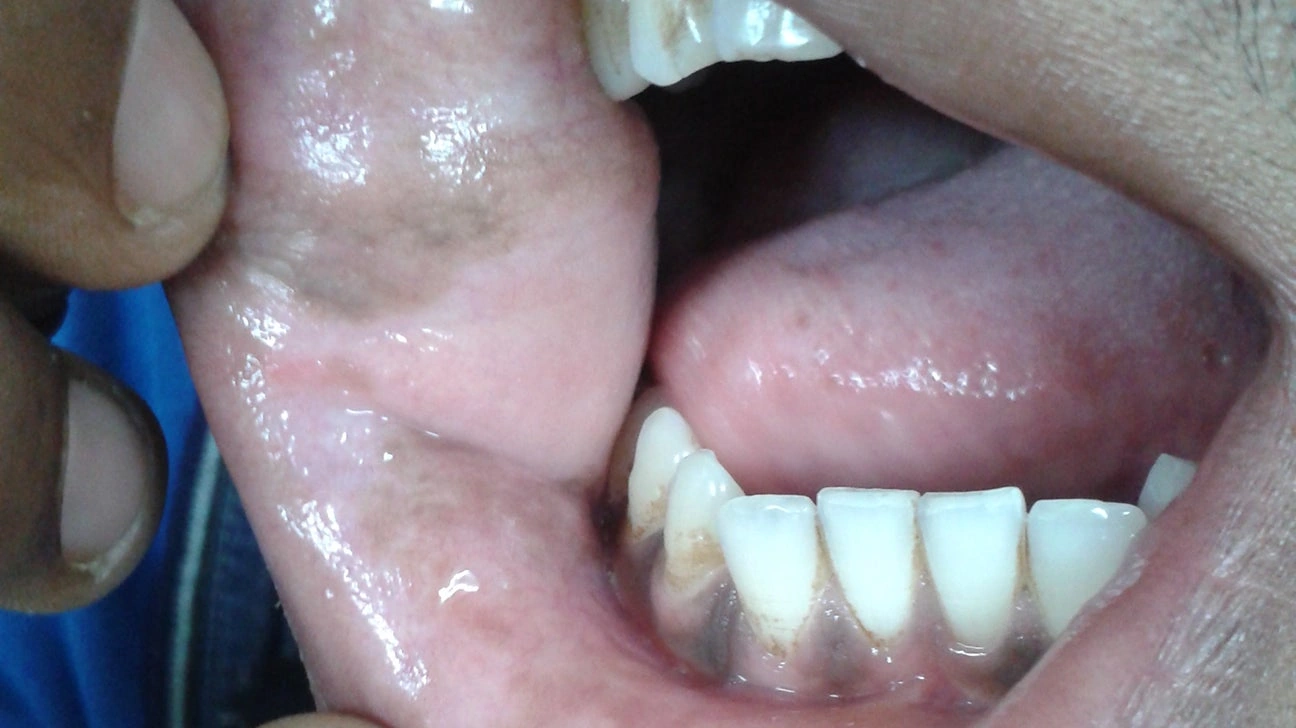
Wait, What’s That Dark Spot?
Most people don’t realize that a tiny painless black spot inside your cheek can be a real stress trigger. You’re brushing your teeth, minding your own business, and then—boom—you spot something you swear wasn’t there yesterday. Is it dangerous? Is it nothing? Why does it look like a weird minuscule tattoo? It’s almost like your mouth has secrets it’s not telling you. Let’s get to the bottom of it, together.
I remember the first time I glimpsed one… my thoughts ran wild. Have I been chewing pencils again? Is this what adulting looks like? (Spoiler: It’s not, but hang tight.) We’re going to walk through the most common causes, show real Painless black spot inside cheek pictures, talk about when it’s time to call your dentist, and share some good, old-fashioned reassurance—because a lot of these spots, truly, are not worth losing sleep over.
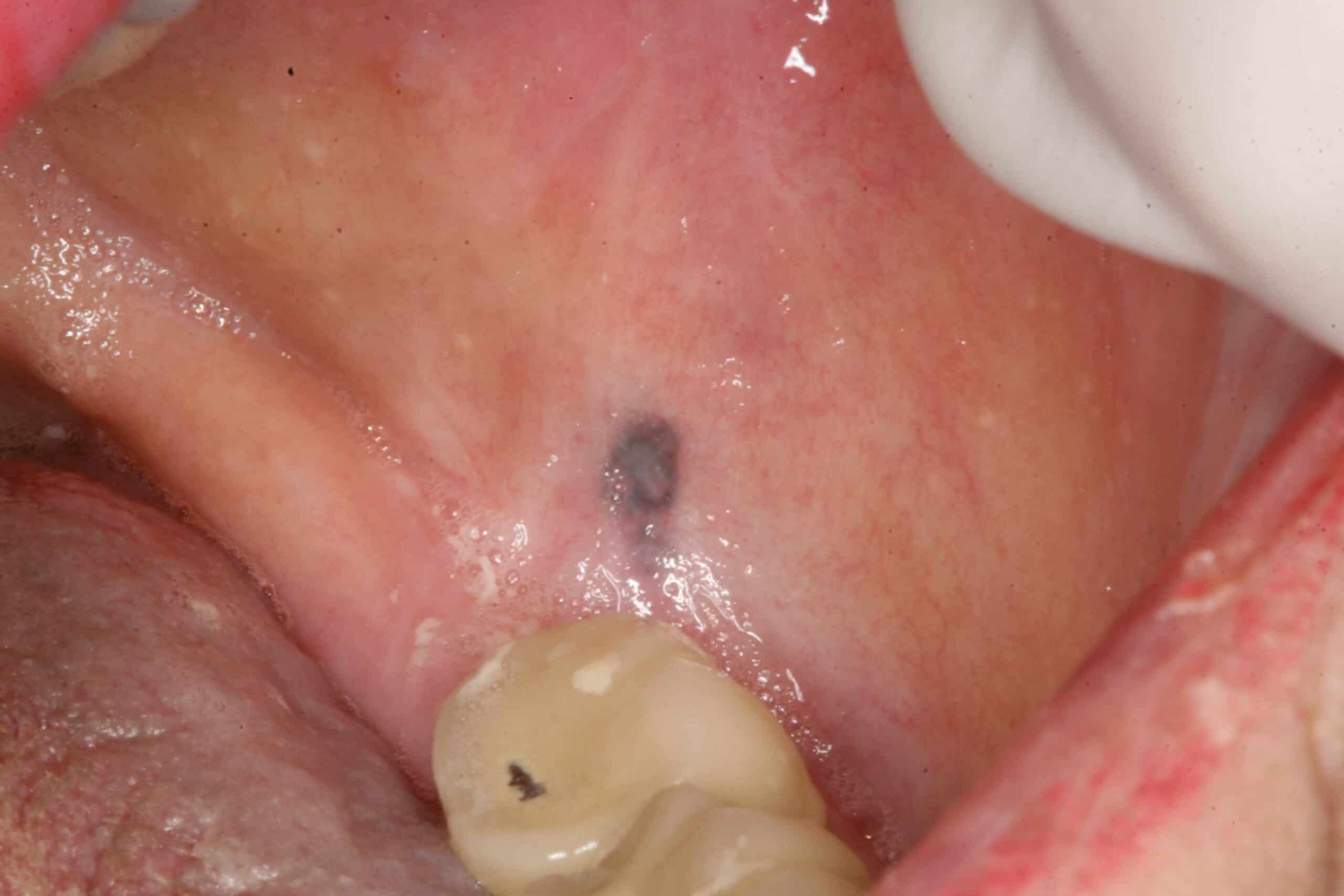
So… Why Do These Spots Even Happen?
Could It Be a Cheek Bite? (You’d Be Surprised How Often!)
Let’s start simple: Have you ever bitten your cheek by accident? Maybe mid-chew, mid-conversation, or even from gnawing in your sleep? That’s one of the most common causes of a blood blister—a tiny bubble filled with blood, usually deep red or purplish, sometimes nearly black. It can look dramatic, but honestly, it’s your mouth’s way of patching itself up. Usually, it fades quietly in a week or two, with zero drama unless you keep aggravating the spot.
One of my friends gets these almost every time she’s stressed or rushing her meals. The first time, she panicked—and then it faded away just as fast as it appeared. If you ever want a reality check, Black spot inside cheek no pain has a gallery of pictures that can be oddly soothing to scroll through, just to compare.
Maybe It’s Just a “Mole” (Yep, Moles Happen in the Mouth!)
Okay, so this one’s more surprising: You can actually get moles (the fancy term is oral nevi) inside your mouth. They’re just like the little beauty marks on your skin—brown, gray, sometimes nearly black dots, usually painless, often slightly raised, and, for most people, harmless. Sometimes it’s just a quirk of genetics.
Oral nevi usually don’t get much bigger or change quickly. They’re most common on your lips and roof of your mouth, but can definitely pop up on your cheek too. I learned about these when my dentist told me about a patient who basically had a freckle pop up overnight. Turns out, nature loves surprises! Still, if the spot looks odd or new, your dentist might recommend a quick look to be sure it’s not something more serious. If you’ve ever dealt with a Tiny black dot inside cheek, you know the drill.
Dental Fillings: Secret Artists?
Here’s one you probably haven’t heard before—old dental work can sometimes leave “tattoos” inside your cheek! These are called amalgam tattoos: tiny metal particles from old silver fillings can get trapped in the tissue, especially if you had work done nearby, say, years ago. The result? Flat, grayish-black or blue-black patches that just hang out, not causing pain or trouble.
Most people never even notice, but if you see a dark spot, especially near a filling, this could be your answer. According to research on possible causes of a black spot inside your cheek, these amalgam tattoos are totally harmless and don’t need to be treated unless you just want them gone for cosmetic reasons (and even then, laser removal is usually needed).
| Spot Type | Appearance | Likely Cause | Should You Worry? |
|---|---|---|---|
| Blood Blister | Dark red–black, raised, soft | Cheek bite/trauma | Rarely – heals fast |
| Oral Nevus (Mole) | Brown, black, or gray dot, may be raised | Natural pigment | Usually no – check if new |
| Amalgam Tattoo | Flat, gray-black, near old fillings | Dental work ‘accident’ | No – almost never causes problems |
Everyday Habits That Stir Up Trouble
Are You a Secret Cheek Biter or Teeth Grinder?
It might sound silly, but the way you fidget—or just your jaw’s quirks—can leave lasting marks. Constant cheek biting, especially during stressful days or even as a kind of absentminded habit, can sometimes create patches of darker tissue. Sometimes, these are flat patches that look brown or grey. Other times, if you’re more aggressive (I speak from experience here…), you might get tiny scar-like spots that look darker than the rest of your cheek tissue.
Grinding your teeth at night? That stress can show up in your mouth before it ever hits your back! The body responds to repeated irritation by producing extra pigment—a bit like a tan, but inside your mouth. Sometimes these show up as painless black spots or even a Tiny black dot inside cheek you can feel with your tongue, but not see (until you go hunting in the mirror).
Smoking’s “Hidden” Stain
Yep, smoking doesn’t just stain your teeth (or leave your breath questionable). “Smoker’s melanosis” is a real thing—about a fifth of smokers will develop brown or black blotches on their gum line and inside their cheeks. Totally painless, but if you quit, these often fade over time (one of the many wins for your mouth if you’re trying to kick the habit) (see Colgate’s breakdown of causes).
These spots won’t hurt you, but the habit tied to them? That’s where the real danger to your health is. Still—you know, if you ever needed another reason to quit, why not chalk this one up too?
Quick Visuals: What Do These Spots ACTUALLY Look Like?
Painless Black Spot Inside Cheek Pictures (and What They Don’t Mean)
Pictures help. A lot. Because honestly, when you hear “black spot,” your mind might immediately jump to the worst possible scenario. The good news: harmless pigmentation and blisters look different from anything serious. Most benign spots are even-colored, regular-shaped, and stubbornly unchanged week after week.
Compare that to the rare—but important to know—oral melanoma spots: those tend to be irregular, uneven in color, and may grow, develop lumps, or even ulcerate. For plain reassurance, seeing real-life painless black spot inside cheek pictures can help you breathe easier and know when it’s nothing to panic about.
(Pictures of blood blisters, amalgam tattoos, and pigmentation from trusted clinical galleries add tons of peace of mind. For vivid examples, see Black spot inside cheek no pain. They collect images that let you compare, side-by-side, what’s harmless and what maybe deserves a closer look.)
How Benign Spots Compare:
| Benign Spots | Cancer Risk Spots |
|---|---|
| Flat, round Even color Doesn’t change No pain or bleeding | Irregular shape Mixed coloring Changes/grows May bleed or ulcerate |
But…Could It Ever Be Serious?
When to Worry (No Panic, Just Caution)
This is the point where, let’s be real, everyone’s brain goes straight to cancer. And yes—very rarely, a black spot can be caused by oral melanoma. But exhale with me… it’s extremely rare, especially if your spot is small, flat, and not changing.
Here’s what’s worth your attention: Is the spot new and growing? Is its border jagged or uneven? Is it starting to bleed, ulcerate, or hurt? Do you feel any hard lumps nearby? If the answer to any of these is yes—or if you’re just plain uneasy—it’s always smart to get checked out.
Doctors and dentists can quickly spot the difference, and if they’re unsure, a simple in-office biopsy can sort things out. For peace of mind, sometimes it’s just easier to show up, point to the spot, and say, “This thing is making me lose sleep, please look!” (Explore Oral Cancer Foundation’s gallery if you want to see what actual oral melanoma and benign pigmentation look like.)
Personal Anecdote: When “It’s Probably Nothing” Isn’t Enough
A friend’s mom noticed her black spot after a dental cleaning—a harmless macule, it turned out. She almost skipped her dentist visit (“probably nothing,” right?), but decided to double-check. It made all the difference for her peace of mind. According to a case discussion on Practo, most simple cheek spots are harmless pigment. But, as stressed by every oral health expert, new, changing, or suspicious marks should always be brought up with a professional.
The Oddballs: Uncommon but Harmless Causes
Oral Melanotic Macule: Just a Quirk
Ever hear of an oral melanotic macule? It’s a flat, well-defined brown or grayish patch, usually smaller than a pencil eraser. These little “beauty marks” can show up anywhere—lips, gums, or, yep, inside your cheek. The kicker? They’re benign, more common in women and those with darker skin, and rarely cause issues at all (Skinsight gives a thorough walk-through).
What About Weird Irritants?
Sometimes even your toothpaste or mouthwash can be the culprit. Some products, especially if they’re a little harsh or filled with chemicals like sodium lauryl sulfate, can irritate the cheek lining and trigger pigment patches. One reader messaged that switching to a gentler toothpaste made her annoying tiny black dot fade in under a month. Bodies are weird, right?
If you ever want to fall down a fascinating rabbit hole, check out all the “harmless irritation causes” on Tiny black dot inside cheek. Sometimes scrolling stories can feel like hanging out at a health support group—strangely comforting!
What You Should Actually Do (Without Panicking)
Okay, time for the friend advice: Don’t try to play internet detective all alone—your mirror and Google are not always trustworthy teammates. But also? Don’t assume the worst.
- If the spot is new, changing, or making you anxious, get it checked. That’s what dentists are for (and trust me, they’ve seen it all).
- If it’s been there forever, small, flat, boring, and unchanged, it’s likely nothing but pigment or an old amalgam tattoo.
- If you just bit your cheek, or you know you’ve been gnawing your nails, give your mouth a break to heal itself.
Still feeling unsettled? Snap a quick photo. That way, if you need to show a pro or keep an eye on changes, you’ve got a record. You wouldn’t believe how helpful that can be when your brain tries to convince you it’s changed (even if it hasn’t!).
Wrapping Up: Mouth Mysteries, Solved (Almost)
Let’s be real. Our mouths do weird things. A painless black spot inside your cheek (whether it looks flat like a faded freckle, nearly blue, or almost purple) will almost always turn out to be harmless—if it’s not changing, hurting, or growing. Normal moles, leftover filling marks, tiny injuries from chewing, and even your daily habits can all leave quiet reminders on your mouth’s inner landscape.
But here’s the real deal, friend-to-friend: if that spot nags at you… if you find yourself poking at it every time you pass a mirror… just get it checked. Dentists and doctors have seen every kind of “mouth mystery” under the sun, and they’re honestly happy to help you breathe easier. And hey, if it gets you to quit smoking or start taking gentler care of your mouth, even better!
So, next time you spot something odd—take a breath. Check out some painless black spot inside cheek pictures for context, scroll through Black spot inside cheek no pain stories or Tiny black dot inside cheek examples, and know you’re not alone. Your health journey is just that—a journey, not an emergency room drama. Let’s keep sharing, learning, and looking out for those little things that matter more than we think. You got this.




















Leave a Reply
You must be logged in to post a comment.