
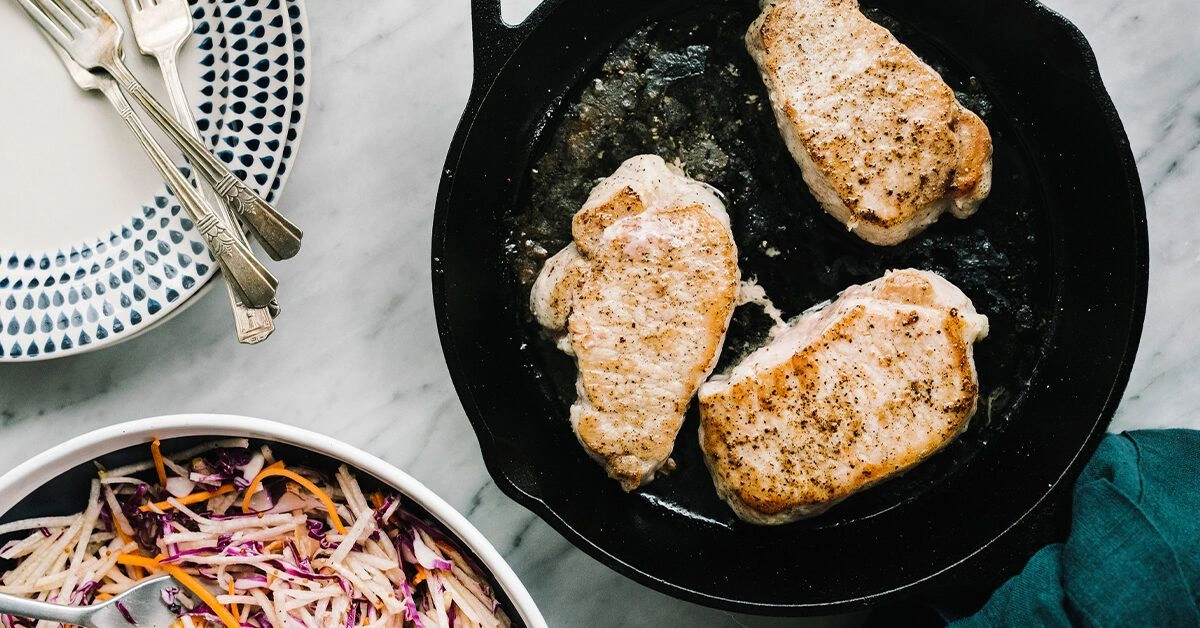
Pork chops supply valuable nutrients such as protein, selenium, zinc, and iron. However, keep an eye on how often you consume them since they are classified as red meat.
Among the many pork cuts, the pork chop is the most commonly chosen, per the National Pork Board. That said, not every pork chop is identical (1).
Pork chops go by several names — loin, rib, sirloin, top loin, or blade chops — but they all originate from the loin that extends from a pig’s shoulder to its hip.
Of course, the way you prepare a pork chop changes its nutritional makeup. Fat content also shifts slightly depending on which specific section of the loin the chop is cut from.
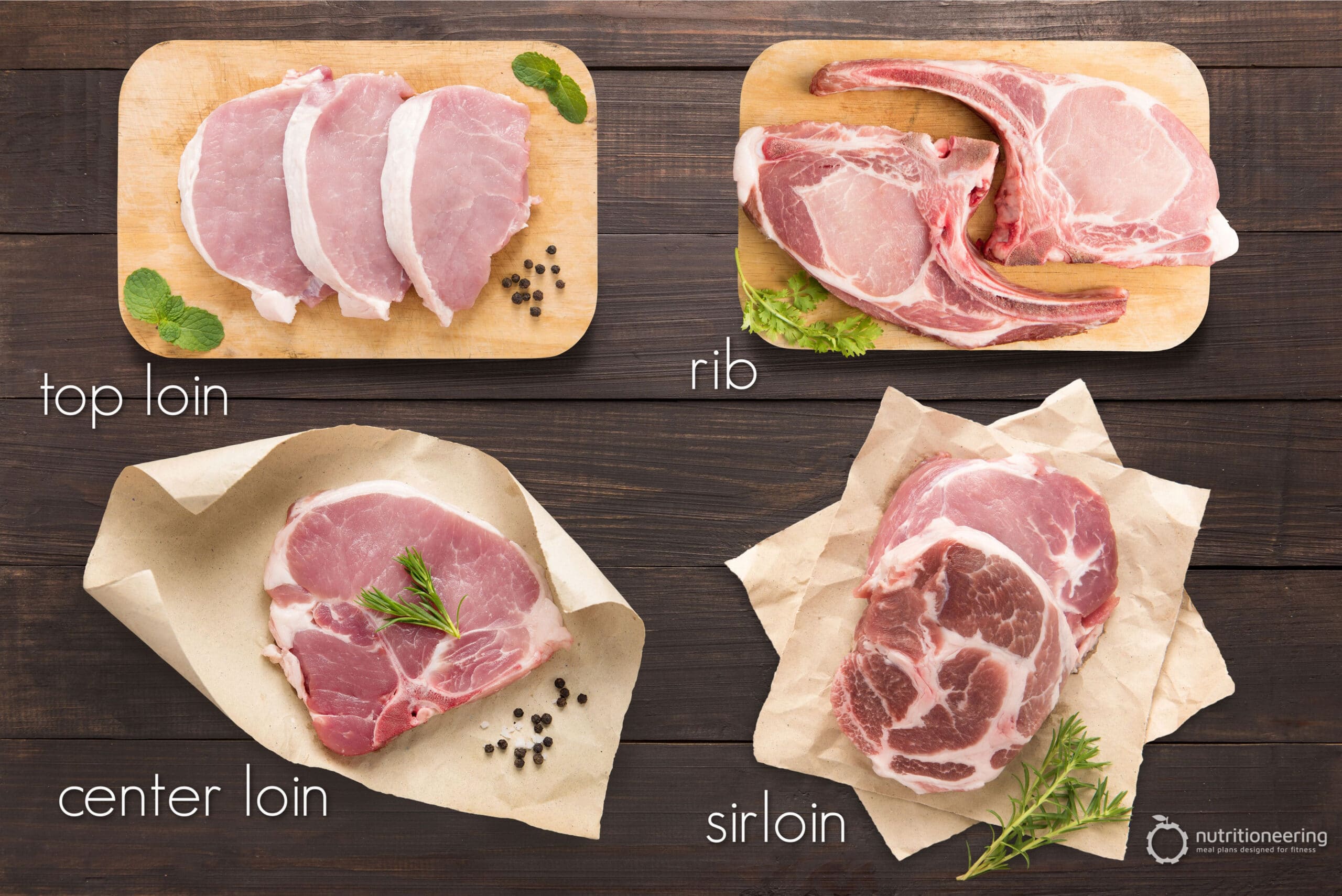
For example, a sirloin pork chop is among the leaner selections, while the tenderloin is the leanest option.
Other cuts like the New York pork chop, Porterhouse pork chop, and Ribeye pork chop contain more total fat than a sirloin chop, though the extra saturated fat is minimal (1).
This piece examines whether pork chops are a healthy choice and how best to prepare them to support your nutritional goals.
Nutrients in pork chops
Overall — regardless of how they’re cooked — pork chops are particularly rich in selenium. Selenium supports immune and endocrine function and has antioxidant and anti-inflammatory roles (2).
Pork chops are also a substantial source of zinc, and they provide useful amounts of:
- iron
- potassium
- magnesium
Yet, preparation method alters calories, fat, and sodium content. Fried pork chops, for instance, contain higher amounts of all three.
Nonetheless, fried pork chops can still be included in a balanced diet if you account for the extra calories, fat, and sodium.
Below is a comparison between a boiled or baked pork chop and one that’s breaded and fried:
| Large pork chop (8 oz, or 227 g, with a bone), broiled or baked, provides (3) | Large pork chop (8 oz, or 227 g, with a bone), breaded and fried (4) | |
| Calories | 276 | 424 |
| Protein | 36 grams | 33 grams |
| Fat | 14 grams | 22 grams |
| Carbs | 0 grams | 23 grams |
| Fiber | 0 grams | 1 gram |
| Sugar | 0 grams | 2 grams |
| Sodium | 29% of the daily value (DV) | 33% of the DV |
| Selenium | 113% of the DV | 107% of the DV |
| Phosphorus | 29% of the DV | 28% of the DV |
| Zinc | 23% of the DV | 23% of the DV |
| Potassium | 13% of the DV | 11% of the DV |
| Iron | 4% of the DV | 13% of the DV |
| Copper | 10% of the DV | 17% of the DV |
| Magnesium | 10% of the DV | 11% of the DV |
Summary: Pork chops are naturally a lean protein source, but preparation methods greatly affect their nutrition. See below for cooking approach details.
The health benefits of pork chops
A complete source of high-quality protein
Amino acids form proteins, and protein is vital for numerous body processes, from building muscle to enabling hormone production that helps regulate mood.
We require essential amino acids because our bodies can’t manufacture them — and pork chops contain all of these essential amino acids.
Pork chops are also rich in protein. A large chop supplies over one-third of an average adult’s daily protein requirement.
Protein is especially filling — more so than carbohydrates or fats — which helps keep you satisfied between meals (5).
Supports weight loss and fat reduction
Because protein promotes satiety, people who consume more protein often reduce overall calorie intake and tend to lose weight (5).
Additionally, recent studies indicate that adding pork to the diet — particularly within weight-loss plans — can support reductions in body weight and fat.
A review suggests pork helps with weight and fat loss because it increases feelings of fullness, raises energy expenditure, and aids blood sugar control (6).
Provides important micronutrients
Here are several nutrients present in pork:
- Selenium. While research is not exhaustive, sufficient selenium levels are linked with lower risks of certain cancers, cardiovascular disease, thyroid problems, and age-related cognitive decline (2).
- Zinc. Animal proteins are a concentrated way to obtain zinc, and pork chops rank among the better food sources. Zinc is essential for immune health and maintaining skin integrity (7).
- Iron. Iron is vital for cell function, hormone production, muscle metabolism, and oxygen transport. Heme iron, the form found in animal products, is absorbed more efficiently than plant-based iron (8).
Summary: Pork supplies complete, high-quality protein that promotes satiety and provides selenium, zinc, and bioavailable iron — all key nutrients.
The downsides of pork chops
A notable drawback of pork, including pork chops, is that it is a red meat — despite past marketing that called it “the other white meat” (9).
Dietary guidance for healthy eating (for example, the USDA Dietary Guidelines for Americans) recommends limiting intake of red meats.
For instance, a 2020 study of 29,682 adults found that every two additional servings of unprocessed red meat were linked with a modest 6% rise in cardiovascular disease incidence and a 3% increase in all-cause mortality.
The study reported that the relationship between red meat consumption and cardiovascular events (such as heart disease, stroke, heart failure, and cardiovascular death) and overall mortality strengthened with age (10).
Summary: Although marketed previously as “the other white meat,” pork is a red meat. High intake of red meats has been associated with an increased risk of cardiovascular disease, so limiting consumption is advisable.
Different ways to cook pork chops
Pork chops are highly adaptable — both in cooking method (grilling, baking, roasting, etc.) and in flavoring (seasonings, fruit-based sauces, salsas, and more).
Common cooking techniques for pork chops, according to The National Pork Board, include (11):
- Sautéed or stir-fried. This high-heat, rapid method produces excellent flavor when you slice the chop into small pieces or thin strips to prevent overcooking and dryness. You can cook the chop plain or coat it with flour, breading, or batter to lock in moisture — though coatings add calories (12).
- Baked or roasted. Preheat the oven to 350°F (176°C) and roast until the internal temperature reaches the desired doneness, at least 145°F (13, 14).
- Smoked. For smoking, grill-mark the chops first, then smoke at 225–250°F (107–121°C) for 45–60 minutes or until the internal temperature reaches at least 145°F (63°C) (14).
- Grilled. On a hot grill, pork chops cook quickly — typically 4–6 minutes per side until they reach 145°F (63°C).
- In an Instant Pot. Brown the chops using the sauté function, remove them, then add them back later to pressure-cook with the other ingredients.
- Broiled. Broiling produces a crisp exterior. Depending on chop thickness, broil times can range from about 3–18 minutes (15).
Summary: Pork chops can be prepared many ways — stir-fried, baked, grilled, or smoked. Always ensure pork reaches a minimum safe internal temperature of 145°F (63°C).
How to cook pork chops
Cooking time for a pork chop depends on thickness; chops can be as thin as 1/2 inch or up to 2 inches thick.
Regardless of thickness, a tender, flavorful, and safe pork chop is cooked to an internal temperature of 145°F (63°C), which corresponds to medium-rare. Let it rest for 3 minutes afterwards (16).
If you prefer pork more well-done, aim for internal temperatures of 150–155°F (66–68°C) for medium, 155–160°F (68–71°C) for medium-well, and 160°F (71°C) for well-done (16).
Cooking pork to safe temperatures is crucial because undercooked or raw pork can transmit foodborne illnesses, including hepatitis E virus (HEV) or Trichinellosis, a parasitic infection (17, 18).
Summary: Always cook pork chops to a minimum internal temperature of 145°F (63°C) to lower the risk of foodborne disease. If you want a more well-done chop, cook to the higher temperatures above.
The bottom line
Pork chops are an easy-to-prepare lean red meat that provide important nutrients like protein, selenium, zinc, and iron, which support everyday bodily functions and can aid weight loss.
Because pork chops are classified as red meat, be mindful of how frequently you consume them. When you do prepare them, ensure they are cooked thoroughly; undercooked or raw pork can cause foodborne illness.
Just one thing
Try this today: Start by making this garlic-roasted pork chops recipe. It’s a 5-ingredient, 25-minute main course that could become a go-to weeknight meal!


















Leave a Reply
You must be logged in to post a comment.