

Key takeaways
- Acid reflux during the night is often worsened by lying flat, which limits gravity’s ability to move food and stomach acid efficiently through the digestive tract.
- Management options include over-the-counter medications, identifying and limiting trigger foods and beverages, and reducing stress with practices such as yoga and meditation.
- Preventive measures include elevating the head of the bed, eating smaller meals, avoiding late-night snacks, and maintaining proper posture.

If you regularly deal with acid reflux, you’ve likely noticed that symptoms can intensify at bedtime. Many people searching for What helps heartburn fast at night are looking for ways to calm that burning sensation before sleep.
When you lie down, gravity can no longer help keep food and stomach acid moving downward through the esophagus and into the stomach. As a result, acid may linger and irritate the esophageal lining.
Below, you’ll find practical strategies that may reduce how often nighttime acid reflux occurs, lessen its severity, and help prevent complications linked to ongoing reflux after dark.
Treatment strategies
Relief for mild or occasional acid reflux episodes may involve one or more of the following approaches. If you’re wondering What helps heartburn fast at night, combining medication with lifestyle adjustments often provides the most effective results.

Try OTC or prescription medications
Over-the-counter (OTC) medications may ease common acid reflux symptoms such as heartburn. These may include:

- antacids (Tums, Mylanta)
- H2 receptor blockers, such as cimetidine (Tagamet HB) and famotidine (Pepcid AC)
- proton pump inhibitors, like omeprazole (Prilosec)
Antacids can provide quick, short-term relief by neutralizing stomach acid, which is why they are often recommended when considering Best heartburn relief fast options. H2 receptor blockers and proton pump inhibitors reduce acid production and may offer longer-lasting control.
If OTC treatments don’t sufficiently control your symptoms, consult a healthcare professional. They may prescribe a stronger medication or adjust your treatment plan to better manage nighttime reflux.
Avoid food and drink triggers
Certain foods and beverages are known to trigger acid reflux, including:
- alcohol
- caffeinated drinks
- spicy foods
- citrus fruits
- tomatoes
- chocolate
- peppermint
- fried and fatty foods
Triggers differ from person to person. A 2021 review found that research on commonly suspected trigger foods for acid reflux and gastroesophageal reflux disease (GERD) is mixed. In some individuals, these foods worsened symptoms; in others, they had minimal effect.
For pregnant individuals experiencing reflux, dietary adjustments may be especially important. You can explore strategies in Best heartburn relief fast pregnancy for additional guidance tailored to pregnancy-related heartburn.
Keep track of symptoms
Maintaining a detailed food and symptom diary can help you pinpoint personal triggers. Sharing this information with a doctor can provide valuable insight and support a more individualized treatment plan.
In your journal, note:
- what and when you eat
- any symptoms that develop and their timing
- how long symptoms persist
This level of tracking can be particularly helpful when trying to determine what helps heartburn fast at night, as patterns often emerge over time.
Know your medication side effects
Some medications may contribute to acid reflux and GERD, including:
- anticholinergics
- calcium channel blockers
- nitroglycerin
- benzodiazepines
- tricyclic antidepressants
- nonsteroidal anti-inflammatory drugs (NSAIDs)
- glucagon
If you suspect a medication is worsening your reflux, speak with a doctor before making any changes. They may adjust your dosage or recommend an alternative therapy that is less likely to aggravate symptoms.
Reduce stress
Stress has been associated with increased acid reflux and GERD symptoms. Heightened stress may also amplify your perception of discomfort.
Stress-management strategies that may help include:
- yoga
- meditation
- regular exercise
- talking with a friend, family member, or counselor
Incorporating relaxation techniques into your evening routine may improve both reflux symptoms and overall sleep quality.
Maintain a moderate weight
Overweight and obesity have been associated with GERD and acid reflux. Excess abdominal weight can increase pressure on the stomach, encouraging acid to move upward into the esophagus.
For some individuals, gradual weight loss may decrease symptom frequency and severity. A healthcare professional can advise whether weight management is appropriate for your situation.
Prevention tips
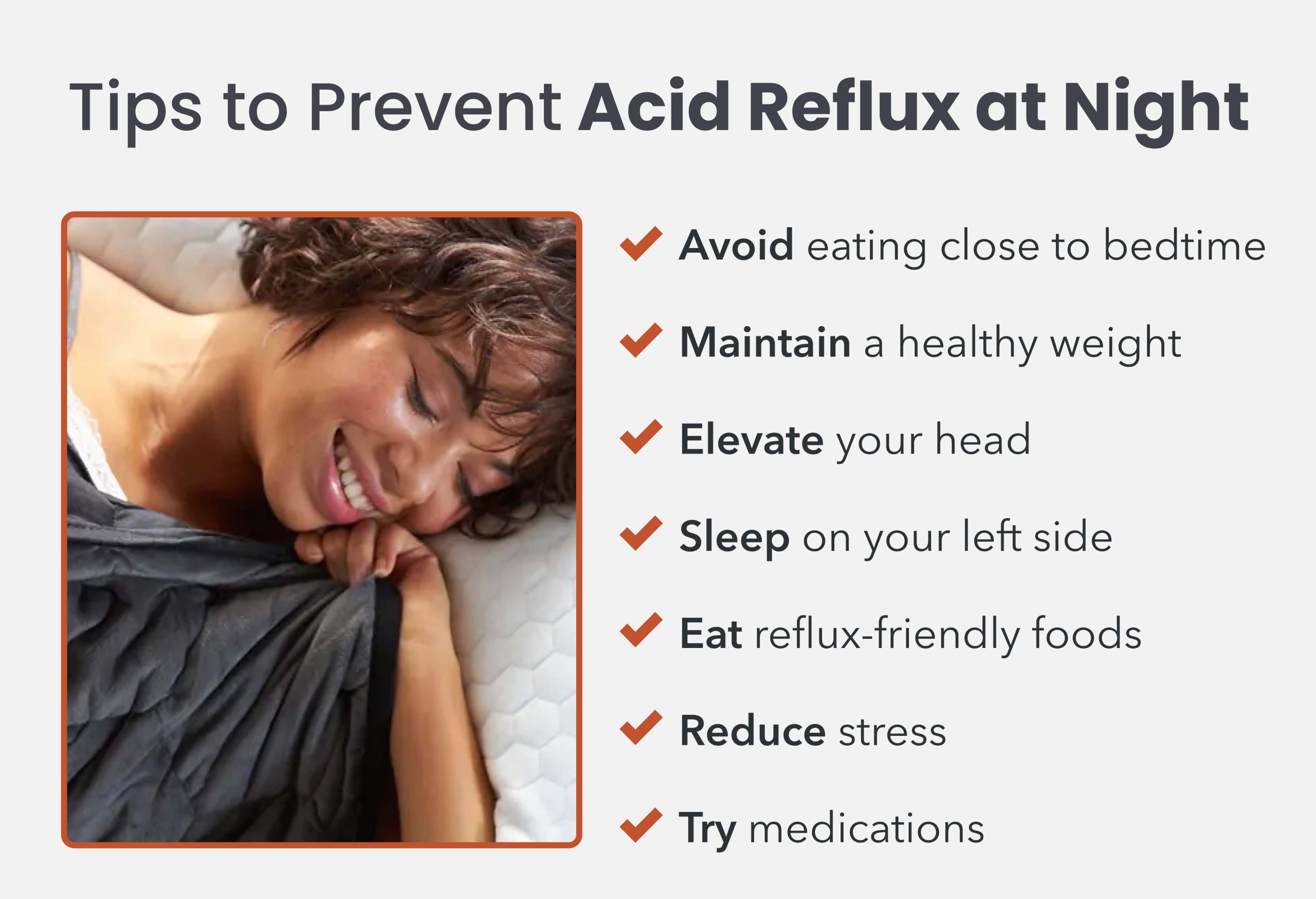
To help prevent acid reflux at night, consider the following strategies:
- sleeping with your head elevated
- sleeping on your left side
- eating smaller, more frequent meals during the day
- experimenting with different foods to identify triggers
- chewing food slowly and thoroughly
- avoiding food at least 3 hours before lying down or going to bed
- improving your posture when sitting and standing
- quitting smoking, if you smoke
- avoiding tight-fitting clothing
- taking a light walk after dinner
Elevating the head of your bed by several inches, rather than just using extra pillows, may be especially effective. If these measures don’t bring relief, a healthcare professional may recommend OTC or prescription treatment.
When it happens
After you eat or drink, the lower esophageal sphincter (LES) — a ring of muscle at the bottom of the esophagus — relaxes to allow food and liquid to pass into the stomach.
The LES then closes, and stomach acid begins breaking down what you consumed.
If the LES weakens or relaxes inappropriately, stomach acid can flow backward through the LES and irritate the esophageal lining. This backflow leads to the burning discomfort associated with acid reflux.
The precise reason this occurs is not fully understood, but researchers have identified several risk factors, including:
- pregnancy
- hiatal hernia
- eating certain foods
- smoking
- drinking alcohol
- stomach ulcer
- stomach bacterial infection
- an increase in some hormones, such as estrogen and progesterone
Understanding these factors can help guide both prevention and treatment decisions.
When is acid reflux GERD?
If you experience acid reflux several times per week, you may have GERD. Unlike occasional reflux, GERD is a chronic condition that often requires long-term medical management and monitoring.
Frequently asked questions
How do I stop acid reflux at night?
Ways to reduce acid reflux at night include taking OTC medications as directed, elevating the head of your bed, eating smaller meals, and practicing stress-reduction techniques. Avoiding late-night eating is also key when considering what helps heartburn fast at night.
What causes acid reflux only at night?
If symptoms occur exclusively at night, lying down soon after eating is a common cause. The horizontal position makes it easier for stomach acid to move into the esophagus.
What can I drink for acid reflux?
Beverages that may be soothing for acid reflux include water, herbal teas, plant-based milk, and coconut water. Avoiding caffeinated and carbonated drinks may also help minimize symptoms.
Takeaway
Although completely preventing acid reflux is ideal, taking steps to manage symptoms before bedtime can make it easier to fall asleep and reduce ongoing irritation of the esophagus overnight.
If you know certain foods trigger your symptoms, try to avoid them — particularly at dinner. If antacids or other medications provide relief, take them as directed and well before lying down.
Should symptoms persist, elevate the head of your sleeping surface as much as possible. Combining practical lifestyle adjustments with appropriate treatment can significantly improve nighttime comfort and help answer the common question: What helps heartburn fast at night.






















Leave a Reply
You must be logged in to post a comment.