
The form of alcohol present in alcoholic drinks is known as ethyl alcohol or ethanol. Ethanol is generated naturally when yeasts and other microorganisms ferment sugars found in plants.
Denatured alcohol refers to ethanol that has had chemicals mixed into it to render it unsuitable for drinking. You might find denatured alcohol listed among the components of products such as:
- household cleaning solutions
- fuels
- industrial formulations
- skin care items
- hand sanitizers
- disinfecting agents
Isopropyl alcohol is a different chemical type of alcohol, though it has overlapping uses. Both isopropyl and denatured alcohols are frequently employed as disinfectants and are hazardous if swallowed. The phrase rubbing alcohol can refer to either one when used as a medical antiseptic.
Below, we’ll examine the distinctions between denatured alcohol and isopropyl alcohol and outline what to do if someone ingests either.
Denatured alcohol vs. isopropyl alcohol
While denatured alcohol and isopropyl alcohol are used similarly, they are chemically distinct.
Denatured alcohol is ethanol blended with bitter or poisonous additives to prevent consumption. Ethanol’s chemical formula is C2H6O, whereas isopropyl alcohol is C3H8O.
The most frequent additive in denatured alcohol is 5 to 10 percent methanol. Methanol is extremely toxic if taken by mouth. Research has documented fatalities after ingesting as little as 0.5 ounces of a 40-percent methanol solution.
Other agents that might be added to denatured alcohol include:
- gasoline
- isopropyl alcohol
- benzene
- pyridine
- castor oil
- acetone
Isopropyl alcohol is widely used as a disinfectant in hand sanitizers and cleaning products at a 70-percent concentration. You’ll also see it listed on cosmetic labels and aftershaves.
Like denatured alcohol, isopropyl alcohol is not safe to ingest. Swallowing it is seldom fatal for adults but can lead to significant illness. Young children and infants face the greatest risk of severe complications or death.
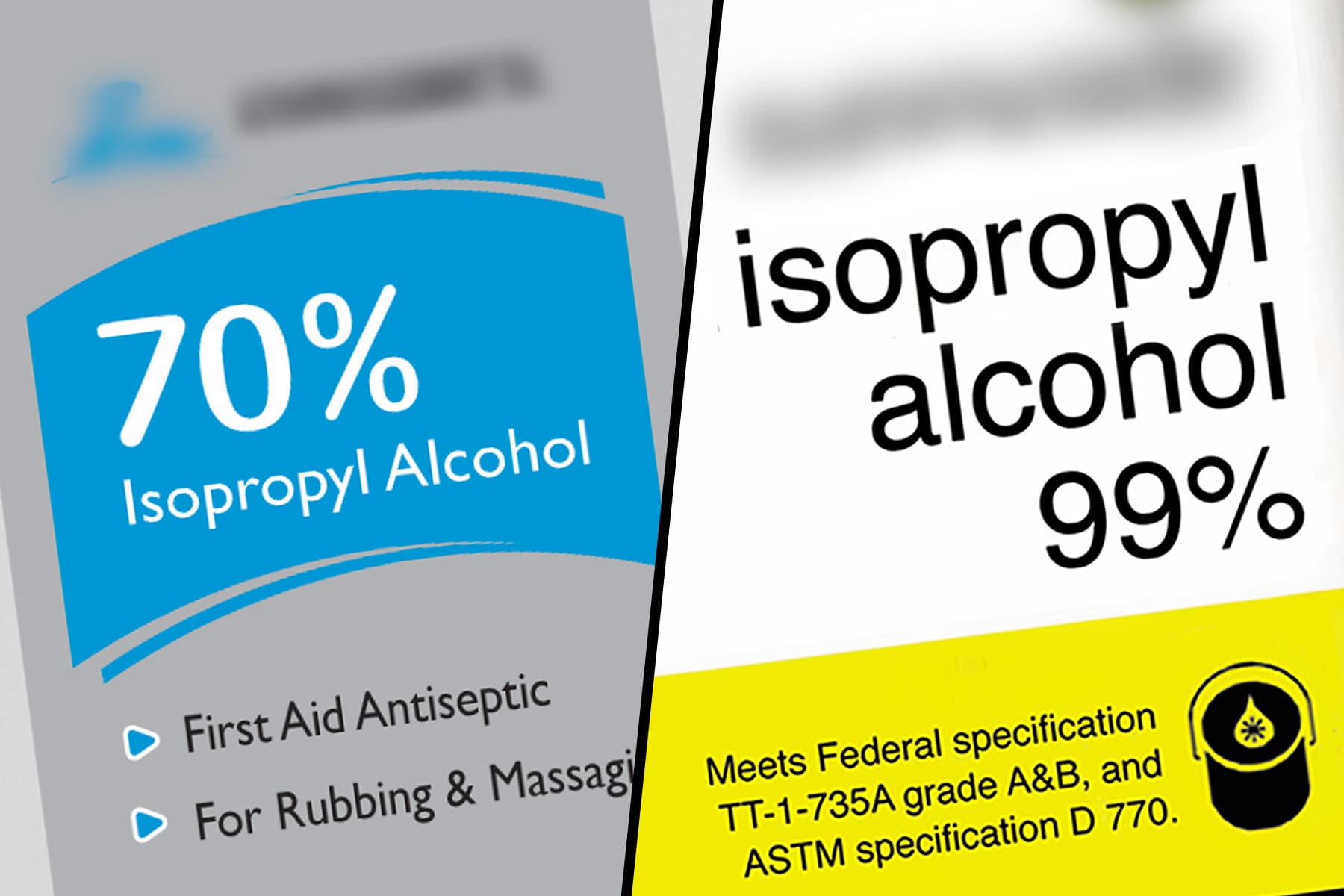
Isopropyl alcohol poisoning is the most frequently reported toxic alcohol ingestion to U.S. poison control centers each year.
Uses for denatured alcohol and isopropyl alcohol
Both denatured alcohol and isopropyl alcohol are incorporated into a broad array of products. Below are some of their typical applications.
Disinfectants
Each alcohol type is commonly used in hand sanitizers, medical disinfectants, and household cleaners. They are the only two alcohols the FDA permits in alcohol-based hand sanitizers.
Fuels
You may encounter ethyl alcohol or isopropyl alcohol listed among ingredients for fuels used in small camping stoves. Ethyl alcohol derived from biomass is also promoted as a greener alternative to gasoline for cars.
Cosmetics
Denatured alcohol is added to cosmetic products to serve as an:
- antifoaming agent
- astringent
- solvent
- antimicrobial component
Likewise, isopropyl alcohol acts as an:
- antifoaming agent
- astringent
- solvent
- thinning agent to reduce viscosity
Industrial products
Both denatured alcohol and isopropyl alcohol are used across many industrial items, including:
- adhesives and sealants
- agricultural formulations
- antifreeze products
- laundry and dishwashing formulations
- fabric and textile goods
- plastic and rubber materials
| Use | Denatured alcohol | Isopropyl alcohol |
|---|---|---|
| Hand sanitizer | ✓ | ✓ |
| Disinfectant | ✓ | ✓ |
| Fuel | ✓ | ✓ |
| Adhesives and sealants | ✓ | ✓ |
| Cosmetics | ✓ | ✓ |
| Agricultural products | ✓ | |
| Antifreeze products | ✓ | |
| Laundry and dishwashing products | ✓ | |
| Antifoaming agent | ✓ | |
| Fabric and textile products | ✓ | |
| Plastic and rubber products | ✓ |
Is denatured alcohol safe to use on the skin?
Both denatured alcohol and isopropyl alcohol are generally safe to apply topically, and they are the two most common active ingredients in hand sanitizers.
However, alcohol can provoke skin reactions in some people. Contact irritant dermatitis may develop, producing symptoms such as:
- dryness
- itching
- irritation
- skin fissures
The FDA advises that hand sanitizer be given to children under 6 only with adult oversight, because young children are more susceptible to alcohol poisoning if they ingest it.
Precautions when working with denatured alcohol and isopropyl alcohol
Both denatured alcohol and isopropyl alcohol are extremely flammable, so store and use them away from open flames or sparking devices.
Additional safety measures include:
- wear eye protection, and if alcohol gets into your eyes, rinse with water for at least 15 minutes.
- use protective gloves and clothing to minimize skin exposure
- keep them separate from other chemicals, since they can react (for example, ethyl alcohol reacts violently with acetyl bromide and acetyl chloride)
If you ingest denatured or isopropyl alcohol
Swallowing even modest quantities of alcohol not intended for drinking can cause poisoning or death.
An earlier 2011 case report describes a 19-year-old who died by ingesting denatured alcohol marketed as stove fuel. According to Poison Control, the toxic dose of 50 percent isopropyl alcohol for a 16-month-old child is roughly two teaspoons.
Medical emergencyIf you accidentally swallow denatured or isopropyl alcohol, contact Poison Control at 1-800-222-1222 for professional advice. Call 911 right away if the person has:seizures difficulty breathing an inability to awaken other severe symptomsYou should also get emergency care if:someone may have attempted self-harm the person is pregnant the person is younger than 6 months or older than 79 years.
Signs of denatured or isopropyl alcohol poisoning may include:
- coma
- dizziness
- low body temperature
- low blood pressure
- nausea
- fast heart rate
- slow breathing rate
- reduced reflexes
- abdominal pain
- slurred speech
- throat pain or burning
- vomiting
Takeaway
Denatured alcohol is simply ethanol that has been mixed with additives to make it unsuitable for drinking.
Isopropyl alcohol is a different kind of alcohol that shares many practical uses. Neither should be consumed orally, but both are typically safe for topical use in products like hand sanitizers and rubbing alcohol. For more on comparing common disinfectants, see rubbing alcohol vs hydrogen peroxide.















Leave a Reply
You must be logged in to post a comment.