

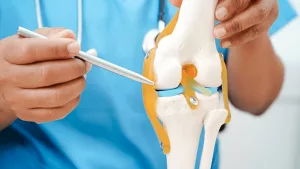
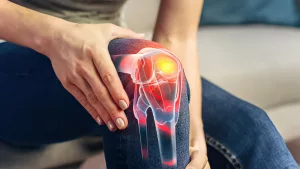
Because the knee is one of the most frequently used joints in the body, discomfort in this area is a common complaint. While knee pain can present in many ways, a burning sensation in the knee may signal several different issues.
The burning feeling might seem to involve the entire knee, but more often it’s localized — most commonly behind the knee or at the front beneath the kneecap. In some people, the burning is concentrated along the knee’s sides.

Causes of burning in the knee
Multiple conditions can produce a burning sensation in the knee. The specific location of the burning often points toward the underlying cause.
Burning behind the knee is frequently caused by:
- ligament injury
- cartilage damage
- overuse-related injury
- osteoarthritis
Burning at the front of the knee is commonly due to an overuse condition known as runner’s knee — also called chondromalacia or patellofemoral pain syndrome (PFS). It can also stem from tendinitis from inflammation of the patellar tendon.
Burning along the outer side of the knee is often associated with iliotibial band syndrome (ITBS).
Burning knee pain at night
Some people notice their knee pain worsens at night. Possible explanations include:
- Blood vessels dilate during sleep, which can press on nearby nerves.
- Without daytime distractions, focusing on physical pain can heighten perception of discomfort.
- Hormonal pain-modulating signals decrease during sleep, allowing more pain messages to reach the brain.
Treatment for burning in the knee
Treatment depends on the cause of the burning sensation.
Knee ligament tear
If a ligament tear is partial, management may include:
- strengthening exercises for surrounding muscles
- a protective knee brace for activity
- activity modification to avoid further injury
A full ligament tear often requires surgical repair.
Knee cartilage tear (damage to the joint surface)
Initial care for a cartilage tear is usually nonoperative and may involve:
- muscle-strengthening regimens such as supervised physical therapy or a structured home program
- pain control, commonly with nonsteroidal anti-inflammatory drugs (NSAIDs)
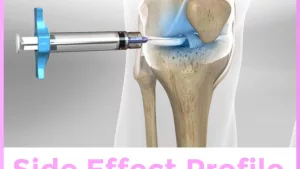
- steroid injections into the knee
If conservative measures fail, surgery may be considered. Surgical choices include:
- Knee chondroplasty. Damaged cartilage is smoothed to decrease joint friction.
- Knee debridement. Loose cartilage fragments are removed and the joint is irrigated.
- Osteochondral autograft transplantation (OATS). Healthy cartilage from a non-weight-bearing site is transplanted to the injured area.
- Autologous chondrocyte implantation. Cartilage cells are harvested, grown in a laboratory, and reimplanted to regenerate healthy cartilage.
Osteoarthritis of the knee
Osteoarthritis cannot be cured, so treatment aims to control symptoms and may include:
- pain relief with over-the-counter medications such as acetaminophen (Tylenol), ibuprofen (Advil, Motrin IB), or naproxen sodium (Aleve)
- physical and occupational therapy
- corticosteroid injections
In time, joint replacement surgery (arthroplasty) might be required.
Chondromalacia
Also called runner’s knee, chondromalacia involves breakdown of the cartilage under the patella (kneecap). First-line treatments include:
- applying ice to reduce post-exercise swelling
- pain control with OTC medications
- resting the knee and avoiding actions like squatting and kneeling
- patellar alignment using a brace, tape, or tracking sleeve
If nonoperative measures do not help, an arthroscopic procedure may be recommended to smooth unstable cartilage and reshape the trochlear groove on the femur.
Patellofemoral pain syndrome (PFS)
Mild PFS is usually managed with:
- resting the knee and avoiding stair climbing or kneeling
- OTC pain relievers
- rehabilitation exercises targeting the quadriceps, hamstrings, and hip abductors
- supportive braces
For more persistent or severe cases, arthroscopy to remove damaged cartilage fragments may be advised.
Patellar tendinitis
Patellar tendinitis is an overuse injury of the tendon connecting the kneecap to the shinbone. Typical treatment includes:
- rest, especially avoiding running and jumping
- ice to decrease inflammation
- pain management with OTC drugs
- strengthening exercises for the leg and thigh
- stretching to lengthen the muscle-tendon unit around the knee
- patellar tendon straps to offload stress from the tendon
If conservative care is ineffective, your physician might consider:
- platelet-rich plasma injections
- percutaneous tenotomy with an oscillating needle
ITBS
Iliotibial band syndrome is a repetitive strain injury commonly affecting runners. Although there’s no single proven cure, runners are often advised to follow this four-step approach:
- Stop running.
- Cross-train with low-impact activities like cycling or pool running.
- Massage the quadriceps, glutes, hamstrings, and iliotibial band.
- Strengthen the core, gluteal muscles, and hip muscles.
Takeaway
A burning sensation in the knee can reflect problems in the joint itself or in the surrounding soft tissues such as ligaments and tendons. Noting whether the burning is at the front, back, or sides of the knee can help narrow the list of possible causes.
If the pain continues or disrupts your daily life or sleep, seek evaluation from your doctor.
















Leave a Reply
You must be logged in to post a comment.