

Key takeaways
- Early ALS symptoms can include muscle twitching, stiffness, or weakness.
- However, some evidence suggests that older females may be more likely to have symptoms affecting the face and neck muscles. This is known as bulbar onset ALS.
- Bulbar onset ALS has links to a shorter survival time, so anyone with symptoms that could be ALS should speak with a doctor, especially if they are affecting the head.
Amyotrophic lateral sclerosis (ALS), previously called Lou Gehrig’s disease, is a progressive neurological disorder that targets motor neurons, the nerve cells responsible for voluntary muscle movement. As these neurons deteriorate, muscle control gradually declines.
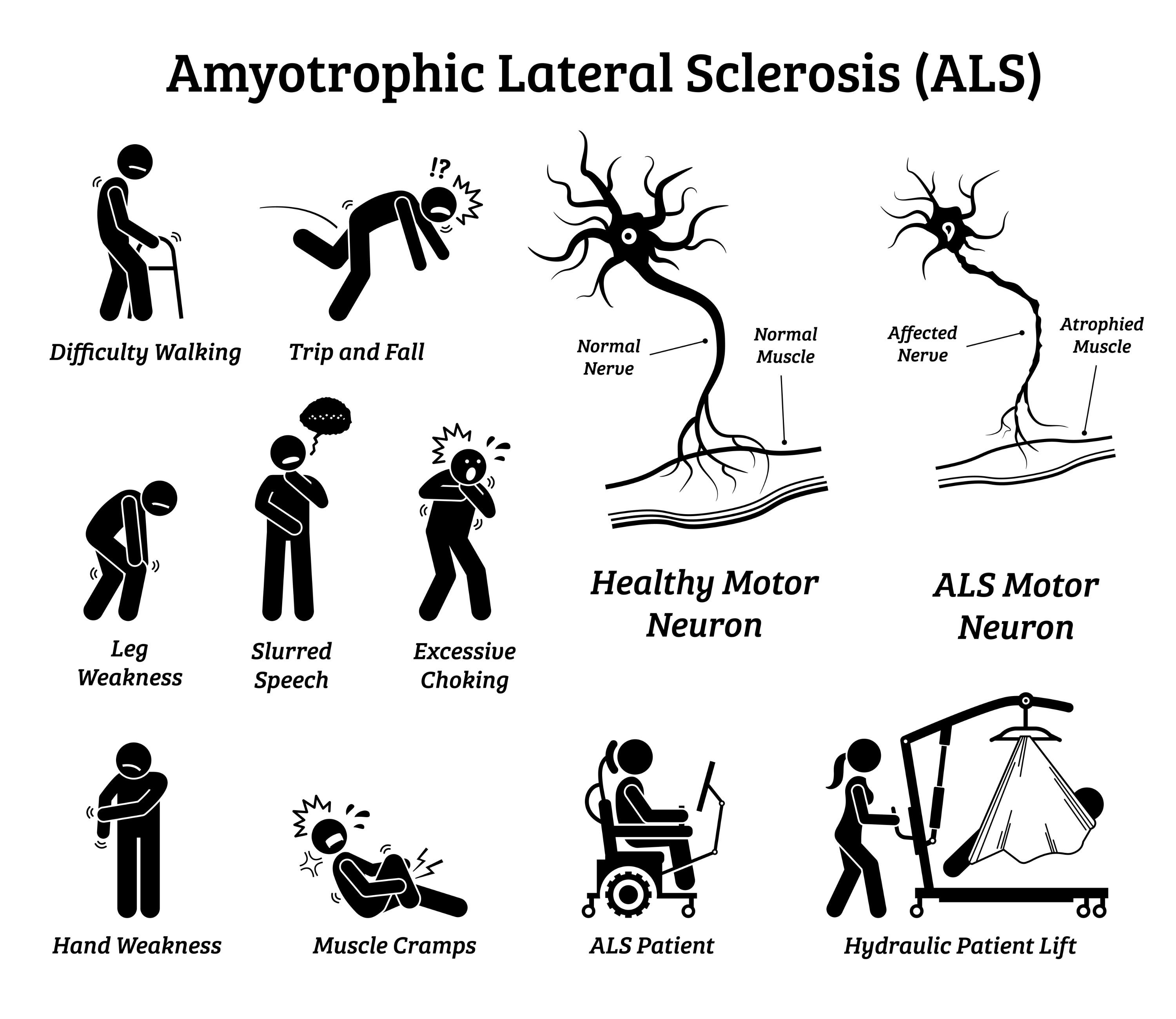
When discussing the Early signs of ALS in Females, it’s important to understand that symptoms can appear subtly and may differ slightly based on age and biological sex. According to the ALS Association, the condition is 20% more common in men than in women, though this gap narrows with advancing age, eventually becoming nearly equal among older adults.
Below, we explore the early warning signs of ALS in females, what distinguishes limb onset from bulbar onset ALS, and what to expect regarding diagnosis, treatment approaches, and overall outlook.
The use of binary terms such as “male” and “female” or “men” and “women” in this article reflects the terminology used in the cited sources. Unless otherwise specified, it is unclear whether the referenced research included participants with broader gender identities.
What are the early signs of ALS in females?
In many individuals, the earliest manifestations of ALS involve noticeable muscle-related changes. Common initial symptoms may include:
- weakness
- twitching
- cramps
- stiffness
These early motor symptoms often begin subtly. For example, a woman may notice difficulty gripping objects, tripping more frequently, or experiencing persistent muscle fasciculations. Over time, these changes may become more pronounced.
Research indicates that symptom patterns can vary by age and sex. A 2021 study found that female adults who develop ALS before age 60 are more likely to experience limb onset ALS. In contrast, bulbar onset ALS becomes significantly more frequent after age 60, although limb onset remains the most common overall presentation.
Limb onset ALS typically starts with weakness in the arms or legs, potentially affecting walking, climbing stairs, handwriting, or lifting objects. Bulbar onset ALS, on the other hand, involves the muscles of the face and neck. This form may first appear as slurred speech, difficulty swallowing, or changes in voice quality.
Overall, approximately 25% of people with ALS initially develop bulbar onset symptoms affecting the neck and facial muscles.
Understanding the Early signs of ALS in Females can be especially important because bulbar onset ALS has been linked to a more rapid disease course. If you’re unsure whether your symptoms resemble ALS, reading personal experiences such as My first ALS symptoms or My first ALS symptoms patient stories may offer helpful perspective—though only a medical professional can provide an accurate diagnosis.
Researchers continue to investigate why ALS may initially present differently depending on sex, hormonal factors, and age-related biological changes.
How quickly can ALS progress after the first stage?
There is no fixed timeline for how ALS progresses after the earliest stage. Disease progression varies widely from person to person. On average, the survival time is about 3 years after symptom onset, but some individuals experience slower progression, while others decline more rapidly.
A study from 2025 suggests that bulbar onset ALS may advance more quickly compared with limb onset forms. This may partly explain why recognizing the Early signs of ALS in Females—particularly those involving speech and swallowing—is so critical for timely intervention.
It’s important to remember that statistics describe averages and cannot predict an individual’s course. Factors such as overall health, respiratory function, and access to multidisciplinary care may influence outcomes.
Why is an early diagnosis important?
Because bulbar onset ALS is often considered an aggressive subtype, early identification can make a meaningful difference. Prompt diagnosis allows individuals to begin treatments that may help slow disease progression and maintain quality of life for as long as possible.
An accurate diagnosis is also essential to rule out other neurological conditions. Bulbar onset ALS can resemble disorders such as multiple sclerosis or myasthenia gravis, both of which have distinct treatment protocols and prognoses. Misdiagnosis could delay appropriate management.
To confirm ALS and exclude other causes, healthcare professionals may use a combination of:
- physical exam
- blood and urine tests
- magnetic resonance imaging (MRI)
- a nerve conduction study
- electromyography (EMG)
These evaluations assess muscle activity, nerve signaling, and structural changes in the brain and spinal cord. Early neurological evaluation is particularly important if symptoms such as persistent muscle weakness, difficulty speaking, or trouble swallowing develop.
Treatment options for ALS
No matter which form of ALS is diagnosed, management generally involves a comprehensive, multidisciplinary plan. Treatment focuses on slowing progression, relieving symptoms, and supporting independence for as long as possible. Options may include:
- edaravone (Radicava)
- riluzole (Rilutek)
- tofersen (Qalsody)
- speech therapy
- occupational therapy
- physical therapy
- nutritional support
- a low impact exercise program
Medications such as riluzole (Rilutek) and edaravone (Radicava) may help slow disease progression in some individuals. Tofersen (Qalsody) may be considered in specific genetic cases. Supportive therapies are equally vital. Speech therapy can assist those with bulbar symptoms, while occupational and physical therapy help preserve mobility and daily functioning.
Nutritional support is particularly important for individuals experiencing swallowing difficulties, as maintaining adequate calorie intake can influence strength and energy levels. Low impact exercise programs, when guided by a healthcare professional, may help sustain flexibility and circulation without overexertion.
Outlook
The prognosis for ALS differs significantly depending on symptom type and progression speed. Across all forms of ALS, the median survival time is approximately 3 to 5 years. However, about 10% of people live for 10 years or longer.

Several factors have been associated with longer survival:
- mild obesity at the time of diagnosis
- younger age when symptoms began
- limb rather than bulbar symptoms
- better forced vital capacity, which is a lung capacity measurement
- better scores in a test known as the ALS Functional Rating Scale
Even so, these factors are not guarantees. ALS progression is highly individualized, and predicting an exact timeline remains challenging.
Takeaway
Women under 60 are less frequently diagnosed with ALS compared with men, but the risk equalizes with age. Older women are more likely to develop bulbar onset ALS, a form associated with shorter survival times.
Recognizing the Early signs of ALS in Females—including persistent muscle weakness, twitching, stiffness, slurred speech, or difficulty swallowing—can support earlier medical evaluation and intervention.
If you notice unexplained muscle changes that interfere with speaking, eating, walking, or using your hands, seek medical advice promptly. Early assessment and treatment planning may help slow progression and optimize quality of life.






















Leave a Reply
You must be logged in to post a comment.