

Hypermetropia and presbyopia are both refractive vision problems that lead to blurred sight. Although they produce similar complaints, their origins differ and so do their treatments.
Have distant or nearby objects begun to appear fuzzy? Numerous issues can produce this sign, and two frequent culprits are hypermetropia and presbyopia.
Keep reading to understand these conditions better and learn how they differ.
Symptoms of hypermetropia and presbyopia
Many signs of hypermetropia and presbyopia overlap, but there are important distinctions.
Signs of hypermetropia
Common indicators of hypermetropia include:
- eye strain or tiredness
- blurred vision when viewing objects up close or at a distance, which can appear suddenly
- headaches
- eyes that turn inward or to one side (eye deviation)
- duller vision, particularly for near objects
- a sensation that your eyes are crossed
- eye inflammation or redness
Signs of presbyopia
Typical symptoms of presbyopia are:
- blurred vision when attempting to focus on nearby items
- eye strain or tiredness
- headaches
- having to hold reading material at arm’s length
Causes of hypermetropia and presbyopia
Although hypermetropia and presbyopia share symptoms, their root causes are quite different. Hypermetropia may arise from several factors, whereas presbyopia has a single cause.
What causes hypermetropia
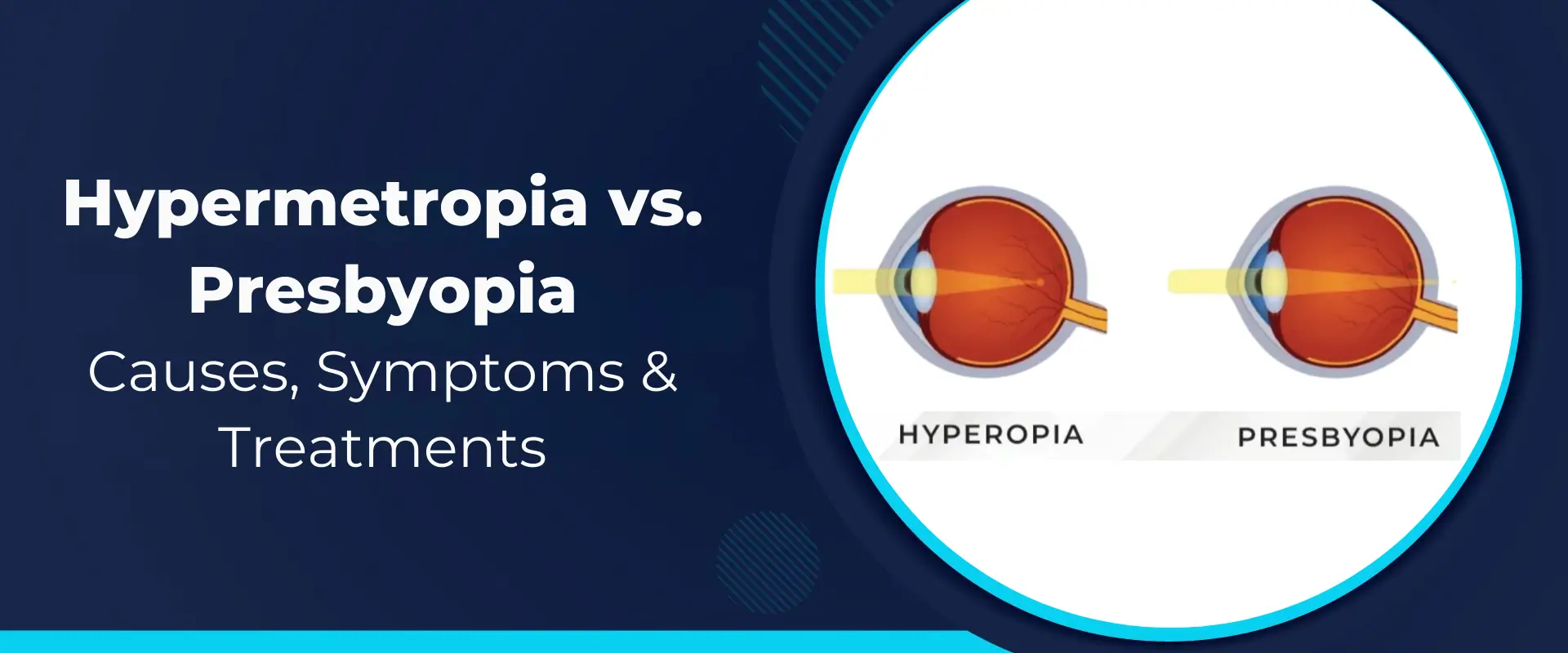
Hypermetropia occurs when the eyeball is too short from front to back, causing light to focus behind the retina instead of on it. This results in distant objects appearing unclear. Hypermetropia may also result if the lens or cornea’s curvature focuses light behind the retina.
Most people with hypermetropia are born with it, though eye injuries or diseases can also produce hypermetropia symptoms.
What causes presbyopia
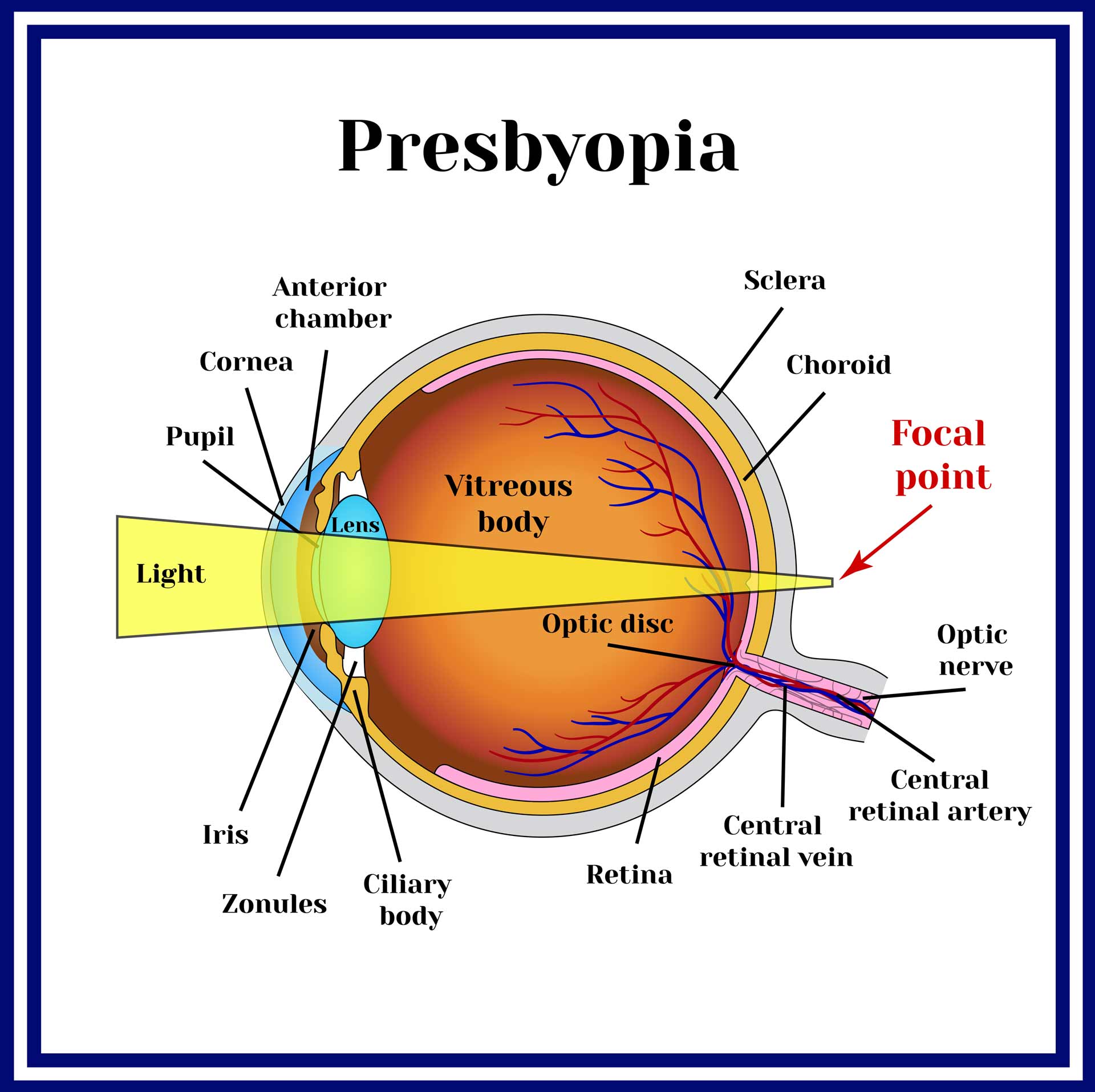
Presbyopia is caused by aging. Over time, the eye’s lens becomes less flexible, making it harder to focus light precisely on the retina as it once did.
As you age, the lens also has reduced ability to change shape, which impairs focusing on both near and distant objects.
When to see a doctor
Children often first notice difficulty seeing distant objects at school; sometimes a teacher spots it. Older adults may first detect problems when reading printed material.
See an eye specialist if blurred vision interferes with daily activities. An eye exam can determine the cause and lead to appropriate treatment.
If your vision changes suddenly, seek medical attention promptly, as it could signal a more serious issue.
Diagnosing hypermetropia and presbyopia
An eye examination by an ophthalmologist or optometrist is the best way to diagnose hypermetropia and presbyopia. The exam might include:
- reading letters of varying sizes and at different distances
- dilating your pupils so the doctor can view the interior of the eyes
- assessing eye muscle function by following an object with your eyes
- observing how well your pupils respond to light
- testing peripheral (side) vision
- measuring intraocular pressure
Treatment options for hypermetropia and presbyopia
Treatment depends on how severe your symptoms are. Some people find relief with conservative measures, while others require more involved interventions.
Treating hypermetropia
Mild hypermetropia might not require treatment. If it progresses, options include:
- glasses or contact lenses
- LASIK surgery
- lens replacement procedures, such as clear lens extraction with intraocular lens implantation or phakic intraocular lens implantation
Surgeries like LASIK or lens replacement are typically recommended only after eye growth has completed, usually in your 20s.
Treating presbyopia
For mild presbyopia, you can try:
- using large-print materials or increasing font size
- holding reading materials farther away
- using brighter lighting when reading
If presbyopia worsens, corrective glasses or contact lenses can ease symptoms. For many, over-the-counter reading glasses are sufficient.
Can hypermetropia or presbyopia be prevented?
Neither hypermetropia nor presbyopia can be prevented. Most people with hypermetropia are born with the condition, and your risk is higher if a family member has it.
Presbyopia, on the other hand, affects virtually everyone to some degree by around age 45.
Hypermetropia and presbyopia vs. hyperopia
Hyperopia is another term for farsightedness — essentially the same condition as hypermetropia.
Therefore hyperopia also causes nearby (and sometimes distant) things to appear blurry and can often be corrected with glasses or contact lenses.
Unlike presbyopia, which develops with aging, most people with hyperopia are born with it.
Hypermetropia and presbyopia vs. myopia
Myopia — nearsightedness — makes distant objects appear blurred. In that sense, it is the opposite of hypermetropia and presbyopia, which primarily affect near vision.
Myopia occurs when the eye’s shape causes light to focus in front of the retina rather than on it.
Although different from hypermetropia, myopia can produce similar symptoms such as eye fatigue and headaches, and may lead to squinting to see distant items more clearly.
Most myopia cases are managed with glasses or contact lenses, and refractive procedures like LASIK can remove the need for corrective lenses by reshaping the eye.
Hypermetropia and presbyopia vs. astigmatism
Astigmatism causes blurriness for objects both near and far because the eye becomes more oval than spherical.
You can have astigmatism alongside hypermetropia, presbyopia, or myopia, but it is a distinct condition.
Your risk of astigmatism increases if your parents have it, and it can also follow eye injury, disease, or surgery.
Besides blurred vision, astigmatism symptoms include headaches, difficulty seeing at night, and eyestrain. It can be treated with glasses, contact lenses, or surgeries such as LASIK.
Takeaway
Both hypermetropia and presbyopia cause blurry near vision. If you’re young or have long-standing blurred distance vision as well, hypermetropia is more likely. If you’re over about 45 and suddenly notice blurring for near tasks, presbyopia is the probable cause.
Regardless of age, consult an eye care professional if your vision becomes blurry so they can determine the cause and recommend appropriate treatment.


















Leave a Reply
You must be logged in to post a comment.